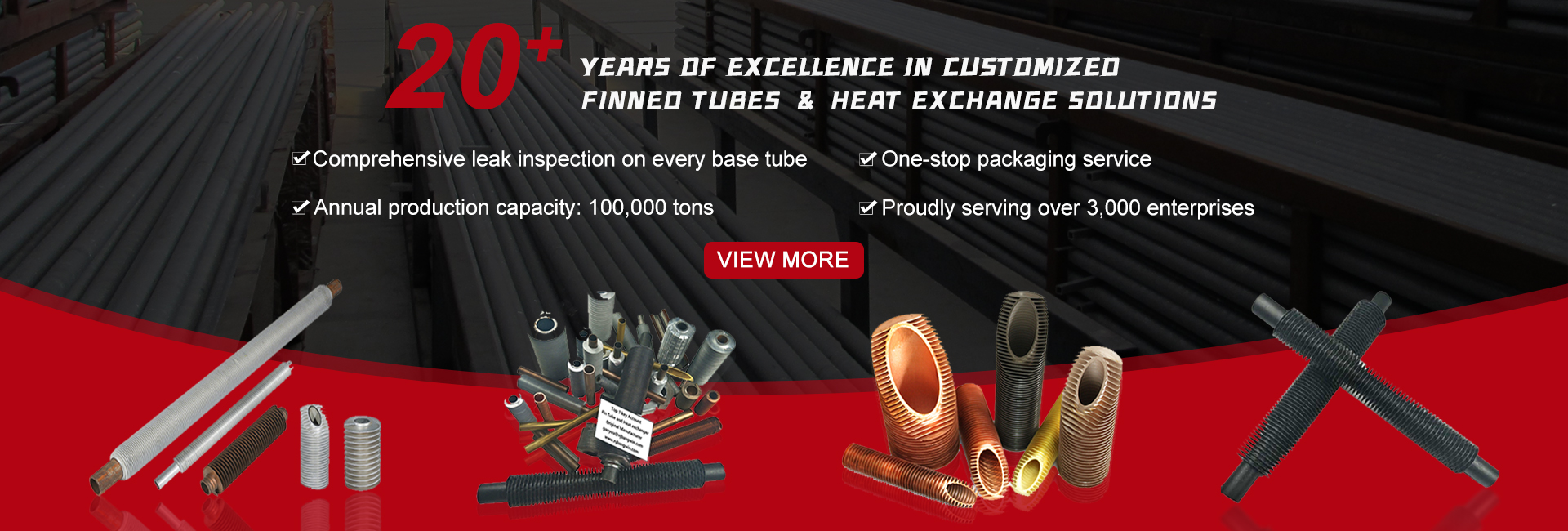
Introduction to KL Fin Tubes
Modern industrial equipment still require efficient heat transfer.
As a result, manufacturers keep coming up with better fin tube technologies.
KL Fin Tube are an ideal solution for augmenting the heat transfer efficiency
Those tubes are usually metal with fins formed around a base tube.
Furthermore, the fin design increases your heat transfer surface.
It is responsible for boosting air-side heat exchange, and hence KL fin tube.
They also have good mechanical stability and corrosion resistance.
Because of this, lots of industries use KL fin tube for air cooling applications.
Common uses involve heat exchangers, HVAC systems, power plants and process cooling equipment.
More About Bangwin Thermal and where do you get fin tube products and tailored heat exchanger solutions for industrial customers worldwide.
Bangwin Thermal
What Are KL Fin Tubes
Kl Fin Tube are finned tubes made using a L shaped fin foot having extra knurling.
The knurling in the surface of the tube increases the strength of the mechanical connection between fin and tube.
As a result, KL fin tube offer tighter contact than conventional L fin tubs.
Normal KL fin tube includes:
- Base tube
- Aluminium fin strip
- Knurled tube surface
- Formed fin foot
The most common fin material used by manufacturers is Aluminium.
But different base tube materials can satisfy different operating requirements.
Common base tube materials include:
- Carbon steel
- Stainless steel
- Copper
- Alloy steel
This great heat transfer is assured by the aluminium fin.
On the other hand, tube base to withstand pressure and provide good structure stability.
This combination makes it an effective heat transfer medium.
How KL Fin Tubes Work
The KL fin provides added heat transfer by increasing the external surface area.
First, the working fluid is entering the base tube.
Heat travels through the wall of the tube.
Next, the fin moves heat from the tube to the air around it.
The heat transfer is improved too because the fin gives far larger surface area.
In addition, the knurled surface of the tube is for better attached to fins.
In this way, KL fin tube will delivery steady state thermal performance.
The fin foot, too, assists with maintaining contact during thermal cycling.
Consequently, KL fin tube are appropriate for a wide range of air side heat transfer systems.
KL Fin Tube Manufacturing Process
KL fin tube are manufactured using specialized equipment.
The stages in the process often revolve around a few key aspects.
4.1 Base Tube Preparation
To begin, manufacturers select the proper base tube.
The tube work depends on the condition of shipment.
Thus, stainless steel is suitable for corrosive environments.
Carbon steel is appropriate for most traditional industrial uses.
Copper provides excellent thermal conductivity.
This demonstrates that material choice therefore impacts end tube performance.
4.2 Tube Knurling
The machine then produces a knurled surface on the line.
Knurling creates tiny grooves around the tube.
This gives better mechanical contact with the fin foot.
So it is still important to accurate knurling affects the KL fin tube quality.
The machine setting should keep stable groove dimensions.
As a result, the completed tubes have more consistent fin attachment.
4.3 Aluminium Fin Feeding
The next confine an aluminium fin strip exists feed in gab.
The feeding system controls:
- Fin tension
- Feeding speed
- Fin alignment
- Fin pitch
Hence the fin retains its stability while being manufactured.
4.4 Fin Forming
The machine provides the fin strip in its given shape
Fin foot wraps around knurled tube surface.
At that point the fin locks into the tube structure.
This strengthens the connection.
4.5 Final Inspection
Manufacturers examine KL fin tube after production.
Typical inspection items include:
- Fin height
- Fin pitch
- Fin attachment
- Tube dimensions
- Surface condition
- Overall straightness
So inspection keeps your product quality in check.
Benefits Of KL Fin Tubes
There are a number of advantages to KL fin tube.
5.1 Stronger Fin Attachment
A knurled tube surface enhances mechanical bonding.
Hence it is more stable during the working of fin.
This structure also serves the purpose of decreasing fin movement.
5.2 Excellent Heat Transfer
Aluminium provides good thermal conductivity.
Instead, as the fins increase external surface area—
As a result, KL fin tube have high air-side heat transfer efficiency.
This ability makes them attractive for air cooled type heat exchangers.
5.3 Good Thermal Cycling Performance
Industrial equipment tends to undergo repeated temperature changes.
As a direct consequence of this fact, fin attachment must be nominally stable subject to thermal expansion.
This is because the KL structure has good mechanical contact.
Consequently, the tube can withstand dozens of operating cycles.
5.4 Corrosion Resistance
Aluminium develops a protective oxide layer of its own.
So, they are relatively resistant to atmospheric corrosion.
This is an advantage for outdoor cooling equipment.
5.5 Lightweight Construction
Light metal, finally leads to its lightness as Aluminium itself has low density.
Hence KL fin tube can save total equipment weight.
This assist is beneficial for massive heating exchanger systems.
5.6 Cost-Effective Production
Mechanical forming technology is used for KL fin tube.
As a result, manufacturers can ensure productive fabrication with simple welding equipment.
Thus KL fin tube provide an appealing combination of good heat transfer and performance at a competitive cost.
Materials and designs of KL Fin Tubes
Tube configuration varies depending on the application.
6.1 Aluminium KL Fin Tubes
Aluminium fins are still your most common bet.
They provide:
- Good thermal conductivity
- Low weight
- Corrosion resistance
- Easy forming
Thus, aluminium KL fin tube make a perfect fit for most of air cooling applications.
6.2 Carbon Steel KL Fin Tubes
Carbon steel gives high mechanical strength.
Owing to this, carbon steel tube for industrial application is utilized by the manufacturers.
The external heat transfer is then improved by aluminium fins.
This pairing offers a strong foundation balanced with thermal performance.
6.3 KL Fin Tubes made of Stainless steel
Stainless steel is more resistant to corrosion.
On that account, they are practising in stainless steel KL fin tube for challenging environments.
Utility will use it for any chemical processing and industrial cooling.
KL Fin Tubes Applications
Much of KL fin tubes fit the industrial applications.
7.1 Air Cooled Heat Exchangers
Air cooled heat exchangers use air as the cooling medium.
This is why manufacturers require large external heat exchange surface areas.
This surface is achieved with KL fin tube.
This enables them to back efficient cooling air-side.
7.2 Petrochemical Industry
Many air cooling systems are utilized across petrochemical facilities.
KL fin tube can support:
- Process coolers
- Air coolers
- Condensers
- Heat recovery systems
This means their designs lend mechanical stability to understanding inhospitable settings from an industrial perspective.
7.3 Power Generation
Reliable heat transfer equipment is a necessity for power plants.
Thus KL fin tube can withstand:
- Cooling systems
- Heat recovery units
- Air cooled equipment
7.4 HVAC Systems
Heat exchange is crucial for HVAC equipment.
Subsequently, finned tubes will still have a place in the overall equipment spectrum.
The KL fin tube can be utilized for any heating or cooling applications.
7.5 Industrial Process Cooling
Factories often need continuous cooling.
Industrial equipment may need to be cooled via oil or gas, for example.
So, KL fin tube can be applied to different kinds of process cooling systems.
KL Fin Tubes vs L Fin Tubes
The fin structure of KL and L fin tubes is similar.
However, their tube surfaces differ.
Feature | KL Fin Tubes | L Fin Tubes |
Fin Foot | Knurled L foot | L-shaped foot |
Tube Surface | Knurled | Smooth |
Fin Attachment | Stronger | Good |
Thermal Cycling | Better | Good |
Corrosion Protection | Good | Good |
Cost | Moderate | Lower |
Application | Industrial | General |
Thus KL fin tubes offer better mechanical bond.
On the flip side, L fin tubes are a simpler and cheaper alternative.
KL Fin Tubes vs G Fin Tubes
Both KL and G fin tube enhance the attachment of fins.
However, their manufacturing methods differ.
Feature | KL Fin Tubes | G Fin Tubes |
Fin Connection | Knurled L foot | Embedded groove |
Manufacturing | Knurling and wrapping | Groove insertion |
Fin Bonding | Mechanical | Embedded mechanical |
Temperature Capability | Good | Higher |
Production Complexity | Moderate | Higher |
Typical Application | Air cooling | Heavy-duty heat transfer |
Thus the KL fin tubes are perfect for many general and industrial air cooling applications.
Applications that need more robust embedded fin structures are better with G-fin tubes.
How to Choose KL Fin Tubes
There are many factors to consider when choosing the right KL fin tubes.
10.1 Operating Temperature
First, determine the operating temperature.
Materials can have very different behavior when subjected to high temperature.
So, according to the actual situation, which base tube is more appropriate.
10.2 Working Environment
Next, evaluate the surrounding environment.
In contrast, outdoor systems may need to better resist corrosion.
So, for instance, aluminium fins can be very good protection.
10.3 Heat Transfer Requirements
Consider:
- Tube diameter
- Fin height
- Fin pitch
- Fin thickness
- Air velocity
These parameters influence heat transfer characteristics.
So, it is necessary to optimize fin design by manufacturers.
10.4 Tube Material
The base tube is selected based on the pressure and corrosive nature of the environment.
Stainless steel is designed for corrosive environments.
At the same range of cost carbon steels act very well on the mechanical performance.
10.5 Manufacturing Quality
Finally, consider supplier manufacturing capability.
A professional supplier should control:
- Fin dimensions
- Knurling accuracy
- Fin attachment
- Tube straightness
The engineering team at Bangwin Thermal can design tailor-made fin tube that fits your heat exchanger needs.
Bangwin Thermal Official Website
Why Choose Bangwin Thermal
Bangwin Thermal specializes in fin tube & industrial heat exchanger solutions.
We operate a supplier of thermal application products and equipment.
Our capabilities include:
- KL fin tubes
- G fin tubes
- L fin tubes
- Extruded fin tubes
- Spiral welded fin tubes
- High frequency welded fin tubes
- Laser welded fin tubes
- Heat exchanger solutions
Additionally, our engineering team can assist customers in choosing appropriate fin geometries.
We also support tailored specifications for individual projects.
This enables customers to create heat transfer solutions based on actual operating conditions.
To know the similar products in industrial you may also visit:
FAQ
- What are KL fin tubes?
KL fin tubes use knurled tube surfaces and L-shaped fin feet.
Therefore, they provide stronger mechanical fin attachment.
- What material do KL fin tubes usually use?
Manufacturers commonly use aluminium for the fins.
The base tube can use carbon steel, stainless steel, copper, or alloys.
- What is the difference between KL and L fin tubes?
KL fin tubes use a knurled tube surface.
L fin tubes normally use a smooth tube surface.
Therefore, KL fin tubes provide stronger fin attachment.
- Are KL fin tubes suitable for high temperatures?
KL fin tubes can support many industrial temperature ranges.
However, material selection must match the actual operating temperature.
- Where are KL fin tubes used?
They are common in air cooled heat exchangers, HVAC systems, petrochemical equipment, power plants, and process cooling systems.
- Can KL fin tubes improve heat transfer?
Yes.
The fins significantly increase the external heat transfer area.
Therefore, KL fin tubes can improve air-side heat exchange.
- Can Bangwin Thermal provide customized KL fin tubes?
Yes.
Bangwin Thermal can provide customized fin tube solutions according to tube size, fin material, fin pitch, and application requirements.
Conclusion
KL Fin Tubes give a safe resolution with regards to successful modern warmth exchange.
The knurled tube structure enhances fin attachment and gives mechanical stability.
In addition, aluminum fins are well known for their thermal conductivity and corrosion resistance.
KL fin tubes can, therefore, provide a good compromise between heat transfer performance, robustness and manufacturing cost.
They provide support for various technical domains such as air cooled heat exchangers, petrochemical equipment, HVAC systems,powerplant and industrial cooling applications.
Bangwin Thermal & Engg product for Heat Transfer along with professional engineering support for custom design/finn tube solutions is the right choice.
Bangwin Thermal