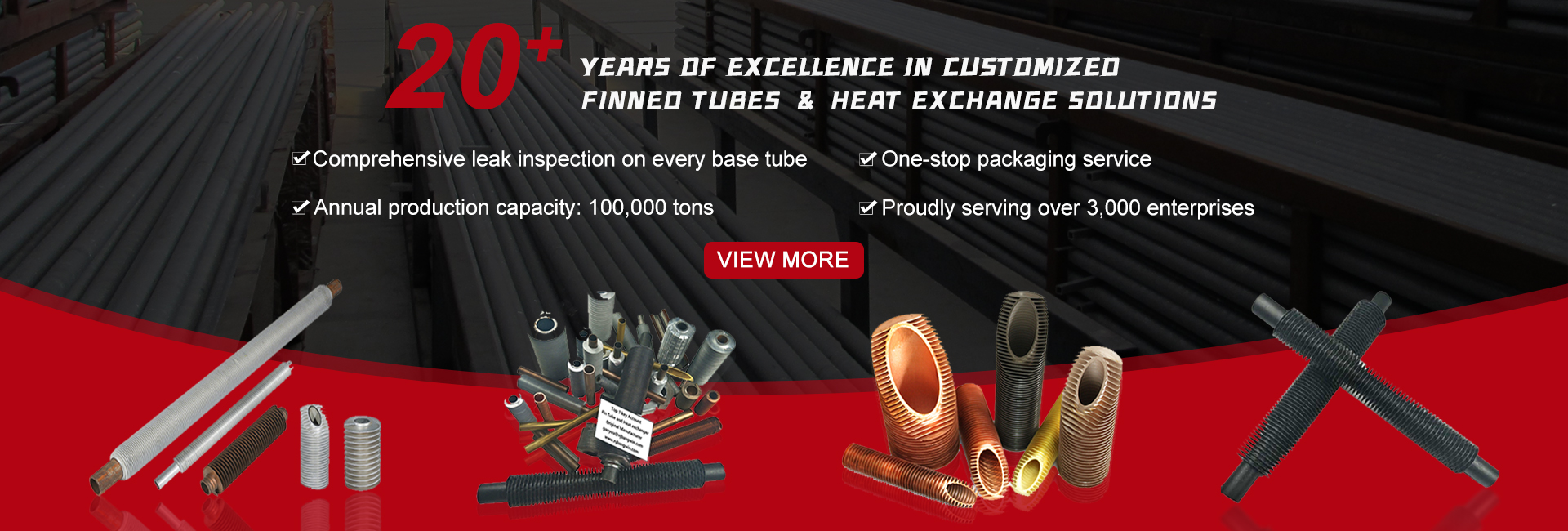
Einführung
Some industrial applications for heat exchangers need cost-efficient processes. Thus, it is one of the most popular technologies employed by engineers in high Frequency Welded Fin Tube.
The purpose of this fin tube type is to increase external surface area which allows getting high heat transfer rates. And also it helps you in the greater bonding of fin and base tube.
And as industries push for more efficiency and lower-cost manufacturing, so high frequency welding becomes a common means of producing…
Bangwin Thermal is a leading company providing special fin tube solutions and industrial heat exchanger systems around the globe.
Besuchen Sie:
Was ist ein Hochfrequenzgeschweißtes Rippenrohr
Hochfrequenzgeschweißtes Rippenrohr is a type of heat transfer tube in which a fin strip made of metal is welded to the base tube by means of high-frequency electrical current.
The current causes localized heating at the point of contact.
A pressure is applied to create a solid state metallurgical bond.
Consequently, the fin becomes strongly bonded to (or grips) the tube surface.
This structure enhances the thermal and mechanical properties of materials.
Zu den gängigen Materialien gehören:
- Kohlenstoffstahl
- Legierter Stahl
- Edelstahl
So it is a common choice in the heat exchanger systems used in industry.
Working of High Frequency Welded Fin Tubes
Welded fin tubes — Using high frequency welded fin tubes with surface enlargement leads to enhanced thermal performance.
The first scenario involves the presence of either hot or cold fluid flow inside the tube.
Then heat will be transfer over the wall of tube.
After that, the spending joint gets hot very fast.
At the same time, air or gas passes through it over all of its surface.
As a result, heat can escape more readily to the surroundings.
As a result of the fin to base joint being continuously welded, thermal resistance is minimized.
Hence, it largely improves efficiency of the heat exchanger.
Fertigungsprozess
Electrical resistance heating is used for high frequency welding.
The process includes several steps:
4.1 Vorbereitung der Röhrchen
The base tube gets cleaned and straightened up at the manufacturers.
4.2 Zuführung von Lamellenstreifen
Direct feeding of a metal strip to the welding system.
4.3 Hochfrequenzerwärmung
Heat is produced at the point of contact through electric current.
4.4 Druckschweißen
There are rollers that rub the fin against the tube.
4.5 Continuous Welding
They have a spiral structure in the form of fin.
4.6 Kühlung und Inspektion
It is cooled naturally and undergoes strict quality testing.
It means production stays fast and efficient.
High Frequency Welded Fin Tube Structure
High frequency welded fin tube:
5.1 Unterrohr
Carries the working fluid.
5.2 Spiral Fin
Increases heat transfer surface area.
5.3 Schweißzone
Creates a metallurgical interconnection between fin and tube
5.4 Protective Layer
Enhances corrosion resistance if required.
Thus, the structure reinforces both strength and efficiency.
Die wichtigsten Vorteile
In summary, there are numerous advantages to using high-frequency welded fin tubes.
6.1 High Heat Transfer Efficiency
More surface area equals better thermal performance.
6.2 Strong Weld Strength
Die metallurgische Verbindung gewährleistet Langlebigkeit.
6.3 Cost-Effective Production
Fast manufacturing reduces cost.
6.4 Wide Material Compatibility
Compatible with alloy and Carbon Steels
6.5 Reliable Performance
Stable operation under industrial conditions.
Hence, is broadly used in heat exchanger systems.
Materials Used
Material selection is dependent on the needs of the application.
Kohlenstoffstahl
Used in general industrial systems.
Alloy Steel
Suitable for higher temperature environments.
Edelstahl
Used in corrosive environments.
It automatically prompts the engineers to choose materials as per the operating conditions.
Anwendungen
High frequency welded fin tubes are the typical types of finned tube in industry.
8.1 Stromerzeugung
Verwendet in:
- Sparanlagen
- Luftvorwärmer
- Wärmerückgewinnungssysteme
[Shell and Tube Heat Exchanger]
8.2 Petrochemische Industrie
Verwendet in:
- Luftkühler
- Kondensatoren
- Prozessheizgeräte
8.3 HLK-Anlagen
Verwendet in:
- Air conditioning systems
- Wärmerückgewinnungsanlagen
- Industrial cooling systems
8.4 Abwärmerückgewinnung
Verwendet in:
Exhaust gas systems
Industrielle Öfen
[Waste Heat Recovery Heat Exchanger]
8.5 Industrial Equipment
Utilized for a reference point in other thermal systems that require some type of cooling or heating.
High Frequency Welded Fin Tube vs Other Fin Tubes
Typ | Kosten | Wärmeübertragung | Stärke | Application Range |
Hochfrequenzgeschweißt | Niedrig | Sehr gut | Hoch | Breit |
Lasergeschweißt | Hoch | Ausgezeichnet | Sehr hoch | Kritische Systeme |
Extrudiertes Rippenrohr | Mittel | Hoch | Hoch | Corrosive environments |
Niedriges Rippenrohr | Niedrig | Mittel | Mittel | HVAC |
Selection Guide
Things to consider when selecting a fin tube
Betriebstemperatur
Higher temperature requires stronger materials.
Korrosionsbedingungen
Die chemische Beanspruchung beeinflusst die Materialauswahl.
Wärmebelastung
Affects fin spacing and thickness.
Budget
Cost Benefits High frequency welding is a more cost-efficient option.
At Bangwin Thermal, we help customers in selecting the right solution.
Besuchen Sie:
Offizielle Website von Bangwin Thermal
Warum Bangwin Thermal wählen?
Bangwin Thermal Termal Exchange Solutions Worldwide
Zu unseren Stärken zählen:
- Hochmoderne Fertigungsanlagen
- Professionelles Ingenieurteam
- Custom fin tube design
- Strenge Qualitätskontrolle
- Wettbewerbsfähige Preise
- Global delivery capability
For industrial gas equipment customers, we also help:
FAQ
- What is a High Frequency Welded Fin Tube?
It is a fin tube welded using high-frequency electrical current.
- Wo wird es verwendet?
It is used in power plants, HVAC, petrochemical, and industrial heat exchangers.
- What are its advantages?
It offers low cost, good efficiency, and strong mechanical performance.
- Is it better than laser welded fin tubes?
It depends. Laser welding offers higher performance, but at higher cost.
- Welche Materialien werden verwendet?
Carbon steel, alloy steel, and stainless steel are common.
- Wo kann ich es kaufen?
Bangwin Thermal supplies customized fin tubes globally.
Schlussfolgerung
Hochfrequenzgeschweißtes Rippenrohr stands as an economical and efficient option for a number of industrial heat transfer systems.
It provides excellent welding quality, decent thermal performance, and a wide range of material compatibility.
Hence, it is widely used in power plants, HVAC systems, petrochemical plants and waste heat recovery applications.
When you are looking for custom fin tube, but need backed engineering technical or global supply source, look no further than Bangwin Thermal.
Besuchen Sie:
Bangwin Thermal