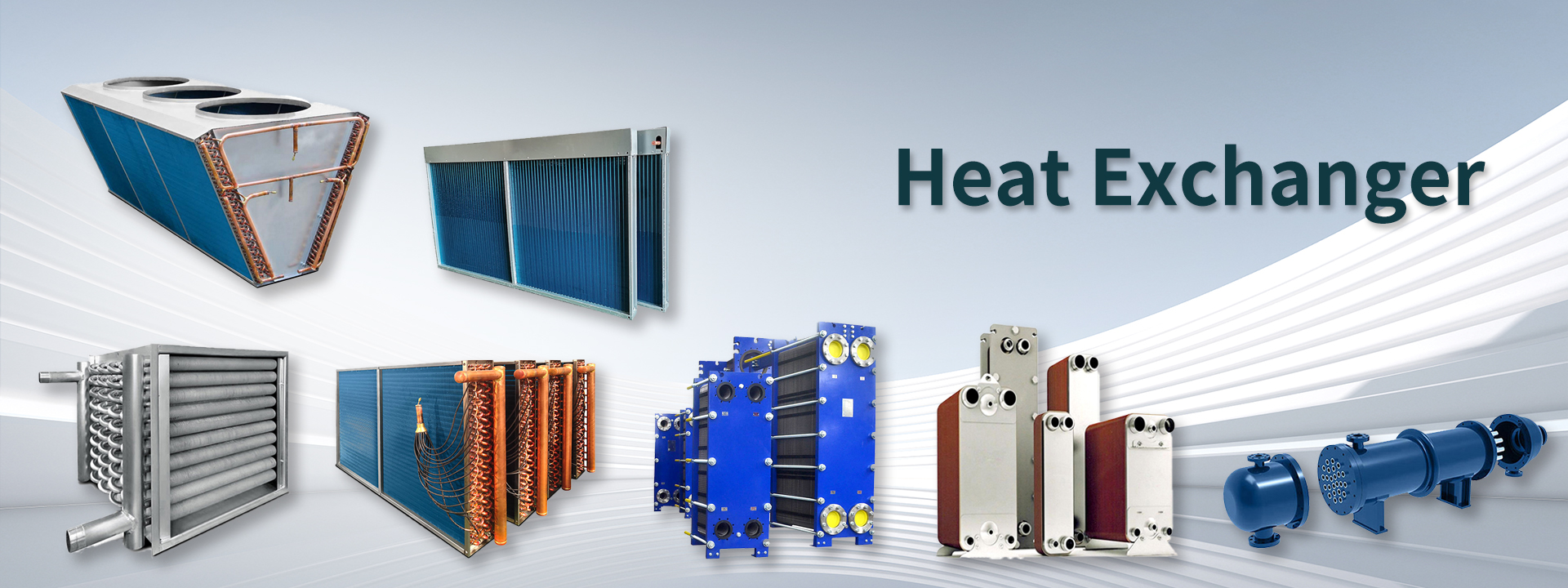
A Plate Heat Exchanger Supplier can help industrial buyers find products that will allow them to heat, cool, or recover heat. When selecting a Plate Heat Exchanger Supplier, you want to select one that offers products that are technically sound, with clearly stated specifications, provides accurate delivery dates and provides continued support once the purchase has been made. To assist in making an informed decision, prior to buying from a Plate Heat Exchanger Supplier, you should review the proposed thermal performance, compatibility of materials, pressure drop, documentation, and the overall cost of ownership. Do not assume the lowest price is necessarily the best choice for your application.
What Does a Plate Heat Exchanger Supplier Provide?
A plate heat exchanger manufacturer provides equipment and/or service to clients who require a means of transferring heat from one fluid stream to another. The manufacturer’s business model determines the type of service clients receive. They could either make the equipment themselves, provide the product of a different company, assemble the parts needed to create the finished product, or coordinate engineering and service support for the client.
Industrial buyers should know the difference between the three types of suppliers when they are looking for quotes. A manufacturer produces their own products and has direct control over the process. A distributor offers products that come from multiple manufacturers. Finally, an engineering supplier will incorporate heat exchangers into a complete thermal system.
Key Factors to Consider Before Choosing a Supplier
Each of these different business models has the ability to satisfy legitimate purchasing requirements; however, each of them will have varying abilities, delivery schedules, customization capabilities, and technical assistance.
A professional plate heat exchanger vendor will assist clients to determine if an proposed product is suitable for the required service. The supplier should establish the process conditions before recommending a suitable product.
The necessary information includes: the required heat load, inlet/outlet temperature, flow rate, composition of fluids, operating pressure, and maximum permissible pressure loss. It would be helpful for the supplier to know if the process involves corrosion, suspended solid particles, frequent cleaning, and/or changes in operating load.
The buyer should request a technical proposal that explains why the supplier selected a specific construction type. and how far it can operate within its specified parameters. In cases where the required process data is not available, the supplier should state that the information is missing from the proposal, rather than making unverified claims regarding the performance capabilities of their product.
What Types of Plate Heat Exchangers Can You Source?
Thermal requirements differ for different construction types. Before choosing a product, buyers will need to consider how each type can be maintained and serviced, if it is compatible with their fluid, what type of environment it will operate in, and what type of maintenance schedule is required.
Тип | Main characteristics | Typical purchasing considerations |
Gasketed plate-and-frame | Uses corrugated plates and replaceable gaskets | Inspection access, gasket compatibility, cleaning, and possible capacity changes |
Brazed plate | Uses permanently joined plates in a compact assembly | Joining material, operating limits, and cleaning options |
Welded plate | Uses welded plate construction | Media compatibility, design conditions, and inspection requirements |
Semi-welded plate | Combines welded channels with gasketed passages | Fluid arrangement, sealing requirements, and application suitability |
Plate-and-shell | Integrates a plate pack within a shell | Pressure and temperature requirements, maintenance access, and process conditions |
Gasketed models are generally used for application where inspections/cleaning are required on a regular basis. Brazed models may be suitable for small heating/cooling systems. Welded and semi-welded designs could be used for specific demanding process/refrigeration applications.
General applications, not general rules, for this type of application. The specific model, fluid property and operating condition will dictate if a particular construction can be used.
Review the Пластинчатый теплообменник Portfolio at Alfa Laval to see what technologies are available. The products listed in their product categories show you how many different types of Plate Heat Exchangers there are to meet your heat transfer needs.
How Do You Evaluate Product Quality?
Buyers should assess product quality by reviewing technical evidence, manufacturing materials, and inspection requirements. It is not possible to substitute general statements concerning quality with documentation regarding the specific equipment being purchased.
Review the technical datasheet
Check the proposed model, thermal duty, flow rate(s), inlet/outlet temperature(s), pressure drop(s), operational limits and connections to ensure they are consistent with the requirements of your process specifications.
If you find that there are differences between what the two quotations say about how much money you can expect to spend, you should contact each supplier and ask them why they have different calculations. There are many reasons why this might happen, including: different operating conditions, materials, design margins, and equipment configuration.
Confirm material compatibility
Both the plate material and seal component need to be compatible with process fluid, temperature, and chemical cleansers. Stainless Steel works well for most typical application, while Titanium and other special alloys may be used for certain areas where there are corrosive issues.
No single material suits every process fluid. Therefore, you should consult with your material supplier about the suitability of a material for your specific application’s fluid chemistry and operating environment.
Ask about inspection and testing
Depending on project requirements, buyers may need pressure tests, leak tests, dimensional inspections, material verification, and reviews of approved engineering drawings to confirm design compliance.
Not all testing is required for each construction. Request an Inspection & Testing Plan which will outline the testing/inspection requirements that are relevant to your project and also define the acceptable levels of performance.
Check documentation and traceability
When working on projects that require formal quality standards, ask for the applicable material certifications, inspection reports, technical drawings, and operating manuals. Prior to placing the order, determine what documentation is needed.
Verify if the supplier has provided product certification. Confirm that the certification was valid at the time of purchase and is still valid today. Verify what products are certified by the supplier (scope). Confirm who issued the certification. Confirm that the certified product will be used for its intended purpose.
Which Industries Need Plate Heat Exchangers?
Plate heat exchangers help support industrial applications that need to control heat (heating), cool (cooling) and/or recover energy. The appropriate type of plate heat exchanger to use is dependent upon the type of fluid being processed, the operating environment, and maintenance/hygiene needs.
- Chemical Processing:The process fluid will need to be at an appropriate temperature for chemical processing, and the materials used in the process must be compatible.
- In the food and beverageindustry, it may be necessary to construct heating and cooling systems with hygienic design principles in mind, select the proper materials for their construction, and establish acceptable methods of cleaning.
- HVAC and District Energy:Heat Exchangers Move Energy From One Separate Circuit For Heating/Cooling To Another Separate Circuit For Heating/Cooling.
- Industrial Refrigeration:Suitable designs can support selected cooling requirements for condensation, evaporation, and oil cooling.
- The use of heat exchangers to transfer heat from one stream of a process to another, while recovering valuable energy, is common throughout power and energy systems.
- Equipment can cool compatible water, oil and other fluid media under specified operating conditions.
Different industries will have varying application requirements. One example would be how a clean water system might enable different design options than a chemical process using corrosive materials and/or suspended solids.
Therefore, a Plate Heat Exchanger Manufacturer must have specific application data prior to suggesting a model. A manufacturer cannot select the proper construction, materials, and/or capacity simply based upon the name of the industry.
How Do You Compare Suppliers?
Structured comparisons help customers identify which technical offers meet their needs and which do not address crucial concerns.
Step 1: Define the application
Process Description: Heat duty: Inlet/Outlet Temperature: Flow Rate: Fluid Composition: Operating Pressure: Expected variations in Operating Load:
Provide the available specifications and operating data for any equipment that you will replace. This information will assist potential suppliers in evaluating the replacement requirements.
Step 2: Request comparable technical proposals
For every supplier asked for a quote, ask for a price that matches the process condition. Each supplier will submit a proposal that includes the identification of the type of equipment being offered, the materials that are suggested to be used, the estimated performance of the equipment, the estimated pressure drop through the equipment, the connection size and location on the equipment, and the operational limitations of the equipment.
Before comparing prices, confirm that every supplier based its quotation on the same technical specifications.
Step 3: Clarify the supplier’s role
Ask if the business makes the product, puts together the parts, sells other brands of products, or combines products to make a complete package.
The above clarifies the roles in terms of controlling design changes, providing documentation, and being responsible for warranties and technical support.
Step 4: Evaluate customization options
For some projects there may be certain types of connections, materials, dimensions and/or operating conditions that are required. Find out if the supplier can accommodate your needs for each of these requirements, and whether the proposed changes will impact lead time, price, testing and/or serviceability.
Be careful not to assume that all suppliers can customize all products. Get written proof of what has been agreed upon as a configuration.
Step 5: Check commercial terms
Compare payment terms, delivery methods, packaging options, shipping responsibilities, warranties, and spare-part availability. The quotation should clearly state what is provided with the order and which items could potentially lead to extra expenses.
Step 6: Review technical support
Confirm what the supplier does with respect to dealing with installation issues, operating issues, replacement parts and warranties. Establish the expected responses to critical issues prior to purchasing.
A practical supplier scorecard can help teams make consistent decisions.
Evaluation factor | Suggested review question |
Technical suitability | Does the proposal meet the specified thermal and hydraulic requirements? |
Material compatibility | Are the proposed materials suitable for the process fluids? |
Quality documentation | Can the supplier provide the required records and test results? |
Delivery | Are the delivery schedule and shipping terms clearly stated? |
Service | Are spare parts, maintenance guidance, and warranty terms available? |
Total cost | Have installation, energy, maintenance, and downtime been considered? |
The table provides a framework for evaluating suppliers based upon your project’s priority levels. The framework does not represent a standard method of rating suppliers.
What Should You Check Before Ordering?
Before placing an order, confirm that the technical proposal matches the commercial agreement. with regard to the equipment to be purchased and the specified criteria for that purchase.
Check the last version of the datasheet and drawing that were approved. Verify that the model, connection configuration, material used, operating parameters, and all other items agreed upon have been included.
Secondly, verify what the relevant codes and standards are. What is required will vary based upon the specific heat exchanger design, the location where it is to be installed, and the particular requirements of the project. It should not be assumed that each and every heat exchanger needs to have the same certifications.
Сайт AHRI Liquid to Liquid Heat Exchangers certification program defines the scope of testing for certifying thermal performance of selected HVAC liquid-to-liquid applications. The program does not apply to all heat exchanger applications, nor does it address all mechanical characteristics; therefore, the buyer must verify that the certification applies to their specific requirements.
Third, establish the criteria for inspecting and accepting products. Identify the documents, tests and performance standards that the supplier needs to provide.
Finally, verify the scope of delivery, warranties, replacement parts, and the responsibility for shipping and installing the item. Resolve any outstanding technical issues prior to releasing the item for manufacture.
How Do Price and Delivery Affect Purchasing Decisions?
The purchase price is just part of the entire cost. A complete comparison would include installation, energy use, cleaning, replacement parts, maintenance and downtime.
The price can depend on the construction of the equipment, material selection, thermal requirements, pressure/temperature limits, installation configurations, customizations, testing, documentation, etc. Additionally, freight costs, packaging costs, applicable taxes, and import duties can increase the total delivered price of the equipment.
Product availability, production requirements, component sourcing, customization, inspections, and shipping arrangements determine delivery timelines. Request your supplier to inform you of their quoted lead-time and when the clock for that lead-time begins to run.
If your project needs to be completed urgently, find out if the part you’ve been offered is already a standard item, or if it will need to be manufactured. Just because a part can be delivered immediately doesn’t mean it’s right for your job.
A lower price might represent a bargain if the technical requirements are equal. But, a lower price can also result in some of your test requirements, documentation, spare parts, and/or other services being eliminated from the quote.
Compare alternatives with similar value propositions and explain why you made the last choice. This method allows procurement professionals to weigh financial considerations (budget), technical adequacy (technical suitability) and risks associated with delivering on time (delivery risk).
What After-Sales Support Should You Expect?
After-sales support helps buyers plan maintenance and extend equipment service life.Buyers need to know what kind of service support they can expect from a supplier prior to making a commitment.
Find out if the supplier offers operating guides, maintenance tips, replacement parts, troubleshooting help and warranty service. For those with gaskets, determine which ones are compatible with the gaskets and plates. For those that are brazed or welded, find out what repair/replace options are available.
You will also need to create a procedure to report any issues with your products, whether they be related to defects or performance problems. You should determine the information the supplier requires to review claims, the process for reviewing those claims, and which expenses associated with the repair of a product can be covered by the warranty.
A Plate Heat Exchanger Supplier may offer varying levels of support based on their business practices and where they operate. For instance, some provide direct engineering assistance to customers. Other suppliers will arrange for customer service via either the original manufacturer of the product or through local partnerships.
Record your agreements about responsibility on the sales order. Arrangements that are clearly defined help to minimize uncertainty when the equipment needs repair.
How Do You Prepare a Request for Quotation?
The RFQ gives suppliers the information they need to evaluate your application and identify any missing data.
as well as determine what additional data is required.
Include the following information where available:
- Application and process description.
- Hot-side and cold-side fluid names and compositions.
- Inlet and required outlet temperatures.
- Flow rates and required heat duty.
- Operating and design pressures for both sides.
- Maximum allowable pressure drop.
- Preferred plate, gasket, and joining materials.
- Fouling characteristics and cleaning requirements.
- Connection sizes, installation space, and orientation.
- Applicable standards, inspection, and documentation requirements.
- Required quantity, destination, and delivery date.
- Warranty, spare-parts, and technical support expectations.
Be sure to clearly identify estimated values. When you do not know the necessary heat duty or fluid properties, provide the information that is currently available and ask your supplier to provide you with the information that you do not yet possess.
The use of a complete RFQ will allow a Plate Heat Exchanger Supplier to create a more relevant proposal for you. Additionally, the use of a complete RFQ will help you evaluate proposals from different suppliers by allowing you to identify critical differences in technology and/or commercial terms among the proposals you receive.
For industrial thermal equipment inquiries, you may go to Bangwin Thermal’s official website located at: https://customindustrialheatexchanger.com/. You should contact Bangwin Thermal in order to verify what type of products they have available, what their scope of delivery is, if there are custom options offered and what kind of technical support is provided.
See Газовый баллон «Бангвин» for other industry-related industrial gas cylinder resources. As an additional resource within this industry, this does not indicate that the company has the capacity to provide plate heat exchangers.
Часто задаваемые вопросы
l How do I choose a Plate Heat Exchanger Supplier?
Compare the suitability of each option’s technical capabilities, materials used for construction, available documentation, delivery options/terms, warranties provided, and post-purchase customer service. Prior to making a price comparison, verify that the equipment being offered will meet all of your application’s processing needs.
l What information should I provide when requesting a quotation?
Give the fluid characteristics, flow rates, inlet and outlet temperature, heat load, operating pressure, permissible pressure drop, and material specification. When possible include the installation constraints and documentation requirements.
l Can a supplier provide customized plate heat exchangers?
Some suppliers will provide custom materials, connection types, dimensional options, and configuration options. Availability is dependent upon what type of product you purchase and how your supplier handles engineering requests. Therefore, you should get confirmation of all of your requested modifications in writing.
l Is the cheapest supplier the best choice?
No, not necessarily. You should compare similar technical features and consider installation cost, operational energy usage, maintenance cost, delivery cost and cost of spare parts as part of your assessment.
l How can I verify a supplier’s product quality?
Check the technical data sheets for all products being used. Review the relevant product certifications. Confirm that you have received all of the material documentation. Examine the inspection plan. Go over the testing results. Confirm that each document applies to the correct product model and project specifications.
l What is the difference between a supplier and a manufacturer?
A manufacturer makes or puts together equipment; on the other hand, a supplier can make, ship, find or combine products. Find out which company manufactures the equipment and how they handle warranties and technical service.
l How long does delivery take?
Product lead times are dependent upon whether or not there is an available stock of the item, the amount of customization needed to complete the order, the current work load of the manufacturing facility, the time required for quality inspections of each completed unit, and finally, the transportation of the completed product. Please provide me with a written delivery schedule for this particular model of product with your requested quantity.
l Why is after-sales support important?
Support provides consumers with help in maintaining their equipment, replacing broken or worn out parts, and dealing with technical difficulties while operating the product. The type of support that is most appropriate will depend upon how critical the process being performed by the equipment is and what type of equipment it is.
Заключение
Selecting the correct Пластинчатый теплообменник Provider will involve a careful evaluation of the supplier’s technical ability to meet your requirements, the quality of their products, the pricing/payment terms offered, the expected delivery date and the level of post-purchase assistance they provide. Start by providing accurate operational data, then assess each provider’s technical proposal for equivalency, and finally verify what the provider is responsible for doing.
Prior to ordering, check your equipment’s specs (specifications), materials, testing requirements, industry standards, warranties, and parts/spare part provisions. Look at the entire cost of ownership instead of just evaluating the initial quote.
For your next industrial project, create a clear RFQ and reach out to possible suppliers to determine what operating conditions will be necessary. To find out if Bangwin Thermal has any options that fit your specifications, go to their company website.