1. Введение
Heat exchangers need good heat transfer between fluids. Engineers use different tubes to enhance thermal performance.
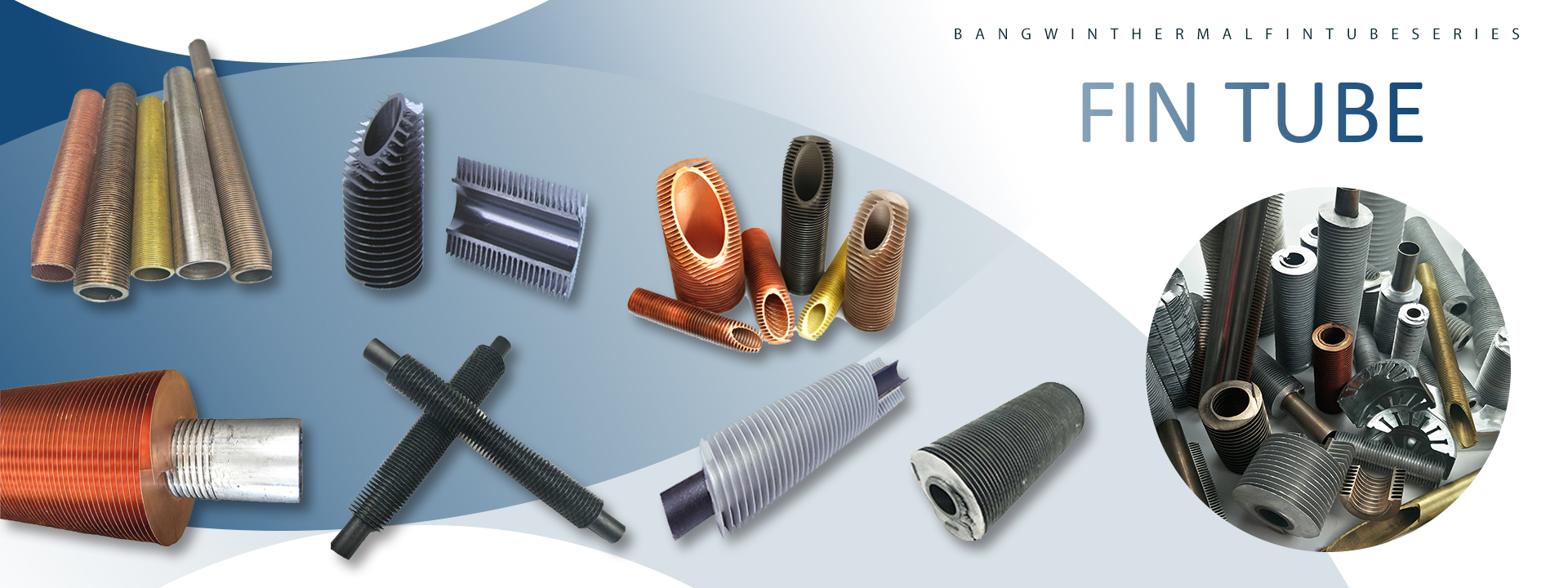
Low Fin Tubes for Heat Exchanger allow increased external heat transfer area in a practical manner.
These tubes are fitted with small fins that are formed onto the tube surface. As a result, low fin tubes offer increased surface area over plain tubes.
Low fin tubes still have a relatively compact design.
This means that low fin tubes allow enhanced heat transfer without requiring a large external diameter.
The tubes are commonly used in shell and tube heat exchangers.
Typical uses include oil coolers, condensers, evaporators, process heaters, and industrial coolers.
Bangwin Thermal manufactures custom fin tube and industrial heat exchanger systems for various thermal applications.
2. What Are Low Fin Tubes for Heat Exchanger Systems?
Low Fin Tubes for Heat Exchanger increase the surface area available for heat transfer. These tubes have short external fins running along the length of the tube.
Manufacturers usually form the fins from the tube wall itself.
This means that there is a single integrated surface for heat transfer. Low fin tubes use short fins when compared to high fin tubes.
Low fins offer benefits such as increased surface area and compactness. Typical components of a low fin tube include:
- Основная труба
- Integral low fins
- Internal fluid passageway
- External heat transfer surface
Customers can choose low fin tubes from various metals. Typical metals used for manufacturing include:
- Медь
- Copper alloys
- Алюминий
- Нержавеющая сталь
- Никелевые сплавы
Therefore, engineers can select material based on factors such as temperature, corrosion and thermal performance needs.
Learn More: Машина для производства труб с низким содержанием фин
3. How Do Low Fin Tubes Work?
Low fin tubes work by increasing the surface area on the outside of the tube. Heat typically transfers from inside the tube to the outside environment.
First, the process liquid flows through the interior of the tube.
Next, heat conducts through the tube wall.
Finally, fins help transfer heat to the environment outside the tube.
More surface area allows more heat to transfer for the same tube length.
The heat exchanger can achieve better thermal performance without greatly increasing the size of the tube.
Integral fins also ensure there is good thermal contact with the tube wall. In comparison, some contact resistance can occur with separately attached fins.
4. Low Fin Tube Manufacturing Process
Custom fin tubes require precise manufacturing processes. Manufacturers typically produce low fin tubes with specialized tube forming machinery.
The basic stages include:
4.1 Tube Material
Firstly, the manufacturer must select the right tube material.
Important factors include:
- The working fluid
- Рабочая температура
- Pressure
- Corrosion considerations
- Heat transfer requirements
Therefore, choosing the correct material is vital for heat exchanger performance.
4.2 Surface Preparation
Next, the manufacturer cleans and checks the surface of the tube. The tube needs to have the correct dimensions before forming the fins.
For example, manufacturers will measure tube diameter and wall thickness.
4.3 Fin Forming Stage
The machine now forms fins into the tube wall. Specialized tooling forms continuous low fins all around the tube circumference.
The finished fins become an integral part of the tube wall.
Manufacturers can control variables such as:
- Высота плавника
- Шаг плавника
- Толщина плавника
- Fin profile
- Tube outside diameter
Because of this, customers can get different fin geometries to suit their application.
4.4 Sizing and Straightening
Fin forming can change the final dimensions of the tube.
Manufacturers may size and straighten the tube as required. As a result, the finished tube will be ready for assembly into heat exchangers.
4.5 Приемочная проверка
Lastly, manufacturers should inspect the finished low fin tubes. Typical inspections include:
- Размеры труб
- Высота плавника
- Шаг плавника
- Surface defects
- Прямолинейность трубы
- Wall thickness
Correct inspection allows manufacturers to ensure consistent quality.
5. Benefits of Low Fin Tubes
Low fin tubes offer many advantages to heat exchanger designers and manufacturers.
5.1 Larger Heat Transfer Area
The added fins create greater external surface area on the tube.
Therefore, the enhanced tube can remove more heat than a plain tube. The low fin tube can allow for a smaller heat exchanger size.
5.2 Integrated Fin Design
The fins are integrated directly into the tube wall during formation. As a result, the fin and tube have great thermal contact.
The design also means that there is no separate fin attachment step.
5.3 Compact Low Profile
Low fin tubes have short fins when compared to high fin tubing. Therefore, low fin tubes have a small external profile.
This property makes low fin tubes ideal for shell and tube heat exchangers.
5.4 Good Mechanical Properties
Integrally formed fins have good mechanical stability.
As such, low fin tubes can withstand the appropriate thermal cycling and vibrations. This property also allows for effective cleaning.
5.5 Efficient Use of Materials
The process of creating low fin tubes does not waste any material.
This is because manufacturers form the fins from the tube material. As a result, manufacturers do not need separate fin stock for suitable materials.
5.6 Selection of Material Options
Low fin tubes are available in a variety of metal materials.
As a result, customers can choose from different materials to match their process conditions.
6. Common Low Fin Tube Materials and Designs
Different heat exchanger applications have different tube material requirements.
6.1 Copper Low Fin Tubes
Copper has very high thermal conductivity. Copper low fin tubes are applicable in a wide variety of heat exchanger applications.
Common applications include:
- Конденсаторы
- Испарители
- Холодильные системы
- Heating ventilation and air-conditioning (HVAC)
Learn More: Медная трубка с низкими ребрами
6.2 Aluminium Low Fin Tubes
Aluminium is lightweight and has good thermal conductivity.
As a result, aluminium low fin tubes work well in heat exchangers where weight is a consideration.
6.3 Stainless Steel Low Fin Tubes
Stainless steel offers excellent corrosion resistance.
Stainless steel low fin tubes are ideal for use in chemical plants and industrial facilities.
These tubes can handle even the most demanding process conditions.
6.4 Nickel Alloy Low Fin Tubes
Nickel alloys work well with certain harsh chemical environments.
Due to this property, nickel alloy low fin tubes are useful for speciality chemicals and high temperature heat exchangers.
7. Industries and Applications Using Low Fin Tubes
Low fin tubes are used throughout various industries for heat exchangers.
7.1 Shell and Tube Heat Exchangers
Shell and tube heat exchangers can use low fin tubes to increase surface area.
Low fins allow greater external surface area without using a large shell. Internal Link Opportunity: Shell and tube heat exchanger
7.2 Oil Coolers
Oil cooling needs to quickly transfer heat away from the oil. As a result, low fin tubes are effective at heat exchange between oil and cooling media.
7.3 Condensers
Condensers need to remove heat from vapours. For this reason, external heat transfer is critical to condenser performance.
Low fin tubes have increased surface area for heat exchanger applications such as condensers.
7.4 Evaporators
Evaporators must transfer heat to the fluid or refrigerant. Low fin tubes can help increase thermal transfer in suitable evaporator applications.
7.5 Process Heat Exchangers
Industrial processes often need heating or cooling of process fluids. As a result, low fin tubes can be used in many applications such as:
- Химическая обработка
- Нефтехимические заводы
- Industrial heaters
- Охлаждение технологических процессов
Learn More: Process Heater
7.6 HVAC and Refrigeration Equipment
HVAC units need compact heat transfer components.
Low fin tubes offer more surface area for heat transfer without taking up much space.
8. Low Fin Tubes vs Bare Tubes
Low fin tubes have extra surface area.
Bare tubes have a smooth exterior surface.
Характеристика | Низкая трубка с плавниками | Bare Tube |
External Area | Выше | Нижний |
Теплопередача | Выше | Нижний |
Tube Profile | Компактный | Simple |
Производство | More complex | Simple |
Thermal Performance | Превосходно | Умеренный |
Типичная область применения | Теплообменники | General piping |
Therefore, low fin tubes can achieve higher heat transfer performance when external area is restricting exchanger size.
9. Low Fin Tubes vs High Fin Tubes
Low fin tubes and high fin tubes are intended for different uses.
Характеристика | Низкая трубка с плавниками | High Fin Tube |
Высота плавника | Низкий | Высокий |
Surface Area | Умеренный | Очень высокий |
Tube Profile | Компактный | Larger |
Airflow Resistance | Нижний | Выше |
Типичная область применения | Shell and tube | Air-side systems |
Fin Structure | Usually integral | Integral or attached |
Therefore, low fin tubes are used for applications where a compact tube design and moderate surface area enhancement is needed.
High fin tubes are used for applications that need a very large surface area for external heat transfer.
10. How to Select Low Fin Tubes
Correct low fin tubes should be selected after appropriate engineering analysis.
10.1 Heat Transfer Needs
Identify the required heat duty.
Calculate the necessary heat transfer area.
Therefore, an engineer can select an appropriate combination of tube diameter and fin height.
10.2 Determine the Appropriate Tube Material
Consider what fluids will contact the tube.
If it is water or refrigerant, copper is a good choice.
If the tube needs to operate in a corrosive environment, stainless steel may be required.
Therefore, engineers should decide on what fluid the tubes will work with first.
10.3 Optimizing Fin Geometry
Some important decisions here include:
- Height of the fins
- Pitch of the fins
- Толщина плавника
- Fin profile style
- Tube outer diameter
- Image Credit: Fin Tube
Therefore, take time to decide on all aspects of fin geometry to ensure optimal thermal performance.
10.4 Determine the Operating Temperature
Examine how temperature impacts your material choice as well as thermal performance.
Therefore, consider what the maximum and minimum temperatures will be during operation.
10.5 Determine Operating Pressure
The pressure of the fluid inside the tube must be considered.
Therefore, think about what wall thickness will be needed.
10.6 Consider Configuration of Heat Exchanger
Will the tube be used in a:
- Кожухотрубный теплообменник
- Конденсатор
- Испаритель
- Oil Cooler
- Process heat exchanger
Image Credit: Applications of Finned Tubes
Therefore, take time to understand how the low fin tube will be used inside the heat exchanger.
Главная
11. Почему стоит выбрать Bangwin Thermal?
Bangwin Thermal is an industrial heat exchanger and fin tube supplier.
Our product lineup includes several different fin tube designs.
We offer low fin tubes, G fin tubes, KL fin tubes, L fin tubes, extruded fin tubes, serrated fin tubes, longitudinal finned tubes, spiral welded fin tubes, high frequency welded fin tubes, and laser welded fin tubes.
Plus, we can customize heat exchanger systems for many industrial applications.
Our experts can help you figure out your heat duty, appropriate tube material, fin height and pitch, operating temperature, working pressure, any expected corrosion, and installation requirements.
Therefore, you will receive a fin tube that matches your specific operating conditions.
«Бангвин Термал»
Check out our Газовый баллон «Бангвин» !
12. ВОПРОСЫ И ОТВЕТЫ
- What are low fin tubes for heat exchanger applications?
Low fin tubes use short fins formed directly on the tube surface.
Therefore, they increase external heat transfer area while maintaining a compact profile.
- What are low fin tubes used for?
They commonly serve shell and tube heat exchangers, condensers, evaporators, oil coolers, and industrial process equipment.
- What materials can manufacturers use?
Common materials include copper, aluminium, stainless steel, and nickel alloys.
- Are low fin tubes better than bare tubes?
Low fin tubes provide more external surface area.
Therefore, they can achieve higher heat transfer performance than bare tubes.
- What is the difference between low fin and high fin tubes?
Low fin tubes use shorter fins and maintain a compact profile.
High fin tubes provide larger surface areas but create larger external profiles.
- Are low fin tubes suitable for shell and tube heat exchangers?
Да.
Low fin tubes work particularly well in many shell and tube heat exchanger designs.
- How are low fins manufactured?
Manufacturers normally form the fins directly from the tube wall.
Therefore, the fins create an integral tube structure.
- Can Bangwin Thermal provide customized low fin tubes?
Да.
Bangwin Thermal can customize tube materials, dimensions, fin height, fin pitch, and other specifications.
13. Заключение
Low Fin Tubes for Heat Exchanger can improve the heat transfer capabilities of your heat exchanger.
They have fins that allow for more surface area on the outside of the tube. Therefore, low fin tubes do not cause a large tube profile.
This makes them ideal for use in heat exchangers where space may be limited.
Not only are low fin tubes used in shell and tube heat exchangers, but they can also be used for condensers, evaporators, oil coolers, HVAC equipment, and process equipment.
No matter what your application is you should take heat duty, material, fin size, temperature, pressure, and corrosion into account when selecting low fin tubes.
If you would like customized low fin tubes or have questions about heat exchangers for your industrial application, contact Bangwin Thermal for engineering assistance and manufacturing support.
«Бангвин Термал»