Введение
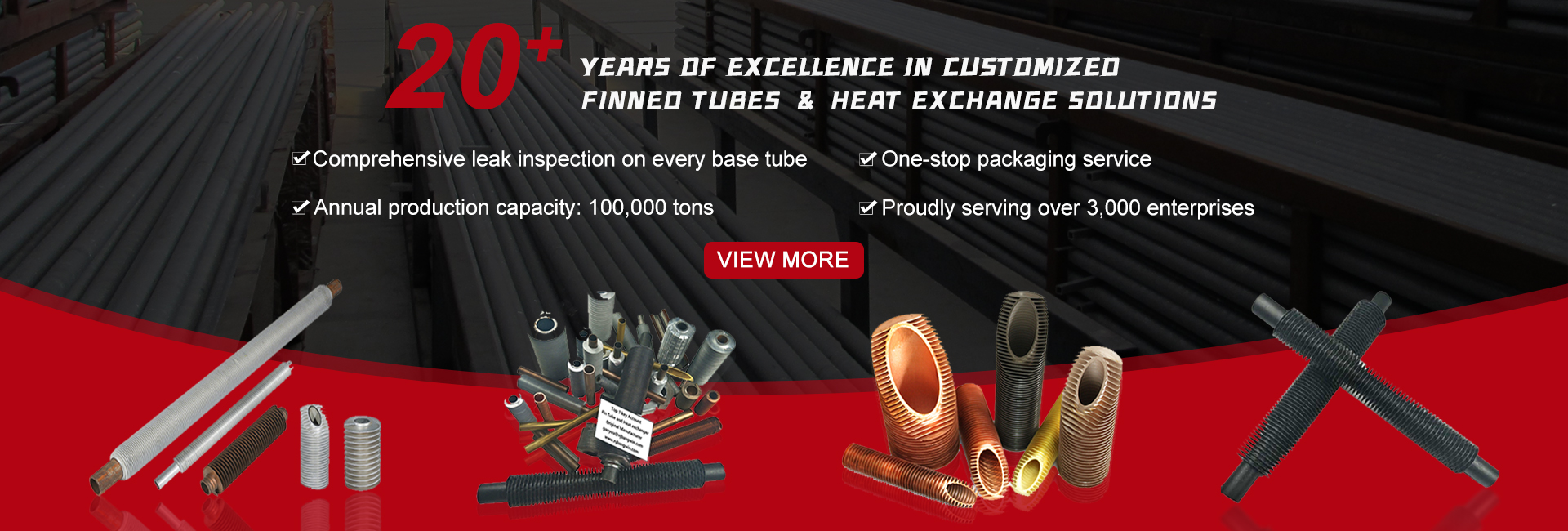
Heat transfer efficiency still is and remains an indispensable aspect of modern industrial equipment. That is why engineers opted for fin tubes in order to enhance the area of heat transfer.
A G Type Fin Tube is a robust, mechanically efficient solution for numerous heat exchanger applications.
Сайт G type fin tubes use an embedded fin structure, while the ordinary wrapped fin tube is used. This means that the fin creates a solid mechanical bond with the base tube.
Also, this structure helps to enhance the mechanical stability and thermal performances.
G type fin tube are generally used for air cooled heat exchangers, petrochemical plants, power plants & industrial cooling equipment.
We learnt of various other professionals fin tube solutions supplier and manufacturer for industrial heat transfer applications at this Banewin Thermal
We also provide hot rolled finned tube and various heat exchanger designs as per custom requirements.
«Бангвин Термал»
What Is a G Type Fin Tube
Tube surface with a continuos spiral groove machined in, done by Manufacturers.
The machine then places the fin strip into this channel.
Then the tube opens up around the fin foot.
Hence the tube locks the fin in place mechanically.
A typical G type fin tube consists of:
- Основная труба
- Spiral groove
- Metal fin strip
- Embedded fin foot
The most common fin material used by the manufacturers is aluminium.
But the base tube can be constructed of other materials.
К наиболее распространенным вариантам относятся:
- Углеродистая сталь
- Нержавеющая сталь
- Легированная сталь
- Медь
- Никелевые сплавы
Hence, the manufacturers can manufacture G type fin tubes for different mode of operations.
How G Type Fin Tubes Work
G kind fin tubes add heat transfer through an enlarged external surface.
Working medium flows through the base tube at first.
After that, heat is conducted through the wall of the tube.
The fin transfers heat from the tube to the surrounding air.
Heat exchange is better because the fin offers more surface area.
Second, embedded structures increase the contact between fin and tube.
Also, chill the thermal contact resistance, so steel fin tubes is a G type material.
Consequently, they offer effective heat transfer on the air side.
This is used in case of air cooled heat exchanger system.
Теплообменник с воздушным охлаждением
Manufacturing process of G type fin tube
G type fin tubes can be produced by manufacturers using special equipment.
This will normally be part of a multi-step process.
4.1 Подготовка основной трубы
Choose the correct base tube manufacturers.
Material is a function of temperature, pressure, corrosion and mechanical requirements.
These could be carbon steel or stainless steel, among others.
Afterwards, the manufacturers clean the tube surface.
And so the tube is prepared to be machined for a groove.
4.2 Spiral Groove Machining
Then the machine cuts a spiral groove with a constant pitch.
It is important that the groove have correct dimensions.
Therefore, manufacturers carefully control:
- Groove depth
- Groove width
- Groove pitch
- Tube rotation speed
This groove improves adherence of the fins on the side.
4.3 Fin Strip Insertion
The next step is for the machine to insert the fin strip between the groove.
Aluminum still is the most popular fin material.
The fin is being wound around the tube continuously by machine.
Hence, this results in uniform spacing and fin structure among manufacturers.
4.4 Расширение труб
Manufacturers subsequently expand the tube after fin insertion.
This expansion process clamps the fin foot inside of the groove (a bit like a clam that sheaths its shell).
This way, the fin material forms a tight mechanical connection.
And it makes them more resistant to thermal movement.
4.5 Приемочная проверка
Then, the manufacturers inspect the finished tubes.
Inspection commonly covers:
- Высота плавника
- Шаг плавника
- Крепление плавника
- Диаметр трубы
- Прямолинейность трубы
- Состояние поверхности
That being said, quality inspection protects the consistency of the product.
Benefits of G Type Fin Tubes
5.1 Strong Fin Attachment
The embedded fin forms a robust bond.
Master, their fins are ever-stable while going.
Additionally, the connection has been well tested against vibrations and thermal cycling.
5.2 Превосходная теплопередача
Features of G type fin tubes provide a huge external surface area.
So they lead to better air-side heat transfer.
Embedded Structure Further Lowers Contact Resistance
Therefore, heat exchangers may reach a good thermal performance.
5.3 Good High-Temperature Performance
The mechanical fin connection is applicable to high operating temperatures.
Следовательно, G type fin tubes are suitable for numerous industrial applications.
But manufacturers must choose appropriate materials at various temperatures.
5.4 Strong Mechanical Stability
Vibration and thermal expansion are widely experienced by industrial equipment.
As a result, stability of fin attachment.
The G inside provides good mechanical support
As a result, the Fin is literally glued on during operation.
5.5 Длительный срок службы
Less likely to move around if you have a strong fin connection.
Thus, G kind fin tubes still ensure trustworthy-efficiency over the years.
Material selection assists with enhancing corrosion protection as well.
5.6 Wide Industrial Application
Many challenging industries are supported by G type fin tubes.
Manufactures in which, for example they use:
- Нефтехимические заводы
- Производство электроэнергии
- Теплообменники с воздушным охлаждением
- системы отопления, вентиляции и кондиционирования воздуха
- Промышленные системы охлаждения
As a result, they continue to be a common design for fin tubes.
Consideration of G Type Materials and Designs on Fin Tube
Different applications require different materials.
6.1 Aluminium G Type Fin Tube
Aluminium provides excellent thermal conductivity.
In addition, aluminium is light weight and has good atmospheric corrosion resistance.
Hence, aluminium fins are perfect for air cooling applications.
6.2 Carbon Steel G Type Fin Tube
Carbon steel offers high mechanical strength.
So it is suitable for many industrial base tube applications.
Many manufacturers use carbon steel tubes with aluminium fins.
This offers a realistic balance between rigidity and heat transfer.
6.3 Stainless Steel G Type Fin Tube
Compared with stainless, the outstanding corrosion resistance of stainless steel.
As such, it is perfectly suited for demanding chemical and industrial environments.
Manufacturers can use stai-nless steel tubes in conjunction with aluminium or stainless s-teel fins.
G Type Fin Tube Applications
G type fin tubes are widely used for many heat transfer application.
7.1 Теплообменники с воздушным охлаждением
Heat exchangers that utilize air as the heat transfer medium need to have huge surfaces for heat exchange.
Следовательно G type fin tubes are the ideal channels.
Области применения включают:
- Охладители технологических потоков
- Маслоохладители
- Газовые охладители
- Конденсаторы
It also provides the robustness needed for continuous operation in an industrial setting.
7.2 Нефтехимическая промышленность
Petrochemical plants need stable devices for cooling.
As such, type G fin tube may support:
- Refinery coolers
- Теплообменники технологического оборудования
- Condensing equipment
- Gas cooling systems
7.3 Производство электроэнергии
There are types of heat recovery, cooling systems or cooling services used by them in thermal generation plants [Disclaimer Information: These data are the horizon of your training with me until October 2023].
This means that G type fin tubes can withstand:
- Heat recovery equipment
- Air cooling systems
- Auxiliary cooling units
7.4 Системы отопления, вентиляции и кондиционирования воздуха
Air-side heat transfer is essential for HVAC equipment.
Thus, it can be an advantageous decision for manufacturers to apply G type fin tubes into reliable heating and cooling systems.
7.5 Industrial Cooling
In fact, in manufacturing processes.
Thus, thermal parts are so important for effective cooling systems.
G type fin tubes are extensively used as oil, gas and process cooling systems.
G Type Fin Tube vs L Fin Tube
G type and L type fin tubes adopting different methods of fin attachment.
Таким образом G type fin tubes are commonly used in applications that demand more robust fin attachments.
At the same time, L fin tubes come as a less complicated and more budget-friendly design.
G Type Fin Tube vs KL Type Fin Tube
The designs offer robust mechanical fin attachment.
However, their structures differ.
Thus, depending on temperature, environment and heat transfer demands the right choice must be made.
How To Pick The Right G Type Fin Tube?
There are a few factors to consider when selecting a G type fin tube.
10.1 Рабочая температура
Сначала определите рабочую температуру.
Tube and fin materials suitable for high temperature systems
Therefore, material selection remains critical.
10.2 Условия труда
Next, evaluate corrosion conditions.
Aluminum fin is often necessary for outdoor systems.
On the other hand, aggressive environments will drive the necessity for stainless steel components.
10.3 Требования к теплопередаче
Рассмотрим следующее:
- Диаметр трубы
- Высота плавника
- Шаг плавника
- Толщина плавника
- Скорость воздуха
These parameters directly influence heat transfer performance.
10.4 Pressure Requirements
Operating pressure inside the base tube.
So manufacturers must choose the tube of wall thickness material.
10.5 Supplier Manufacturing Capability
Then, assess the engineering background of the supplier.
Important groove dimensions as well as quality of fin attachment can be controlled by the professional manufacturer.
Bangwin Thermal we can make fin tube solutions as per the specific heat exchanger application.
Официальный сайт компании «Bangwin Thermal»
Почему стоит выбрать Bangwin Thermal
Specialist in Fin tube & industrial heat exchanger solution |Bangwin Thermal
Throughout fin tube technologies, our product and engineering capabilities include;
These include:
- G type fin tubes
- Трубы с ребрами KL
- Трубы с ребрами L-образной формы
- Трубы с экструдированными ребрами
- Трубы со спирально сварными ребрами
- Трубы с ребрами, сварные высокочастотным методом
- Лазерная сварка плавниковых труб
- Системы теплообменников
Additionally, we have the ability to design fin tube specifications depending on requirements needed for the project.
Our engineering team considers:
- Working temperature
- Working pressure
- Материал трубки
- Материал плавников
- Шаг плавника
- Heat transfer requirements
In this way, the customers would have the liberty to choose the right fin tube solutions for different applications.
FAQ About G Type Fin Tube
- What is a G type fin tube?
A G type fin tube uses an embedded fin structure.
The fin fits into a spiral groove on the tube surface.
- Why do manufacturers use G type fin tubes?
They provide strong fin attachment and efficient heat transfer.
Therefore, they suit demanding industrial applications.
- What materials can manufacturers use?
Common materials include aluminium, carbon steel, stainless steel, copper, and alloys.
- Where are G type fin tubes used?
They are common in air cooled heat exchangers, petrochemical plants, power generation, HVAC, and industrial cooling systems.
- What is the difference between G and KL fin tubes?
G type fin tubes use an embedded groove.
KL fin tubes use a knurled surface with an L-shaped fin foot.
- Are G type fin tubes suitable for high temperatures?
They can support many high-temperature applications.
However, manufacturers must select suitable materials and specifications.
- Can Bangwin Thermal customize G type fin tubes?
Да.
Bangwin Thermal can customize tube materials, fin materials, dimensions, and fin spacing according to project requirements.
Заключение
G Type Fin Tube technology is an ideal solution to meet both the toughest heat transfer requirements.
Embedding the fin structure in resonates create a strong mechanical attachment.
Large fin surface area also has benefits for air-side heat transfer as well.
Следовательно, G type fin tubes gives a satisfying balance of thermal performance with mechanical strength and long term viability.
This caters to applications in petrochemical, power generation,HVAC, and industrial cooling industries.
Bangwin Thermal offers the professional engineering support and manufacturing capabilities to customize fin tube and heat exchanger solutions for your specific needs.
«Бангвин Термал»