High Frequency Welded Fin Tubes: Process Fundamentals and Engineering Selection
1. Direct Answer: What Is a Tubo com aletas soldado por alta frequência?
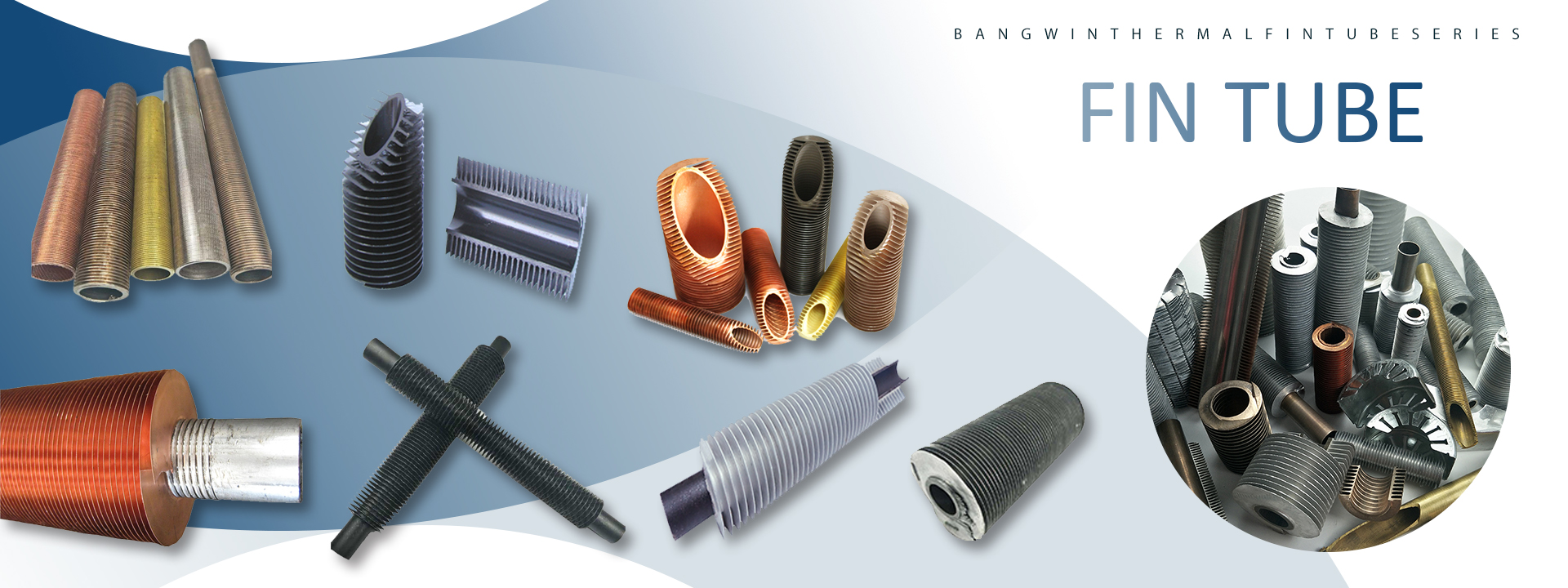
A tubo com aletas soldado por alta frequência is an extended-surface heat transfer tube made by helically winding a steel fin strip onto a base pipe while a high-frequency electric current fuses the fin root into the tube wall. The result is a continuous metallurgical weld along the full helix, with no filler metal and no contact gap between fin and tube. This construction is the standard choice for boiler economizers, waste heat recovery units, air heaters, and heat recovery steam generators operating up to roughly 550°C in flue gas that carries ash, soot, or abrasive particulates.
The defining property is thermal: a welded fin root has essentially no contact resistance, so the fin performs as an extension of the tube wall rather than as a separate component pressed against it. That single characteristic explains why the process dominates high-temperature, dirty-gas service where tension-wound fins would relax and detach.
2. The Welding Physics Behind the Process
High-frequency resistance welding works because of two electromagnetic effects that concentrate current exactly where the weld is needed.
Skin and Proximity Effect
At frequencies in the 300–450 kHz range, alternating current does not distribute evenly through a conductor. The skin effect pushes current toward the conductor surface. The proximity effect pulls current toward the nearest adjacent conductor. When the fin strip edge approaches the base tube at a shallow V angle, both effects drive current density to the narrow apex where the two surfaces are closest. That apex heats to forging temperature in milliseconds while the surrounding metal stays comparatively cool.
The Continuous Sequence
Tube preparation.
- The base pipe is cleaned and, where specified, shot-blasted or polished to remove scale that would interfere with fusion.
Strip feed at helix angle.
- Flat steel strip is fed at a controlled tension and wrap angle. Strip width becomes fin height; strip thickness becomes fin thickness.
Current application.
- Contact shoes or induction coils deliver high-frequency current to the weld apex, heating fin edge and tube surface to roughly 1200–1300°C.
Forge consolidation.
- Squeeze rolls apply pressure immediately behind the heating zone, expelling oxides and consolidating the joint into a solid-state weld with a small natural fillet at the root.
Cooling and inspection.
- The tube cools in line, then passes dimensional checks and weld sampling.
No flux, no filler wire, and no post-weld heat treatment are normally required for carbon steel work. That absence of consumables is a large part of why the process is economical at volume.
3. Solid or Serrated: Choosing the Fin Profile
Both profiles come off the same welding platform, and both count as a tubo com aletas soldado por alta frequência. The choice is about gas cleanliness rather than about the process itself.
Profile Comparison
Consideration | Solid (Continuous) Fin | Serrated (Segmented) Fin |
Fin edge | Unbroken continuous strip | Notched or cut along the outer edge |
Heat transfer | Baseline reference | Roughly 10–20% higher in clean gas |
Ash bridging risk | Low — smooth surface sheds deposits | Higher — notches trap ash |
Soot blower tolerance | High — rigid continuous edge | Lower — segment tips can deform |
Pressure drop | Lower per row | Higher for the same face velocity |
Preferred gas | Coal, biomass, heavy oil, waste | Natural gas, clean process exhaust |
A practical rule from field experience: if the fuel produces sticky or abrasive ash, specify solid. If the gas is clean and space is constrained, serrated recovers more duty per unit of bundle volume. For a deeper treatment of the solid profile specifically, see the dedicated guide on high frequency welded solid finned tube.
4. Base Tube and Fin Material Combinations
Material pairing determines both the pressure boundary and the corrosion life of the tube.
Carbon steel tube with carbon steel fin.
- ASTM A106 Gr. B, A179, or A214 tube with A1008/A1010 strip. The workhorse combination for utility and industrial economizers below about 400°C.
Chrome-moly tube with alloy fin.
- ASTM A335 P11 or P22 for convection sections and superheater-adjacent banks operating in the 400–550°C band.
Stainless tube with stainless fin.
- Grades 304, 304L, 316L, 321, and 310S for condensing economizers, sulfur-bearing gas, and acid dew-point zones.
Stainless fin on carbon steel tube.
- A cost-control approach that buys gas-side corrosion resistance without upgrading the entire pressure boundary. The dissimilar joint is weldable by this process, though the welding window is narrower than for matching steels.
Duplex and nickel alloys.
- Specified for chloride-bearing or aggressive chemical service where standard austenitics suffer stress corrosion cracking.
One caution worth stating plainly: the fin alloy does not protect the tube from internal corrosion, and the tube alloy does not protect the fin from external wastage. Both sides of the boundary need separate consideration.
5. Dimensional Range and Governing Standards
Production capability varies by manufacturer, but the following ranges reflect common industrial practice.
Geometry Typically Available
Base tube OD:
- 4 mm to 219.1 mm, with 38.1 mm, 50.8 mm, and 63.5 mm most common in economizer work.
Base tube wall:
- 77 mm to 12.7 mm, set by pressure design rather than by the finning process.
Fin height:
- 5 mm to 38.1 mm.
Fin thickness:
- 8 mm to 3.0 mm.
Fin pitch:
- 2 to 7 fins per inch (roughly 80 to 287 fins per metre).
Finned length:
- commonly up to 12–24 m depending on line configuration.
Standards Referenced in Procurement
HG/T 3181
- — Chinese standard for high-frequency resistance welded finned tubes, widely cited in Asian project specifications.
ASME Section I
- — power boiler requirements where finned tubes form part of the pressure boundary or are attached to it.
ASME Section VIII
- — pressure vessel rules for bundle and header fabrication.
API 560
- — fired heaters for general refinery service, relevant to convection section bundles.
EN 10204 3.1
- — material certificate form for tube and strip traceability.
Always confirm with the fabricator which standard revision governs the weld acceptance criteria, because weld coverage percentage and inspection frequency differ between them.
6. Why the Welded Bond Holds Up in Service
Four mechanisms separate a welded fin from a wrapped one over a twenty-year life.
No contact resistance to lose.
- A tension-wound fin depends on residual winding stress. Thermal cycling relaxes that stress; the weld has no stress to relax.
Vibration damping.
- The welded helix stiffens the tube and raises its natural frequency, which reduces the risk of flow-induced vibration damage in high-velocity ducts.
Soot blower survival.
- Steam soot blowers impose repeated mechanical and thermal shock. A continuous welded root resists stripping where a wrapped fin foot can lift.
Temperature headroom.
- The welded joint tolerates continuous service in the 400–550°C range that would destroy an aluminium tension-wound fin within months.
The counterpoint matters too. A welded tube is heavier and more expensive per metre than a tension-wound tube, and it is unnecessary in a clean, low-temperature air cooler. Process choice should follow duty, not habit.
7. Design Rules for Ash-Laden and High-Temperature Gas
Most premature failures in welded finned bundles trace back to a design decision rather than a manufacturing defect.
Keep fin pitch wide in dirty gas.
- Two to three fins per inch (roughly 8–12 mm pitch) leaves gas lanes open. Dense fins in biomass or coal gas bridge with ash and block flow within a season.
Control face velocity.
- Roughly 9–14 m/s is a defensible band. Below about 8 m/s, particulates settle; above roughly 16 m/s, erosion accelerates at the leading rows.
Prefer in-line layouts in fouling service.
- Staggered bundles transfer more heat per row, but in-line layouts give soot blowers straight access lanes. In heavy fouling, cleanability beats clean-gas efficiency.
Check cold-end metal temperature.
- If the tube wall falls below the acid dew point, sulfuric acid condenses and corrodes the fin root regardless of weld quality. Cold-end protection belongs in the thermal design, not in the material specification alone.
Size soot blowers with the bundle.
- A bundle designed for wide-pitch solid fins can take aggressive blowing; a tight-pitch serrated bundle cannot.
8. Where Tubo com aletas soldado por alta frequências Are Specified
Economizadores de caldeiras
- in utility, industrial, and biomass plants, recovering sensible heat from exhaust to preheat feedwater.
Heat recovery steam generators (HRSG)
- behind gas turbines in combined-cycle plants.
Petrochemical convection sections
- in crude heaters, vacuum units, and cracking furnaces, often to API 560.
Air preheaters and steam air heaters
- in power and process plants.
Waste-to-energy and biomass boilers
- , where ash chemistry is aggressive and cleanability drives design.
Marine exhaust gas economizers
- on commercial vessels.
Across these duties the common thread is exhaust gas that is hot, dirty, or both — the exact conditions where a metallurgical fin bond is worth its cost.
9. Verifying Weld Quality Before Shipment
Weld quality is invisible in a photograph, so verification has to be documentary and mechanical.
Documents to Require
Fin peel test report.
- The fin is gripped and pulled; acceptable failure occurs in the parent fin metal, not at the weld interface. A report showing clean separation at the weld line indicates insufficient fusion.
Weld coverage measurement.
- Continuous fused length as a percentage of fin root length, typically required at 90% or above with many specifications asking for 95%.
Metallographic cross-section.
- Shows fusion depth into both fin and tube wall, and confirms the tube wall has not been thinned excessively.
Dimensional report.
- Fin height, thickness, pitch, straightness, and tube length against drawing.
Hydrostatic or pneumatic test record.
- Pressure, hold time, and result for each tube or bundle.
Material certificates.
- EN 10204 3.1 for tube and strip, traceable to heat numbers.
Request these with the quotation rather than after the purchase order. A fabricator who produces them routinely will send samples without friction.
10. Sourcing Tubo com aletas soldado por alta frequências from Nanjing Bang Win
Nanjing Bang Win Thermal Equipment Co., Ltd. manufactures industrial heat exchangers, finned tubes, and finning machinery, covering engineering, design, production, and sales in-house.
Capabilities Relevant to Welded Finned Tube Projects
Welded finning in solid and serrated profiles
- , alongside L, LL, KL, G type embedded, extruded, and laser welded configurations. Process selection follows duty rather than a single product line.
Material range
- spanning carbon steel, chrome-moly alloy steels, stainless grades including 304L, 316L, 321, and 310S, and copper-nickel base tubes.
Bundle and assembly fabrication
- — economizer banks, convection bundles, and replacement assemblies built to customer drawings.
In-house equipment engineering.
- The company also builds finning machinery, so welding parameters are developed and controlled internally.
Export logistics.
- Seaworthy crating and bundle framing for international project delivery.
Send the tube drawing, operating temperature, fuel or gas composition, and required test scope for a technical review through customindustrialheatexchanger.com.
11. Perguntas frequentes (FAQ)
What does “high frequency” refer to in a tubo com aletas soldado por alta frequência?
It refers to the welding current frequency, typically in the 300–450 kHz range. At these frequencies, skin and proximity effects concentrate current at the fin-to-tube contact apex, producing a localized forge weld without filler metal.
What is the maximum service temperature of a tubo com aletas soldado por alta frequência?
Carbon steel and low-alloy welded finned tubes are commonly rated to about 550°C continuous. The actual limit depends on the specific grades chosen and on the flue gas environment, so the material selection rather than the welding process usually sets the ceiling.
How is the fin weld tested?
The standard check is a peel test: the fin is mechanically gripped and pulled until it fails. Acceptable results show tearing in the parent fin metal rather than separation at the weld interface. This is supported by weld coverage measurement, metallographic cross-section, and pressure testing.
Can a tubo com aletas soldado por alta frequência replace an L type finned tube?
In high-temperature or dirty-gas duty, yes, and it usually should. In a clean, low-temperature air cooler, a welded tube adds cost and weight without a thermal benefit, so an L type or extruded tube remains the better economic choice.
Why do welded finned tubes fail early in biomass boilers?
Usually because of design rather than welding: fin pitch too tight for the ash load, face velocity outside the sensible band, or a cold-end metal temperature below the acid dew point. Wide pitch, in-line layout, and cold-end protection address most of these cases.
What documentation should accompany a welded finned tube order?
A fin peel test report, weld coverage record, metallographic cross-section, dimensional inspection report, hydrostatic test record, and EN 10204 3.1 material certificates for tube and strip. These are standard deliverables for export-grade supply.
12. Conclusion and Specification Checklist
A tubo com aletas soldado por alta frequência is the default extended-surface solution for hot, dirty exhaust gas, because its metallurgical fin bond does not relax, detach, or lose conductance over a long service life.
Checklist Before Requesting Quotation
- State base tube grade, OD, and minimum wall thickness.
- Define fin material, height, thickness, and pitch in fins per inch.
- Choose solid or serrated profile based on ash loading, not on habit.
- State flue gas temperature, composition, dust load, and cleaning method.
- Specify the governing standard and its revision for weld acceptance.
- Require peel test, weld coverage, cross-section, and pressure test records.
- Confirm straightness tolerance and end preparation for the tube sheet.
- Agree packaging, marking, and documentation before release.
For process selection support or a quotation against your drawings, contact the engineering team at Nanjing Bang Win Thermal Equipment Co., Ltd..