Table of Contents
- Introduction
- What is a Plate Heat Exchanger?
- Product Description
- Key Features
- Technical Details
- Advantages
- Applications
- FAQs
1. Introduction
Plate heat exchangers are a type of heat exchanger that is used to transfer heat between two fluids. They are made up of a series of thin, corrugated metal plates that are stacked together. The plates create a number of small channels through which the two fluids can flow. Heat is transferred from one fluid to the other through the metal plates.
2. What is a Plate Heat Exchanger?
A plate heat exchanger (PHE) is a type of heat exchanger that uses thin, corrugated plates to transfer heat between two fluids. The plates are usually made of metal, but can also be made of other materials such as plastic or ceramic. The plates are arranged in a stack with alternating fluids flowing through them. Heat is transferred from the hot fluid to the cold fluid as they flow past each other through the plates.
3. Product Description
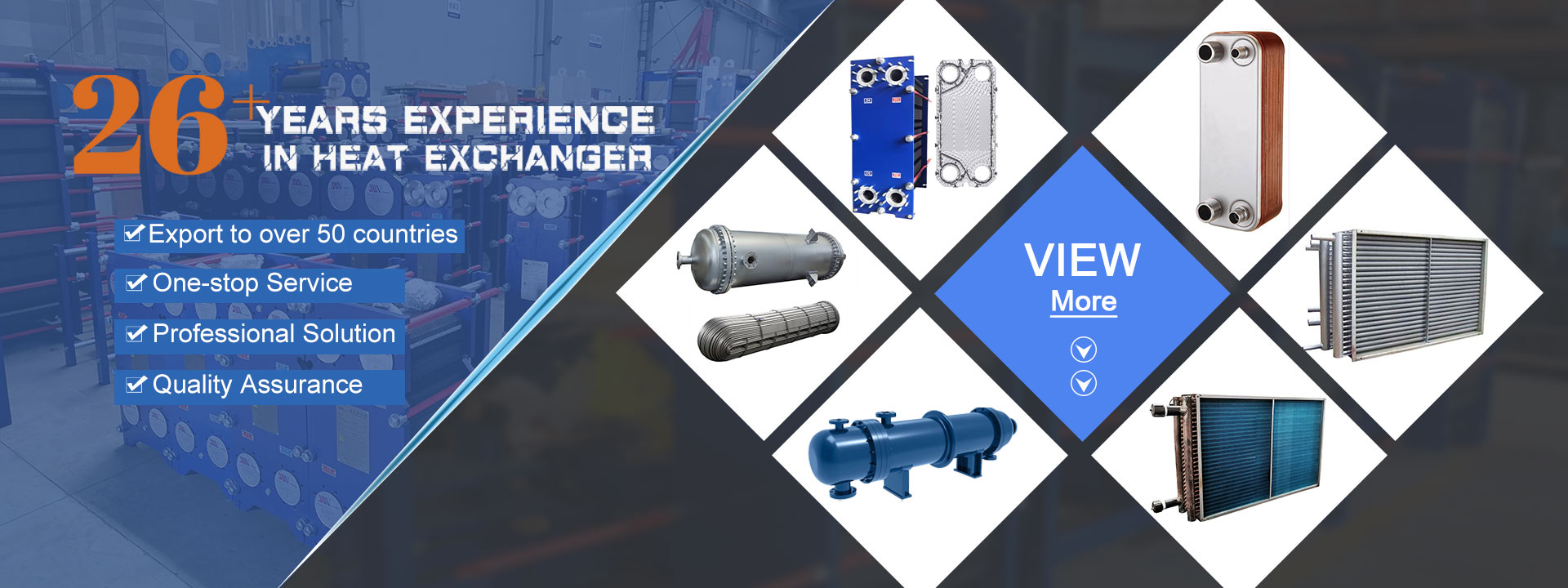
Plate Heat Exchanger with gaskets, made of stainless steel or titanium, features a durable frame and multiple plate options for various applications in HVAC, chemical processing, and more.
4. Key Features
* High heat transfer efficiency
* Compact and lightweight design
* Easy disassembly and cleaning
* Modular and expandable capacity
* Variety of plate materials available for different applications
* Corrosion-resistant construction options for handling corrosive fluids
* Available in gasketed, brazed, and welded configurations
5. Technical Details
* Plate material: stainless steel (SS304, SS316), Titanium, Alloy plates
* Plate thickness: 0.4–0.8 mm
* Temperature range: −50°C to +200°C
* Pressure rating: up to 25 bar
* Flow rate: 5–5000 m³/h
6. Advantages
* Space-saving design compared to shell-and-tube heat exchangers
* Reduced fouling due to turbulent flow
* High heat transfer coefficient
* Easy maintenance and cleaning procedures
* Suitable for viscous and non-Newtonian fluids
* Wide range of materials available for corrosion resistance
7. Applications
* HVAC systems (heating, cooling, district energy)
* Chemical and petrochemical processes
* Food and beverage industry
* Power generation
* Marine and oil & gas industry
8. FAQs
Q1: What is the difference between a gasketed and a brazed plate heat exchanger?
A: Gasketed plate heat exchangers can be taken apart for cleaning or maintenance, while brazed PHEs are sealed and do not require disassembly.
Q2: Can plate heat exchangers handle corrosive fluids?
A: Yes, PHEs made with corrosion-resistant materials like titanium or special alloys can handle corrosive fluids.