1. Introduction
Heat transfer tubes require sufficient surface area for heat exchange.
Bare tubes offer only their original outside surface.
A Low Fin Tube offers additional surface area without creating a very large OD.
This means low fin tubes offer good balance of transfer area vs. compact heat exchanger design.
They are formed with relatively short fins which project outwards from the tube surface.
The fins themselves offer additional surface area for contact with the external fluid.
Thus low fin tubes find use in many shell and tube heat exchangers.
They are also applied in equipment for liquids, gases, steam, refrigerants, and process fluids.
In addition, manufacturers can make low fin tubes from materials such as copper, aluminum, stainless steel, and carbon steel.
Exact material selection will depend on temperature, pressure, corrosion conditions, and heat transfer needs.
2. What Is a Low Fin Tube?
Essentially, a low fin tube is a heat transfer tube with small fins on the outside.
Compared to standard high fins, the fin height of low fins is shorter.
As a result, the finished tube will have a smaller outside diameter.
Fin can be formed directly onto the tube surface via mechanical forming among other techniques.
Compared to a bare tube, the finned surface offers additional heat transfer surface area.
Consequently, higher heat transfer rates can be achieved in a similar length tube.
Low fin tubes become especially advantageous when only a moderate increase in surface area is needed.
Compared to taller fins, low fins can also reduce complexity during cleaning and handling.
Low Fin Tubes for Heat Exchanger
3. How Does a Low Fin Tube Work?
Heat transfer operates on the same basic principles as other finned tubes.
One fluid passes through the inside of the tube.
Heat is transferred through the tube wall.
Then heat is transferred to the external fins.
Finally, heat is either absorbed or released by the external fluid.
The fins provide additional surface area on the outside of the tube.
As a result, more heat can transfer to or from the fluid outside the tube.
Low fins also disturb the flow of fluid around the tube.
This can help improve heat transfer under the right conditions.
However, fin geometry should be matched to both fluid properties and flow conditions.
Adding too much surface can actually increase pressure drop.
Therefore, it is important to balance heat transfer enhancement with hydraulic penalties.
4. Low Fin Tube Structure
Low fin tubes have several important design features which should be considered.
4.1 Base Tube
The base tube will carry the fluid on the inside.
The material of construction can vary based on application.
For example, copper is suitable for many HVAC or refrigeration applications.
Stainless steel could be used for corrosive industrial services.
4.2 Low External Fins
As mentioned earlier, fins project outward from the surface of the tube.
Compared to regular fins, their height is much shorter.
This allows for increased heat transfer surface area without a bulky tube.
4.3 Fin Pitch
Fin pitch refers to center-to-center distance between fins.
Smaller fin pitch allows for greater surface area.
However, too many fins can impede fluid flow on the outside of the tube.
As such, fin pitch needs to be optimized for each low fin tube application.
4.4 Fin Height
Fin height will determine how much additional surface area is added.
Taller fins create more surface area.
However, the “low” in low fin tubes indicates that the fins aren’t very tall.
This allows for a more compact size and easier manufacturing.
4.5 Tube Diameter
Tube diameter will affect velocity and heat transfer of the internal fluid.
Therefore, tube diameter should be sized according to thermal and hydraulic requirements.
5. Low Fin Tube Manufacturing Process
The quality of manufacturing will affect performance of low fin tubes.
As a result, manufacturers should use precision equipment and stable production.
5.1 Tube Preparation
The process begins with preparation of the base tube.
It will go through cleaning and dimensional inspection.
Surface condition can impact the tube during the forming process. Proper preparation promotes uniform production.
5.2 Tube Feeding
The tube then feeds into the fin forming machine.
During this stage, the machine controls speed and positioning.
Uniform feeding ensures consistent fin dimensions over the entire tube.
5.3 Fin Forming
The forming machine presses the fins directly onto the tube.
Rollers or other forming tools create the shape of each fin.
Consistent fin height and pitch is important during this stage.
5.4 Dimension Control
Dimensional checks of the finished fin profile are completed.
Critical dimensions include:
- Fin height
- Fin pitch
- Fin thickness
- Tube diameter
- OD of finished tube
- Tube length
Correct dimension ensures uniformity from one tube to the next.
5.5 Cutting and Finishing
Finally, the tube is cut to its final length.
Cutting and any needed end finishing takes place.
Finished goods then go through a final inspection before shipping.
Fin Tube Manufacturing Machine
6. Advantages of Low Fin Tubes
Low fin tubes can benefit heat exchanger designs in a number of ways.
6.1 Increased Heat Transfer Area
Adding fins to the outside increases total surface area.
Consequently, more heat can transfer from the tube compared to a bare tube of similar size.
6.2 Compact Design
Since low fins aren’t very tall, they don’t add much to the OD.
As a result, the finished product will be relatively compact.
Designers can use this to their advantage when sizing heat exchangers.
6.3 Moderate Pressure Drop
Low fins typically create less obstruction to airflow than taller fins.
As such, they provide useful surface area without serious penalties in suitable applications.
6.4 Good Mechanical Strength
Low profile fins offer good mechanical strength.
This strength also allows for easier handling during installation.
6.5 Easier Cleaning
Shorter fins can help simplify cleaning versus deeper fin designs.
This can be an advantage when fouling is expected on the external surface.
6.6 Flexible Material Options
Low fin tubes can be produced from various metals.
This allows engineers to choose a material suited for temperature and corrosion considerations.
6.7 Suitable for Compact Heat Exchangers
Thanks to their combination of increased surface area and compact size. Low fin tubes work well in many heat exchangers.
7. Low Fin Tube Materials
Material selection is important when considering product performance.
Different applications will call for different materials based on:
- Temperature
- Pressure
- Internal and external fluids
- Required service life
7.1 Copper
Copper has very good thermal conductivity.
This makes copper low fin tubes ideal for HVAC, refrigeration, and some heat exchangers.
Copper is also formable which aids the manufacturing process.
7.2 Aluminum
Aluminum is lightweight and has good heat conductivity.
Therefore, low fin aluminum tubes can help reduce weight where necessary.
Corrosion could be a concern with aluminum fins.
Engineers should assess the compatibility when using aluminum.
7.3 Stainless Steel
Stainless steel has high corrosion resistance.
As such, stainless steel low fin tubes work well in harsh industrial environments.
Higher temperatures can also be handled with stainless steel fins.
7.4 Carbon Steel
Carbon steel provides good strength and is cost effective.
These factors allow it to be used in many industrial heat transfer applications.
Carbon steel may require some corrosion protection.
7.5 Nickel Alloys
Nickel alloys have exceptional temperature and corrosion resistance.
These alloys are useful for many chemical process applications.
Their high cost means each application should be carefully considered.
8. Applications of Low Fin Tubes
Low fin tubes are versatile heat transfer components.
Many different equipment types take advantage of their unique surface geometry.
8.1 Shell and Tube Heat Exchangers
Heat exchanger designers often need enhanced tubes surfaces.
Low fin tubes offer increased heat transfer area without greatly increasing tube diameter.
As a result, these tubes can facilitate compact heat exchanger designs.
8.2 HVAC Equipment
HVAC requires dependable heat transfer performance.
Low fin tubes work well in heating or cooling applications.
These tubes can also offer convenient surface enhancement for small coil designs.
8.3 Refrigeration
Refrigeration processes need efficient heat transfer operations.
Low fin tubes allow for increased external heat transfer surface area.
As a result, these tubes work well in some evaporator and condenser applications.
8.4 Oil and Gas
Heat exchangers operate at nearly every stage of oil and gas processing.
Low fin tubes provide additional surface area for appropriate process conditions.
In these industries, material compatibility is also important.
8.5 Chemical Processing
Chemical plants often work with corrosive fluids or hot temperatures.
Stainless steel and special alloys can resist these conditions.
As a result, engineers may select these materials for low fin tubes.
8.6 Power Generation
Power generation uses numerous heat recovery and cooling operations.
Low fin tubes are one option to consider if moderate surface enhancement is needed.
8.7 Heat Recovery
Heat recovery systems use process fluids or exhaust gases to capture energy.
Low fin tubes allow for more transfer surface area to be installed.
Consequently, heat recovery systems may be more compact.
9. Low Fin Tube vs Bare Tube
Increased surface area is the primary difference between these two types of tubes.
A bare tube offers only its bare outer cylindrical surface.
A low fin tube adds numerous small external fins to the surface.
As a result, low fin tubes provide more total surface area.
Feature | Low Fin Tube | Bare Tube |
Surface area | Increased | Standard |
Heat transfer potential | Higher | Lower |
Outside profile | Compact | Very compact |
Flow resistance | Moderate | Low |
Cleaning | Relatively easy | Very easy |
Heat exchanger size | Can be reduced | May require more area |
Typical use | Enhanced heat transfer | Basic heat transfer |
Low fin tubes are sometimes described as a middle ground. They provide more surface area without the extreme resistance of aggressive fin designs.
10. Low Fin Tube vs High Fin Tube
Low fin tubes and high fin tubes are meant for different applications.
High fins create more surface area.
The tradeoff is increased overall diameter and greater flow resistance.
Low fins allow for moderate surface area enhancement.
As a result, low fins work well in applications where space is limited.
Feature | Low Fin Tube | High Fin Tube |
Fin height | Low | Higher |
Surface enhancement | Moderate | High |
Tube profile | Compact | Larger |
Flow restriction | Generally lower | Potentially higher |
Cleaning | Easier | May require more attention |
Compactness | Excellent | Depends on design |
Typical application | Heat exchangers | Air-side heat transfer |
Low fin tubes should only be used when their heat transfer and flow resistance levels match the application.
11. How to Select a Low Fin Tube
Selecting low fin tubes requires understanding their strengths and limitations.
11.1 Heat Transfer Needs
First, understand how much heat needs to be transferred.
Heat transfer needs affect tube diameter, fin height, and tube length decisions.
11.2 Fluid Considerations
Second, what fluids will be on the inside and outside?
Fluid viscosity, density, conductivity, and flow rate impact heat transfer.
11.3 Temperature Requirements
Will the selected material hold up at the operating temperature?
Consider operating temperature during the preliminary design phase.
11.4 Pressure Conditions
Internal pressure impacts tube thickness and material choice.
Make sure pressure requirements agree with tube specs.
11.5 Corrosion Potential
Internal and external corrosion should both be considered.
Always choose tube material that can handle the process conditions.
11.6 Fin Configuration
Fin height and pitch will affect heat transfer and pressure drop.
Engineers should optimize fin geometry, not just maximize surface area.
11.7 Maintenance Concerns
How often will the heat exchanger need to be cleaned?
Low fin tubes offer beneficial maintenance characteristics in some cases.
11.8 Available Space
Finally, what is the maximum heat exchanger size?
Low fin tubes have compact designs that may help with tight spaces.
12. Low Fin Tube Heat Exchanger
Installing low fin tubes in a heat exchanger allows extra surface area without significantly impacting the exchanger size.
This tradeoff is ideal when the heat exchanger must stay within certain size constraints.
Low fin tubes are commonly used in shell and tube heat exchangers.
Tuning fin geometry helps meet thermal transfer needs while controlling pressure drop.
Tube diameter, fin height, and fin pitch all play a role in heat exchanger performance.
Remember that heat exchanger selection depends on many factors.
These include:
- Heat duty
- Fluid Temperature
- Flow Rate
- Pressure
- Tube material
- Fin height
- Fin pitch
- Tube OD
- Corrosion considerations
- Maintenance requirements
When chosen correctly, low fin tubes become one component of an efficient heat exchanger system.
13. Why Choose Us?
Picking the right fin tube is more complicated than finding a tube with the right outer diameter.
The manufacturer should also understand your heat transfer needs, material limitations, fin configuration, and production process.
Bangwin Thermal specializes in manufacturing industrial heat transfer equipment and finned tube solutions.
Bangwin Thermal can provide several types of fin tubes for industrial heat exchanger applications.
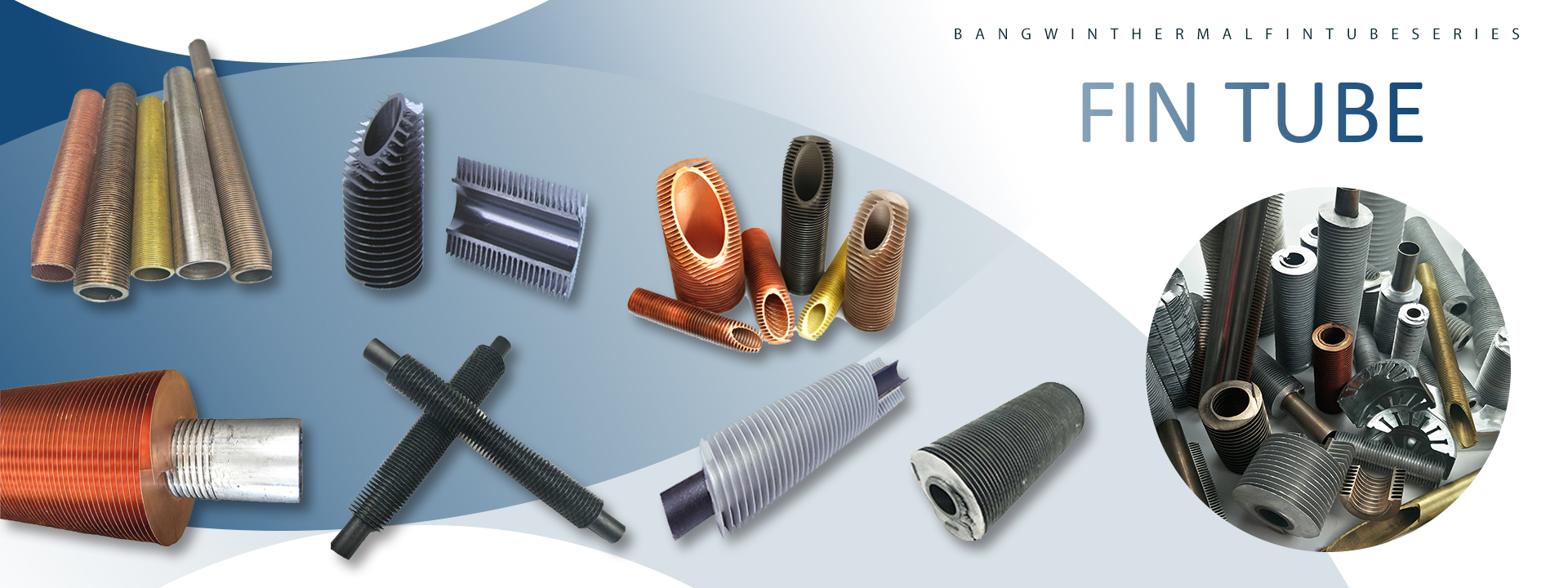
Customers can choose from low fin tubes, extruded fin tubes, high frequency welded fin tubes and laser welded fin tubes.
Therefore, customers have multiple fin tube solutions to choose from based on their application needs.
Need custom fin tubes for your next project? Check out Bangwin Thermal.
Home
High Frequency Welded Fin Tube
Fin Tube Machine
14. FAQ
14.1 What is a low fin tube?
Low fin tubes are heat transfer tubes with short fins on the outside of the tube.
These fins increase the outside surface area of the tube.
14.2 What are low fin tubes used for?
Low fin tubes see use in shell and tube heat exchangers, HVAC systems, refrigeration, industrial processing, power generation equipment, and heat recovery.
14.3 Why would someone use low fin tubes?
Low fin tubes allow additional surface area for heat transfer without greatly increasing the outer size of the tube.
14.4 What are low fins made of?
Low fin tubes can be copper, aluminum, stainless steel, carbon steel, or other alloys depending on the application requirements.
14.5 Can you tell me the difference between low fins and plain tubes?
Low fins have extra surface area. Plain tubes do not.
As a result, low fins can transfer more heat than plain tubes.
14.6 Are low fins better than plain fins?
Low fins provide more external surface area.
If increasing heat transfer is your goal, low fins would be considered better than plain tubes.
Plain tubes have advantages too. If minimizing cost, cleaning effort, or flow resistance are your goals, plain tubes would be better than low fins.
14.7 What is the difference between low fin tubes and high fin tubes?
Low fin tubes use short fins to enhance the surface area of the tube.
High fin tubes use tall fins to greatly enhance the surface area of the tube.
Low fin tubes will have a smaller outer diameter than high fin tubes.
14.8 Do you customize low fin tubes?
Yes! Low fin tube dimensions and fin geometry can be customized to your specifications.
Manufacturing limits exist, but we can discuss tube diameter, fin height, fin pitch, wall thickness, and tube length.
14.9 How do low fins work?
Adding low fins to a tube increases its surface area.
Increasing a tube’s surface area allows more heat to be transferred to or from the fluid surrounding the tube.
14.10 Can you use low fin tubes for industrial heat exchangers?
Absolutely. Low fin tubes are used in many heat exchanger applications.
However, take note of the pressure rating, temperature limits, corrosion resistance, flow rate, and material compatibility before making your selection.
15. Conclusion
Low Fin Tubes have external fins that enhance the tube’s surface area.
These short fins allow increased heat transfer compared to a bare tube.
Low fin tubes can be used in many heat exchanger applications when space is limited.