1. Introduction
Improving the energy performance of industrial systems requires efficient heat transfer. Therefore, low fin tubes are a go-to design solution for many engineers.
At the tube’s outer wall, low fin tubes add a helical arrangement of circumferential fins. Therefore, systems designed with low fin tubes are thermally efficient and can be compact.
Today, low fin tubes are used in HVAC, petrochemicals, power generation, refrigeration, marine, and many more. Additionally, low fin tubes excel in gas as well as liquid heat transfer.
At Bangwin Thermal, we offer cutting-edge fin tube and heat exchanger technologies around the globe. For industrial solutions that are tailored to your needs, visit Bangwin Thermal.
2. What Is a Low Fin Tube
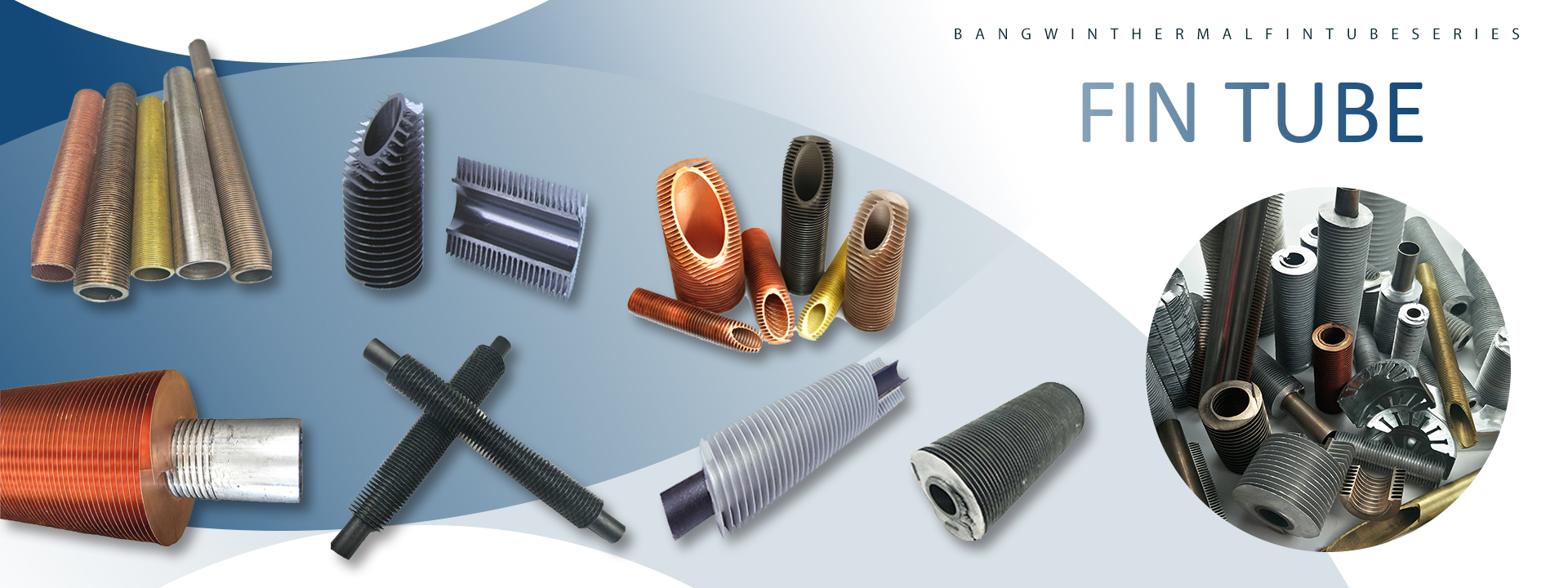
Low fin tubes are heat transfer tubes with helical fins of shallow depth on their outer surface. The fins are an extension of the tube itself.
Manufacturers use mechanical rolling or extrusion to produce these fins. As a result, the fin tube retains its structural integrity.
Low fin tubes are an optimum solution for a reasonable pressure drop while maximizing surface area for heat transfer.
To many industries, low fin tubes represent a solution to their need for efficient heat exchangers with a compact design.
3. How a Low Fin Tube Works
Low fin tubes help enhance heat transfer through surface area extension.
Initially, the system directs fluid through the tube. Thereafter, heat transfer through the wall of the tube occurs.
Fins that are external to the tube wall increase the surface area for heat transfer. Thus, the external liquid or gas absorbs heat more readily.
The following details each step of the process:
– Fluid enters the respective tube.
– Heat transfers throughout the wall.
– Low fins help increase the surface area.
– External medium absorbs heat.
– Heat dissipates.
– Fluid exits the system.
Due to their design, low fin tubes enhance thermal functioning of a system without any additional intricate design requirements.
4. Manufacturing Process
Low fin tubes can be produced due to technological advancements in precision forming.
– Operators prepare the base tubes.
– Machines Roll/extrude fins to the base tube.
– Inspections occur to verify fins were rolled to the required height and proper spacing.
– Tubes are cut and finished
The above process repeats to prepare base tubes, roll/extrude surface fins, verify dimensions, perform quality checks, and then package the tubes.
Contemporary systems strictly abide by the specifications set by heat exchanger manufacturers.
5. Structure of Low Fin Tube
A low fin tube consists of several key components.
5.1 Base Tube
Carries process fluid and provides structural support.
5.2 Low Profile Fins
Increase surface area, but are shallow.
5.3 Helical Pattern
Enhances the efficiency of heat transfer.
5.4 Tube wall
Conducts heat from the inner to the outer side of the tube.
5.5 Surface Finish
Protective coating to help prevent corrosion, and increase overall performance.
6. Types of Low Fin Tubes
Due to differing application requirements, low fin tubes differ in design.
A commonly used Low fin tube design in most HVAC systems due to its lightweight properties.
Used for refrigeration due to its enhanced thermal properties.
6.3 Stainless Steel Low Fin Tube
Used for low fin tube systems in environments that corrosive.
A cost effective low fin tube design used in various industrial systems.
Further Optimized tube design that greatly improves heat transfer.
7. Advantages
A low fin tube design encompasses multiple advantages.
7.1 Improved heat transfer
Higher surface area improves efficiency in heat transfer.
7.2 Low pressure drop
Helps maintain a smooth flow throughout the system.
7.3 Compact Design
This leads to a reduction in the size of devices.
7.4 Cost Efficiency
The cost of production is lower when compared to conventional complex fin systems.
7.5 High Reliability
Stable performance for a long period of time.
For these reasons, low fin tube systems are used widely.
8. Applications
Low fin tubes are used in different fields.
8.1 HVAC Systems
Supports heating and cooling applications.
8.2 Refrigeration Equipment
Improves cooling performance.
8.3 Power Plants
Engineers install these tubes in condensers and heat recovery systems.
8.4 Petrochemical Industry
Supports industrial heating and cooling processes.
8.5 Marine Systems
Provides reliable cooling performance.
8.6 Industrial Heat Exchangers
Handles a wide range of thermal applications.
9. Low Fin Tube vs Smooth Tube
Low fin tubes outperform smooth tubes.
Due to the limited surface area of smooth tubes, low fin tubes highly increase thermal contact.
This leads to a significant increase in heat transfer.
Along with this, low fin tubes offer the advantage of a lower pressure drop compared to high fin tubes.
10. Selection Guide
The right choice of low fin tubes allows higher performance.
10.1 Operating Temperature
High temperature systems require a different choice of material.
10.2 Corrosion Resistance
For highly corrosive environments, stainless steel is used.
10.3 Heat Load
Higher heat load requires the fins to be designed with greater precision.
10.4 Fluid Type
If the fluid is a gas or liquid impacts the choice.
10.5 System Design
Low fin structures are suitable for compact systems.
For more details, go to the Bangwin Thermal Official Website as they can provide customized solutions.
11. Maintenance Tips
Periodic maintenance helps improve performance.
This includes detailed inspections of tube surfaces and cleaning of dust and deposits.
Also, check the condition of fins and monitor efficiency of the system.
And finally, check that airflow and the fluid are balanced.
Standards for the maintenance and cleaning of heat exchangers are followed by most industries.
12. Why Choose Bangwin Thermal
Bangwin Thermal caters to all your world-wide heat transfer solution needs.
We provide:
- Personalized fin tube designs
- Complete industrial heat exchanger systems
- Consistent quality
- Engineering
- Cost effectiveness
- International delivery
Fin tubes and thermal systems are our areas of expertise.
Learn more about us at Bangwin Thermal.
Home
13. FAQ
- What is a low fin tube?
A low fin tube features shallow external fins that improve heat transfer efficiency.
- Where is it used?
Engineers use low fin tubes in HVAC, refrigeration, petrochemical, power generation, and marine systems.
- What is its advantage?
The main advantage is enhanced heat transfer with minimal pressure drop.
- What materials are used?
They are made from Copper, Aluminum, Stainless Steel and Carbon Steel.
- How is it different from high fin tubes?
They have smaller fins and low fin tube have low resistance.
- Where can I buy it?
You can find solutions at Bangwin Thermal.
14. Conclusion
Low fin tube technology offer a great solution for heat transfer that are efficient, compact and cost effective.
It enhances thermal transfer with low resistance and is reliable.
Because of these it is a popular choice for modern industrial systems.
Bangwin Thermal provides expert solutions for fin tubes and heat exchangers around the globe.