Complete Engineering Guide to L Type Finned Tubes in Air-Cooled Heat Exchangers
1. Direct Answer: What Is an L Type Finned Tube?
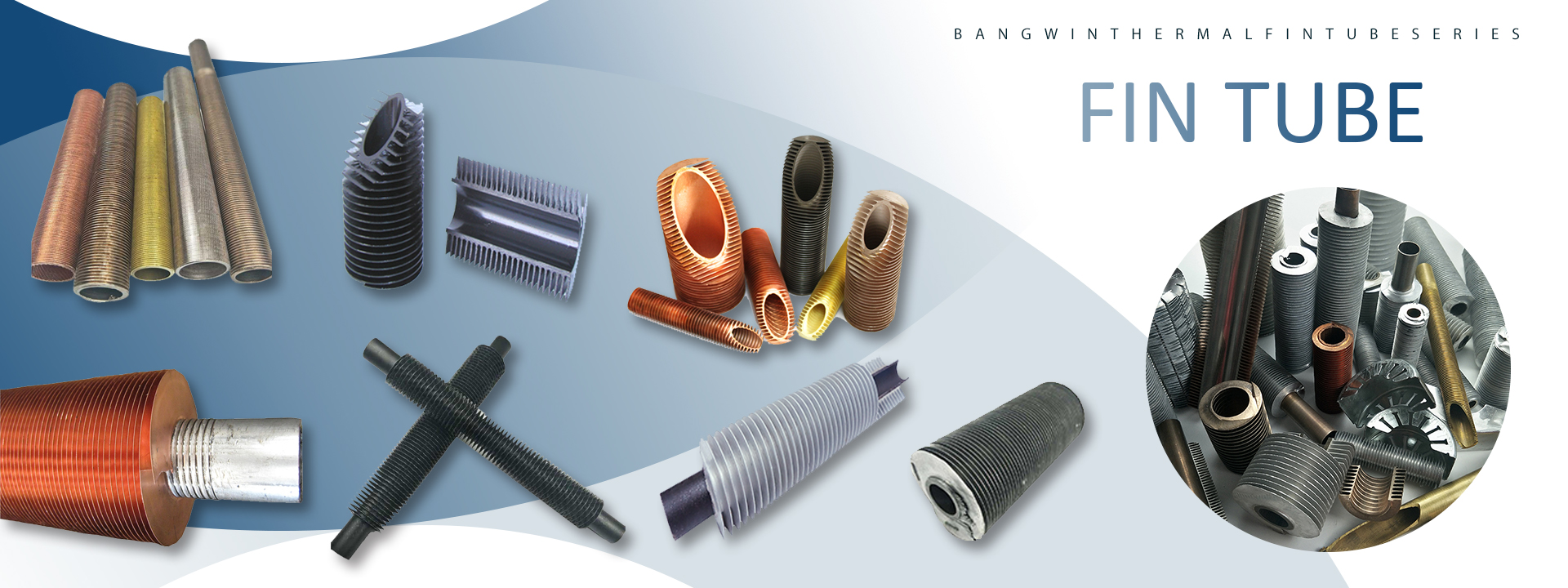
An L type finned tube (also known as an L-foot or wrap-on finned tube) is an extended surface heat transfer pipe where a continuous aluminum or copper fin strip is mechanically formed into an “L” shaped profile and wound helically under high tension around a base tube. The horizontal foot of each “L” overlaps against the base tube wall, providing continuous atmospheric corrosion protection to the base metal while maximizing gas-side heat transfer area. It is widely specified for air-cooled heat exchangers (ACHE), air coolers, compressor intercoolers, and industrial radiators operating at temperatures up to 130°C (266°F).
Thermal engineers select L type finned tubes when air-side heat transfer resistance dominates fluid-side resistance, requiring a cost-effective, lightweight surface enhancement for low-to-moderate temperature systems.
2. Manufacturing Method: How Tension-Wound L-Foot Geometry Is Formed
L type finned tubes are produced using specialized cold-forming fin winding machines that combine continuous strip feeding, roll-forming, and helical tension control.
The Step-by-Step Production Process
Base Tube Surface Cleaning
- : The core tube (carbon steel, stainless steel, or copper) is mechanically cleaned and degreased to ensure maximum contact surface.
Fin Strip Profile Forming
- : A continuous flat strip of aluminum (typically Grade 1050, 1060, or 1100) passes through precision profiling rollers that bend one edge by 90 degrees, forming an exact “L” shaped foot.
Helical Tension Wrapping
- : The profiled fin strip is wound under calibrated mechanical tension around the rotating base tube. The controlled tension stretches the outer fin edge while compressing the inner foot firmly against the tube wall.
End Fastening and Trimming
- : The fin ends are mechanically secured or stapled to maintain tension and prevent unwrapping during transport, handling, and tube bundle assembly.
The radial contact pressure generated by helical tension ensures tight thermal contact between the aluminum L-foot and the base pipe wall without welding or grooving the base pipe.
3. Comparison Matrix: L-Type vs. LL-Type vs. KL-Type vs. Extruded Tubes
Choosing among tension-wound and mechanical fin designs depends on maximum operating temperature, atmospheric corrosiveness, and project budget.
Technical Comparison Matrix
Feature / Metric | L Type Finned Tube (L-Foot) | Double L (LL-Type) | Knurled L (KL-Type) | Extruded Finned Tube |
Manufacturing Method | Tension-wound single L-foot | Tension-wound overlapping double L-foot | Knurled base tube + knurled L-foot | Bimetallic cold roll extrusion |
Max Operating Temp. | 130°C (266°F) | 160°C (320°F) | 250°C (482°F) | 300°C (572°F) |
Atmospheric Corrosion Protection | Good (partial base tube cover) | Excellent (complete base tube overlap) | Excellent (tight mechanical grip) | Complete (seamless aluminum sleeve) |
Bond Type | Mechanical tension | Mechanical tension overlap | Mechanical knurled interlock | Metallurgical/Mechanical bimetallic bond |
Relative Cost | Economical () | Moderate () | Moderate () | Higher () |
Cleaning Resistance | Moderate (low-pressure washing) | Moderate (low-pressure washing) | High (supports moderate pressure) | Exceptional (high-pressure water jet) |
Key Engineering Rule: Specify standard L type finned tubes for clean ambient air and operating temperatures under 130°C. Upgrade to LL-type or KL-type if the base tube requires complete outer coverage in coastal environments, or select extruded tubes for heavy wash-down cycles.
4. Material Combinations and Metallurgy
The hybrid construction of L type finned tubes allows designers to pair an optimal inner corrosion barrier with high-conductivity exterior aluminum fins.
Common Base Tube Materials
Carbon Steel
- : ASTM A179 (cold-drawn seamless), ASTM A214 (welded), ASTM A106 Gr. B for standard oil, water, and steam duties.
Stainless Steel
- : ASTM A249 / A312 (Grades 304, 304L, 316, 316L, 321) for corrosive chemical process streams, food processing, and condensing steam.
Copper and Copper Alloys
- : ASTM B111 (C12200, C70600 90/10 Cu-Ni, C44300 Admiralty Brass) for marine chillers, HVAC condensers, and potable water cooling.
Titanium & Duplex Steels
- : For aggressive offshore and chemical refinery environments.
Fin Strip Material
Aluminum 1060 / 1050 / 1100
- : Purity
, providing high thermal conductivity (≈205 W/m⋅K) and excellent ductility for tension wrapping.
Copper Fins (C11000)
- : Used in specialized marine or aggressive environments where galvanic compatibility with copper base tubes is mandatory.
5. Thermal Efficiency and Mechanical Operating Limitations
Understanding the physical limits of an L type finned tube prevents premature thermal degradation in service.
Operating Temperature Ceiling (130°C)
- : Aluminum expands at roughly twice the rate of carbon steel (αAl≈23×10−6/Kvs. αSteel≈12×10−6/KαSteel≈12×10−6/K). Above 130°C, differential thermal expansion relaxes the winding tension, creating a microscopic air gap that drastically lowers heat transfer.
Contact Thermal Resistance
- : Under design temperatures, the tensioned L-foot maintains consistent conductance. However, thermal cycling beyond rated limits permanently loosens the mechanical bond.
Low Pressure Drop Design
- : Smooth aluminum fin surfaces deliver minimal air-side static pressure drop, reducing forced-draft fan power consumption.
Lightweight Structural Advantage
- : Aluminum fins add substantial heat transfer surface area with less than 20% of the weight of comparable all-steel welded tubes.
6. Standard Sizing and Geometric Dimensions
Custom L type finned tubes are manufactured to match precise aerodynamic and thermal sizing models.
Standard Dimensional Capabilities
Base Tube Outside Diameter (OD)
- : 12.7 mm to 50.8 mm (0.50″ to 2.0″) — standard sizes: 19.05 mm (3/4″), 25.4 mm (1.0″), 31.75 mm (1-1/4″), 38.1 mm (1-1/2″).
Fin Height
- : 9.5 mm to 15.875 mm (0.375″ to 0.625″) — typical standard: 12.7 mm (1/2″) and 15.875 mm (5/8″).
Fin Thickness
- : 0.35 mm to 0.50 mm (0.014″ to 0.020″).
Fin Density (FPI)
- : 7 to 12 fins per inch (275 to 472 fins per meter) — standard: 10 FPI and 11 FPI.
Tube Length
- : Up to 18 meters (60 feet) continuous finned length.
7. Common Sizing and Maintenance Mistakes to Avoid
Exceeding Maximum Design Temperature
- : Installing L type finned tubes in gas streams above 130°C causes fin relaxation and rapid loss of heat duty.
Aggressive High-Pressure Water Jetting
- : Cleaning tension-wound aluminum fins with high-pressure nozzles (>50 bar) can bend or flatten the thin fin blades, restricting airflow. Always use low-pressure foam washing or air blasting with fin combs.
Neglecting Galvanic Corrosion in Saline Coastal Air
- : In aggressive marine environments, salt moisture trapped under the L-foot can cause galvanic reaction between carbon steel and aluminum. Specify double L-foot (LL) or bimetallic extruded tubes in high-salinity zones.
Over-Tight Tube Spacing
- : Selecting excessive fin density (e.g., 12 FPI) in dusty outdoor environments accelerates airborne fouling and increases fan motor loading.
8. Industrial Application Scenarios: Where L Type Tubes Excel
L type finned tubes are the primary choice across multiple air-cooled cooling and condensing duties:
Air-Cooled Heat Exchangers (ACHE / Fin-Fan Coolers)
- : Used extensively in oil & gas refineries, petrochemical plants, and natural gas compressor stations for closed-loop process fluid cooling.
Power Generation & Turbine Auxiliary Coolers
- : Cooling lubricating oils, generator closed-circuit cooling water, and transformer cooling radiators.
HVAC and Commercial Refrigeration
- : Air-cooled condensers, large chillers, and industrial dehumidifiers.
Diesel Engine and Compressor Radiators
- : Jacket water and charge air intercoolers/aftercoolers in tropical and industrial environments.
9. Sourcing Custom L Type Finned Tubes from Nanjing Bang Win
Procuring quality-controlled L type finned tubes ensures dependable thermal rating and mechanical longevity.
Nanjing Bang Win Thermal Equipment Co., Ltd. is a professional manufacturer of industrial heat exchangers, finned tube bundles, and automated finning machinery. Bang Win produces custom L type, LL type, KL type, and high-frequency welded finned tubes to exact project drawings and thermal performance specifications.
Manufacturing and Service Highlights:
Precision Tension Control
- : Automated fin winding lines ensure constant root contact pressure and tight spacing tolerances along the entire tube length.
Broad Material Selection
- : Custom pairing of carbon steel, copper, brass, stainless steel, and high-purity aluminum fin strips.
Strict Quality Assurance
- : Full dimensional verification, fin strip tensile testing, bond tightness audits, and hydrostatic pressure testing of complete tube bundles.
Global Export Support
- : Export-standard seaworthy wooden case packaging and custom tube bundle framing ready for direct field installation.
For technical specifications, replacement bundle drawings, or volume quotes, visit the official website at customindustrialheatexchanger.com.
10. Frequently Asked Questions (FAQ)
l What is the maximum operating temperature for an L type finned tube?
The recommended maximum continuous operating temperature for a standard aluminum L type finned tube is 130°C (266°F). Operating above this threshold causes the aluminum to expand faster than the steel base pipe, relaxing the mechanical tension and degrading heat transfer performance.
l How does an L type finned tube differ from an LL type finned tube?
An L type finned tube has a single bent foot that rests against the base tube, whereas an LL (Double L) finned tube features an overlapping foot profile where each fin overlaps the previous one, completely enclosing the base tube for superior atmospheric corrosion protection.
l Can L type finned tubes be cleaned with high-pressure water?
L type aluminum fins are thin (0.35 mm–0.50 mm) and can bend under direct high-pressure water jets. Operators should use low-pressure water sprays (below 30–40 bar), specialized chemical foam cleaners, or compressed air lances directed parallel to the fin blades.
l Does the L-foot completely protect the base tube from corrosion?
A single L-foot covers most of the base tube surface but does not create a hermetic seal. In aggressive coastal or marine atmospheres with airborne chlorides, moisture may penetrate the fin seams. For severe corrosive atmospheres, LL-type, KL-type, or extruded bimetallic tubes are recommended.
l What are the most common tube diameters for L type finned tubes?
The most widely used base tube outer diameters in air-cooled heat exchangers are 25.4 mm (1.0 inch) and 19.05 mm (3/4 inch), typically paired with 12.7 mm or 15.875 mm high aluminum fins at 10 or 11 fins per inch.
l Why is aluminum the standard material for L-type fins?
Aluminum offers high thermal conductivity (approx. 205 W/m·K), low material density, excellent ductility for cold tension forming, and cost effectiveness compared to copper or stainless steel.
11. Conclusion and Next Steps for Thermal Procurement
The L type finned tube provides a proven, cost-effective extended surface solution for air-cooled heat exchangers, radiators, and industrial process cooling below 130°C. Its tension-wound aluminum L-foot delivers excellent heat dissipation while keeping bundle weight and fan power requirements to a minimum.
When preparing your procurement specifications:
- Confirm maximum process fluid temperature and ambient air conditions.
- Verify base tube material compatibility with the internal fluid stream.
- Select appropriate fin height and FPI to balance heat duty against air-side pressure drop.
- Source from a manufacturer with automated tension-controlled winding lines and certified quality testing.
For custom sizing assistance, replacement bundles, or engineering quotes, contact the technical team at Nanjing Bang Win Thermal Equipment Co., Ltd..