1. Pendahuluan
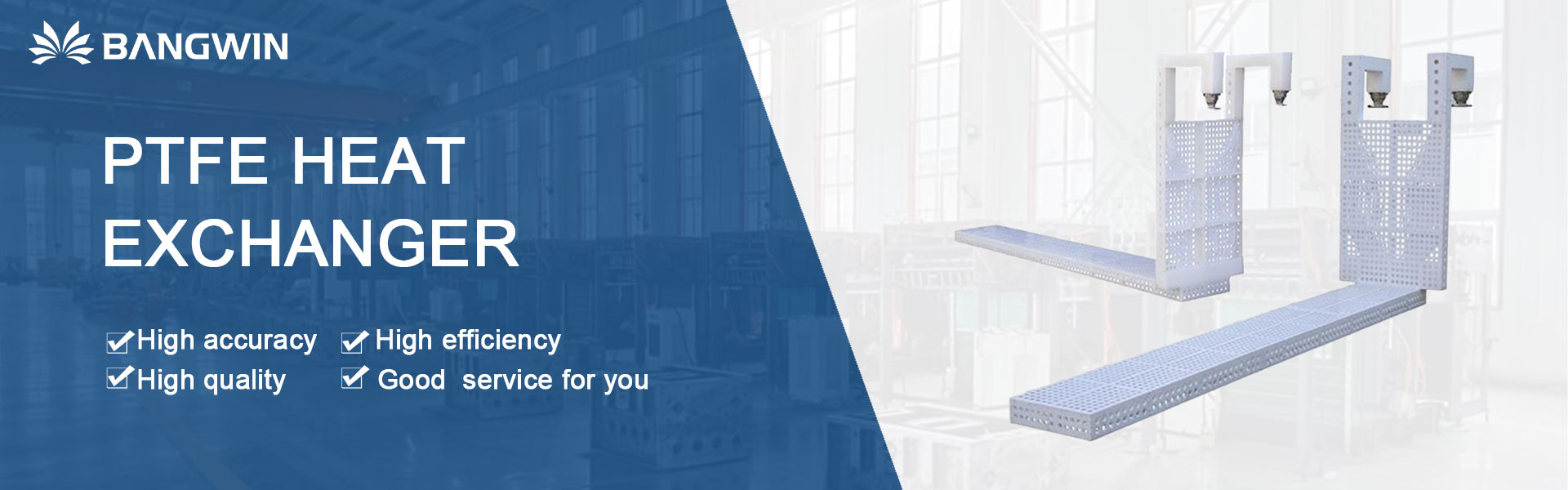
Highly corrosion resistant thermal equipment is necessary for today’s chemical industries. That is why many chemical factories choose a Peralatan pertukaran panas PTFE design for aggressive processing applications.
Metal heat exchangers are susceptible to corrosion from harsh chemical environments. But fluoropolymers can stand up to strong acids, alkalis, and corrosive liquids. Therefore, Peralatan pertukaran panas PTFEs allow for longer service life and reliable operation.
Peralatan pertukaran panas PTFEs are used extensively today in chemical processing, pharmaceutical, semiconductor, and electroplating industries. Also, as safety regulations get stricter, the need for corrosion-resistant heat transfer grows.
Bangwin Thermal supplies advanced industrial heat transfer systems to customers around the world. Visit Bangwin Thermal’s website to learn how we design custom thermal equipment for corrosive applications.
2.What Is a Peralatan Pertukaran Panas PTFE
A Peralatan pertukaran panas PTFE is a device that transfers heat between two fluids. It incorporates PTFE parts or fluoropolymer tubing in its design. Typically, the primary heat transfer area is made of PTFE material.
PTFE is short for polytetrafluoroethylene, which is a non-stick material with excellent chemical resistance. Therefore, it operates with outstanding results when used inside corrosive environments.
Peralatan pertukaran panas PTFEs do not degrade from contact with strong acids and corrosive chemicals like traditional stainless steel units. For this reason, many chemical plants use heat exchangers made with PTFE technology.
Mayoritas dari Peralatan pertukaran panas PTFEs are built with fluoropolymer tubes, shell cases, and corrosion-resistant valves. Also, heat exchanger designs vary to meet specific process needs.
If you search online for Peralatan pertukaran panas PTFE, you will find many companies in need of durable heat transfer systems. These systems are required for processing corrosive liquids in various applications. PTFE technology is extremely useful in the chemical industry.
Visit Chemours to learn more about different kinds of fluoropolymers. Check out online resources like Chemical Processing Magazine for more technical information.
3. Prinsip Kerja dari sebuah Peralatan Pertukaran Panas PTFE
Heat is applied to a fluid and is transferred to another fluid without mixing both streams. Simply, Hot Fluid enters into the heat exchanger from one Stream.
Cold Fluid goes through parallel PTFE tubes / chambers respectively. After that, Thermal Energy is exchanged from the hot to cold fluid via the PTFE Medium.
During the process, the PTFE construction isolates the heat exchanger from chemical erosion. As a result, the Peralatan pertukaran panas PTFE experiences less permanent decline in operation.
Additionally, some systems allow a counterflow to increase the exchanger effectiveness. Thus, allowing the highest level of heat exchange efficiency.
These steps typically consist of:
- Introduction of Fluids
- Transfer through PTFE Tube-side
- Shell-side flow
- Heat Transfer
- Removal of Fluids
- Temperature Control
Due to this consistent cycle, thermal regulation can be used safely in hazardous services.
Furthermore, facilities can incorporate these heat exchangers with other types of industrial heat exchangers for full chemical processing.
4 Things You Need to Know About a Peralatan Pertukaran Panas PTFE
- Peralatan pertukaran panas PTFEs are made up of many components. Each individual component provides support for corrosion resistance and thermal effectiveness.
4.1 Tubes
Made of PTFE these transfer heat and resist chemical corrosion.
4.2 Shell
The shell helps support the fluid that is being transported and protects the system.
4.3 Lembaran Tabung
Hold tubes securely in place.
4.4 Ports
Allow fluid to enter and exit the heat exchanger.
4.5 Supports
Helps support the heat exchanger while in use.
Some production systems are integrated right into heat exchanger manufacturer fabrication technology.
5. Types of Available Peralatan Pertukaran Panas PTFEs
Buyers have several choices when considering PTFE exchanger styles. Various industries need different applications so producers offer multiple designs.
5.1 PTFE Shell and Tube Heat Exchanger
Shell and tube style heat exchangers utilize PTFE tubes within a shell configuration. For this reason, they resist extremely aggressive chemicals.
5.2 Immersion PTFE Heat Exchanger
Chemicals manufacturers can install immersion type systems directly into their tanks with PTFE coils.
Many businesses prefer coil style heat exchangers because they are compact and offer versatility.
5.4 Compact PTFE Heat Exchanger
Compact style allows for installation with minimal space.
Customers often review these options alongside regular penukar panas cangkang dan tabung equipment.
6.Peralatan pertukaran panas PTFE Manfaat
Peralatan pertukaran panas PTFEs offer many benefits for industrial applications. That’s why they remain in high demand among chemical industries.
6.1 Great corrosion resistance
PTFE withstands powerful acids, alkaline agents and highly corrosive substances.
6.2 Longer life span
Operation time of the equipment increases due to corrosion-resistant design.
6.3 Non-stick surface
Maintenance and removal of fouling and scaling is less due to PTFE surface.
6.4 Chemically stable
PTFE operates without degradation in severe chemical environments.
6.5 Reduced Maintenance Cost
Maintenance cost decreases due to excellent corrosion resistance.
Chemical plants often combine these heat exchangers with industrial AC units for cooling processes.
7 Where can I use Peralatan pertukaran panas PTFEs?
Extensive use of Peralatan pertukaran panas PTFEs in industries for corrosive process control.
7.1 Chemical Plant
Use Peralatan pertukaran panas PTFEs for corrosive acid and alkali process control.
7.2 Electroplating
Use corrosion resistant heat exchangers for electroplating process heating and cooling.
7.3 Semiconductor
Use ultra clean Peralatan pertukaran panas PTFEs for chemical processing.
7.4 Pharmaceutical
Peralatan pertukaran panas PTFEs provide chemical process control for pharmaceutical and hygienic applications.
7.5 Wastewater Treatment
Treatment of corrosive liquids occurs in wastewater treatment.
Customers who are looking for Peralatan pertukaran panas PTFE often require custom made corrosion resistant heating or cooling systems.
8. Peralatan Pertukaran Panas PTFE vs Metal Heat Exchanger
Choosing between a Peralatan pertukaran panas PTFE and metal heat exchanger is common among manufacturers before purchasing.
PTFE gives excellent corrosion resistance against aggressive chemicals. In comparison, metal heat exchangers generally have better thermal conductivity.
PTFE systems also provide good resistance against chemical contamination. As a result, manufacturers tend to implement them where the service is highly corrosive.
On the other hand, stainless steel exchangers can handle high-pressure applications better in many cases.
Factories will often purchase both technologies to service different chemicals or areas of their operation.
9. How to Choose the Right Peralatan Pertukaran Panas PTFE
Purchasing the right exchanger allows you to operate your process safely and efficiently. As a result, there are several important factors to consider when buying.
9.1 Chemical Compatibility
You will need different configurations of PTFE material depending on the chemical being processed.
9.2 Operating Temperature
Your expected temperature conditions can determine what style of exchanger you should purchase.
9.3 Flow Rate Requirements
Your application will dictate your thermal capacity requirements.
9.4 Installation Space
If you have limited space for installation, smaller compact systems will be ideal.
9.5 Maintenance Accessibility
Consider how easily you can access the exchanger for cleaning. Systems that are easier to clean will allow you to run your process more reliably.
Visit Bangwin Thermal Official Website to find custom corrosion resistant heat exchanger options.
10. Tips for Maintaining and Cleaning Exchangers
Regular cleaning and maintenance can greatly increase the life of your exchanger and how well it runs.
Operators should begin by checking the PTFE tubing of exchangers frequently. Then they can carefully clean any fouling deposits that have built up.
Gentle cleaning methods will ensure no damage to the PTFE surface. Operators should never use sharp or abrasive cleaning tools.
Operators should also keep a close watch on the temperature of your fluids. Fluctuations in pressure should also be monitored.
Factories typically utilize expert tips on how to maintain and clean heat exchangers that are corrosion resistant.
11. Mengapa Memilih Bangwin Thermal
Bangwin Thermal supplies professional industrial heat transfer systems to industries around the world. We also offer custom made corrosion resistant thermal systems.
We offer the following benefits:
- State of the art corrosion resistant solutions
- Custom made exchangers to fit your needs
- Quality you can trust
- Expert engineer support
- Harga yang kompetitif
- Exporting knowledge
Our team knows corrosion resistant chemical process heat exchangers inside and out.
Customers all over the world use Bangwin Thermal for their industrial corrosion resistant heat exchangers.
Head over to Bangwin Thermal to see more industrial heat transfer equipment.
Untuk lebih banyak wawasan manufaktur industri:
Beranda
12. TANYA JAWAB
- What is PTFE heat exchanger?
Peralatan pertukaran panas PTFE is a heat transfer equipment that uses PTFE (or fluoropolymer coated material) as corrosion resistant material.
- Where is PTFE heat exchanger used?
Chemical processing, semiconductor manufacturing, pharmaceutical, electroplating, wastewater treatment industries are some of the major applications.
- What are the benefits of PTFE heat exchanger?
Exceptional corrosion resistance, longer service life and minimal maintenance needs are some of the benefits of Peralatan pertukaran panas PTFE.
- Does PTFE material withstand strong acids?
Yes! PTFE can resist many harsh acids and corrosive chemicals.
- What is the difference between PTFE and metal heat exchanger?
Peralatan pertukaran panas PTFE provides unmatched corrosion resistance while metal heat exchangers offer higher thermal conductivity.
- Where I can see industrial PTFE heat exchanger?
Please visit Bangwin Thermal Official Website to see various industrial thermal solutions.
13. Kesimpulan
Peralatan pertukaran panas PTFE offers durable and corrosion-resistant heat transfer solution for the chemical industry. That is why many chemical plants use Peralatan pertukaran panas PTFE for extremely corrosive processes.
Peralatan pertukaran panas PTFE not only increases chemical resistance, but also lowers maintenance cost and increases equipment lifetime. Due to this reasons, Peralatan pertukaran panas PTFEs are widely used in chemical processing equipment.
Bangwin Thermal supplies professional industrial heat transfer solutions for various applications worldwide. We also offer custom thermal solutions to meet your corrosive industry needs.
For advanced corrosion resistant heat exchanger, visit Pembangkit Listrik Tenaga Panas Bangwin website.