1. Pendahuluan
Heating and cooling equipment must operate reliably in industrial applications.
As a result, effective heat transfer is necessary for many manufacturing processes.
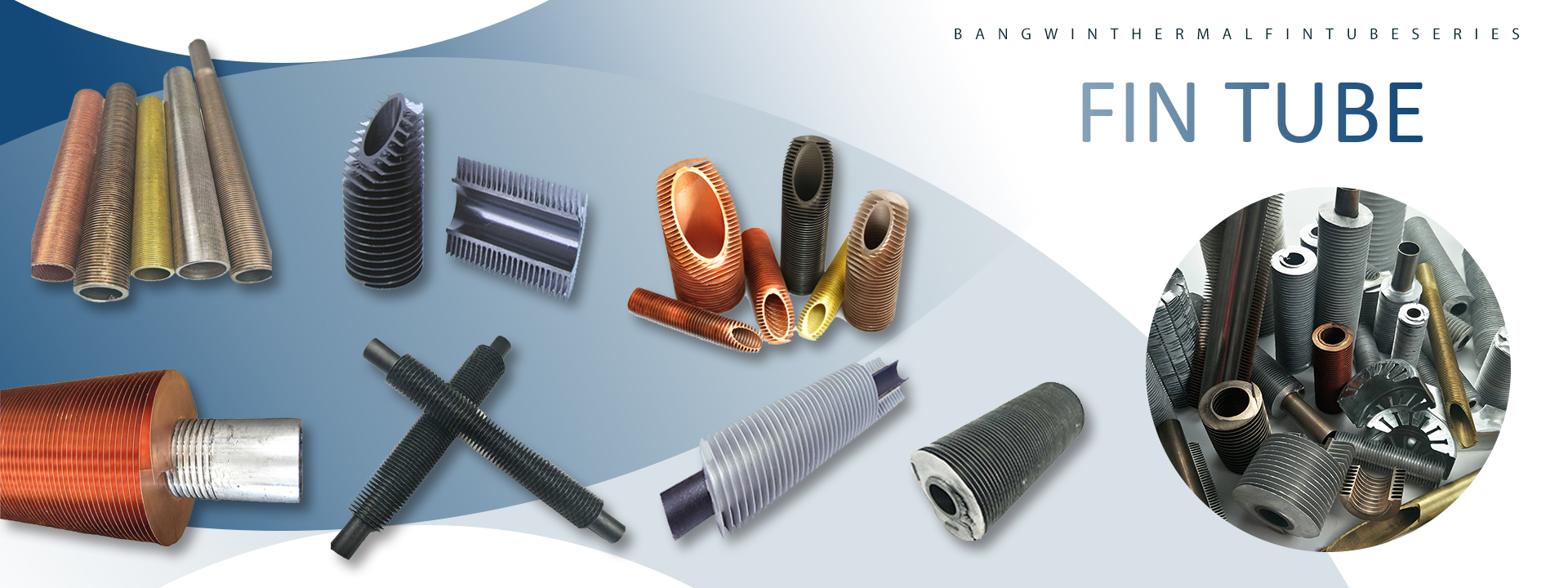
Industrial Finned Tubes increase heat transfer surface area.
This heat transfer enhancement attaches external fins to a base tube.
The fins provide increased heat transfer surface area.
The tube conducts heat from the working fluid inside.
As a result, finned tubes allow for enhanced thermal transfer without oversized equipment.
Penerapan industrial finned tubes include power generation, petrochemical processing, oil and gas processing, HVAC and refrigeration, and industrial cooling systems.
Different applications require specific fin designs and material construction.
As a result, you can choose industrial finned tubes to suit your temperature, pressure, corrosion resistance, airflow, and heat transfer requirements.
Bangwin Thermal supplies industrial fin tube and heat exchanger products to our customers worldwide.
Pembangkit Listrik Tenaga Panas Bangwin
2. What Are Industrial Finned Tubes
An Industrial Finned Tube adds external fins to a standard tube.
These fins allow the tube to have greater external surface area.
As a result, the tube has improved heat transfer capabilities.
The fluid inside the base tube is usually a liquid, gas, steam, or refrigerant.
The fins conduct heat to or from air or another external fluid.
Examples of components that make up an industrial finned tube include:
- Tabung dasar
- External fins
- Fin to tube connection
- Fluid passage inside tube
- Tube ends
Fin manufacturers can use different materials to construct both the fin and tube.
Bahan tabung yang umum digunakan antara lain:
- Baja karbon
- Baja tahan karat
- Tembaga
- Aluminium
- Baja paduan
- Paduan nikel
Fin materials include:
- Aluminium
- Baja karbon
- Baja tahan karat
- Tembaga
Manufacturers can use different material combinations to suit different environments.
3. How Industrial Finned Tubes Work
Industrial finned tubes improve heat transfer performance by increasing the surface area on the outside of the tube.
The process fluid inside the tube heats or cools as it travels through the tube.
Heat conducts through the tube wall and into the fins.
The larger external fin surface then releases or absorbs heat into the surrounding air or fluid.
We use finned tubes for heating applications to move heat into the process fluid.
We also use them for cooling to remove heat from the fluid.
As a result, the design can handle both heating and cooling applications.
Fin geometry can further alter airflow characteristics and heat transfer efficiency.
Serrated fins create more disturbance in airflow.
Low fins provide increased surface area without greatly enlarging the profile.
As a result, consider the conditions your finned tube will work under when choosing the fin structure.
4. Main Types of Industrial Finned Tubes
Customers use finned tubes for many industrial applications. Different applications require different fin tube designs and features.
4.1 High Frequency Welded Fin Tubes
High frequency welding joins the fin strip to the tube.
As a result, the fin provides strong mechanical and thermal contact with the tube.
These fin tubes work well in many industrial heat transfer applications.
4.2 Laser Welded Fin Tubes
Laser welding allows for precise attachment of the fin to the tube.
As a result, manufacturers can create a small weld with precise heat input.
Laser welded fin tubes work well when you need precise fin attachment.
4.3 Extruded Fin Tubes
Tabung sirip ekstrusi typically use aluminium for the external fin.
The extrusion process creates strong mechanical contact between the fin and tube.
As a result, these fin tubes provide good thermal performance and corrosion resistance.
4.4 G Fin Tubes
G fin tubes feature fins embedded into grooves on the tube.
As a result, the fin and tube have strong mechanical contact.
This finned tube design works well in many industrial applications.
4.5 KL Fin Tubes
KL fin tubes feature a knurled tube surface.
The fin wraps around this surface during production.
As a result, the knurled surface provides a mechanical improvement to fin attachment.
4.6 Low Fin Tubes
Low fin tubes feature short fins that extend outward from the tube surface.
As a result, low fins increase surface area without extending far from the tube.
These fin tubes commonly serve in shell and tube heat exchangers.
4.7 Serrated Fin Tubes
Serrated fin tubes feature segmented or notched fins.
As a result, serrated fins can increase turbulence in airflow.
This fin design can increase air-side heat transfer under the right conditions.
4.8 Longitudinal Finned Tubes
Longitudinal finned tubes position the fins in line with the tube’s length.
As a result, it provides a different airflow compared to spiral fin tubes.
These tubes can serve in many industrial heating and cooling applications.
5. Industrial Finned Tube Manufacturing Process
The manufacturing process differs depending on the type of fin tube.
However, most industrial finned tubes go through several similar stages of production.
5.1 Base Tube Preparation
The production process begins with base tube selection.
Considerations include:
- Temperature
- Pressure
- Type of working fluid
- Corrosion
- Mechanical requirements
As a result, the base tube must match the demands of the intended application.
5.2 Surface Preparation
Next, the manufacturer cleans and inspects the tube surface.
Ensuring a clean surface helps create a strong bond with the fin.
As a result, surface preparation allows manufacturers to consistently produce quality fin tubes.
5.3 Fin Preparation
Next, the manufacturer prepares fin strips or aluminium fin sleeves.
Different manufacturing processes use different fin materials.
As a result, different production lines will produce varying fin tube designs.
5.4 Fin Forming and Attachment
Now, manufacturers form and attach the fin to the base tube.
The process may include:
- Pengelasan frekuensi tinggi
- Pengelasan laser
- Ekstrusi
- Mechanical winding
- Embedded fin forming
As a result, each fin tube type offers unique benefits and features.
5.5 Sizing and Straightening
Following fin attachment, manufacturers bring the tube up to size.
The process may include straightening the tube.
As a result, the finished tube meets sizing requirements for heat exchanger assembly.
5.6 Inspection
Finally, manufacturers inspect the finished industrial finned tubes.
Inspection points include:
- Diameter tabung
- Tinggi sirip
- Pitch sirip
- Ketebalan sirip
- Quality of fin attachment
- Kekelurusan tabung
- Kondisi permukaan
As a result, inspection creates reliability in finished products.
6. Advantages of Industrial Finned Tubes
Industrial finned tubes offer many benefits to various industries.
6.1 Increased Heat Transfer Area
Fins greatly increase a tube’s external surface area.
As a result, the heat transfer surface area exceeds that of a bare tube.
6.2 Compact Heat Exchanger Design
The increased surface area allows designers to fit heat transfer performance into a smaller space.
As a result, these components can reduce equipment size.
6.3 Improved Air-side Heat Transfer
Since fins connect directly to surrounding air, they improve heat transfer.
Different fin designs can further increase heat transfer by enhancing airflow.
6.4 Flexible Material Options
Many materials exist for use in constructing fins and tubes.
As a result, you can match finned tubes to specific environmental needs.
6.5 Strong Fin Attachment
Fin attachment methods create strong bonds between the fin and tube.
As a result, the right industrial finned tubes can resist vibration and thermal cycling.
6.6 Wide Application Range
Banyak industri menggunakan industrial finned tubes.
As a result, you can use them for cooling, heating, condensing, or heat recovery applications.
7 Industrial Finned Tube Applications
Industrial finned tubes have many applications across different thermal systems.
7.1 Petrochemical
Heat transfer equipment must operate reliably within petrochemical facilities.
As a result, industrial finned tubes can be used for:
- Process cooler
- Gas cooler
- Kondensor
- Heat recovery
Due to their larger surface area, they can support highly efficient thermal transfer.
7.2 Oil and Gas
Oil and gas production facilities use many industrial thermal systems.
As a result, finned tubes can be used in:
- Pendingin oli
- Gas cooler
- Air cooler
- Process heat exchanger
Additionally, high strength fin attachment options can help finned tubes to operate in demanding environments.
7.3 Pembangkit Listrik
Power plants produce heat as a by-product of the electricity generation process.
As a result, they require efficient cooling systems to keep the plant operating.
Industrial finned tubes can be used for:
- Air cooled heat exchanger
- Sistem pemulihan panas
- Condensing systems
- Sistem pendingin
7.4 HVAC and Refrigeration
HVAC Systems require efficient heat transfer on the air-side.
As a result, finned tubes are commonly used in:
- Kondensor
- Evaporator
- Heating coil
- Cooling coil
- Heat pump
7.5 Pendinginan Proses Industri
Factories often require process cooling capabilities.
As a result, finned tube heat exchangers can help remove heat from:
- Oil
- Water
- Gas
- Process fluids
7.6 Heat Recovery Systems
Factories and industrial facilities often produce waste heat that goes unused.
As a result, heat recovery systems help facilities recover and use that energy.
Finned tubes allow for heat recovery systems to provide a large heat transfer surface.
As a result, they improve heat recovery system efficiency.
8 Industrial Finned Tubes Material Selection
What material your industrial finned tube is made from will drastically change its capabilities.
8.1 Carbon Steel
Carbon steel has good mechanical properties.
As a result, it works for many general industrial applications.
It can also be cheap to manufacture with.
8.2 Stainless Steel
Stainless steel offers excellent corrosion resistance.
As a result, stainless steel finned tubes work great for many chemical process applications.
8.3 Copper
Copper offers incredible thermal conductivity.
Akibatnya, copper finned tubes work great for HVAC and refrigeration applications.
8.4 Aluminium
Aluminium offers low weight and decent thermal conductivity.
As a result, aluminium fins work great for many air-side heat transfer applications.
8.5 Nickel Alloys
Nickel alloys offer excellent resistance to certain corrosive environments.
As a result, nickel alloy finned tubes can be used for specialized applications.
9 How to Choose Industrial Finned Tubes
There are many factors that come into play when selecting industrial finned tubes.
9.1 Determine Heat Duty
Identify how much heat your heat exchanger needs to transfer.
From here, you can calculate how much heat transfer surface you’ll need.
As a result, you can select what tube and fin sizes to use.
9.2 Check Operating Temperature
What is the minimum and maximum temperature your heat exchanger will see?
Temperature will determine what materials you can use for your fins and tube.
As a result, you want to make sure you select materials that can operate in your application’s temperature range.
9.3 Evaluate Working Pressure
The tube your fins are attached to will have to deal with the internal pressure of your heat exchanger.
As a result, you’ll want to select the correct wall thickness for your tube.
9.4 Analyze Fluid Properties
Take note of:
- Density
- Viscosity
- Thermal conductivity
- Specific heat
- Corrosion potential
As a result, your fluid’s properties will dictate some decisions you’ll have to make when designing your heat exchanger.
9.5 Select Fin Geometry
Fin geometry can impact heat transfer as well as airflow.
Some parameters you will need to consider include:
- Tinggi sirip
- Pitch sirip
- Ketebalan sirip
- Kepadatan sirip
- Fin profile
As a result, you’ll want to optimize all of these parameters together.
9.6 Consider the Installation Environment
If your heat exchanger will be installed outdoors, you may have to deal with humidity and salt.
If your heat exchanger works with chemicals, you may need chemical-resistant material.
As a result, make sure you match your fin and tube material to your installation environment.
10 Industrial Finned Tubes vs Bare Tubes
Bare tubes do not have any external fins.
As a result, they have a relatively small heat transfer area on the outside of the tube.
Industrial finned tubes have external fins that extend out from the tube.
As a result, they have a much larger external heat transfer area.
Fitur | Industrial Finned Tubes | Bare Tubes |
Heat Transfer Area | Tinggi | Rendah |
Air-Side Performance | Tinggi | Sedang |
Equipment Size | Ringkas | Larger |
Design Flexibility | Tinggi | Limited |
Manufaktur | More complex | Sederhana |
Typical Use | Heat exchangers | General piping |
As a result, if your heat exchanger is limited by air-side heat transfer, finned tubes can help provide a larger heat transfer area.
11 Why Choose Bangwin Thermal
Bangwin Thermal specializes in industrial fin tube technology and heat exchangers.
Not only can we provide you with many different fin tube solutions that will work for your specific operating conditions, but we also offer customized solutions to fit your needs.
Our Industrial Finned Tube product range includes:
Tabung sirip yang dilas dengan frekuensi tinggi
Tabung sirip yang dilas dengan laser
- Tabung sirip G
- Tabung sirip KL
- Low fin tubes
- Serrated fin tubes
- Tabung sirip las spiral
- Longitudinal finned tubes
- Copper Finned Tubes
If you need a customized industrial heat exchanger solution, we can help with that too.
Our engineers can take into consideration:
- Heat transfer requirements
- Bahan tabung
- Bahan sirip
- Fin geometry
- Operating temperatures
- Working pressure
- Airflow
- Corrosion prevention
As a result, you can find a fin tube that will work for your specific operating conditions.
Need professional industrial fin tube and heat exchanger solutions?
Visit Bangwin Thermal Official Website
Explore other great industrial products from Bangwin:
12 FAQ
- What are industrial finned tubes?
Industrial finned tubes are heat exchanger tubes that have external fins attached to them.
They use these fins to increase the heat transfer surface of the tube.
- What are industrial finned tubes used for?
Industrial finned tubes are used for air coolers, process heat exchangers, oil coolers, condensers, heating systems, heat recovery units, and many other applications.
- What materials can industrial finned tubes be made of?
Industrial finned tubes can be made from carbon steel, stainless steel, copper, aluminium, nickel alloys, and more.
- What types of industrial finned tubes are there?
Ada banyak jenis yang berbeda dari industrial finned tubes.
Some of these include high frequency welded fin tubes, laser welded fin tubes, tabung sirip yang diekstrusi, G type fin tubes, KL fin tubes, low fin tubes, serrated fin tubes, spiral welded fin tubes, and longitudinal finned tubes.
- Are finned tubes better than bare tubes?
Finned tubes have many more fins on the outside of the tube.
As a result, they have a larger external surface area. Finned tubes provide better air-side heat transfer compared to bare tubes.
- What is the best fin tube material?
There is not one best fin tube material.
Steel provides high strength, copper has the best thermal conductivity, and aluminium is the lightest material. It all depends on your operating parameters and what you need from your fin tube.
- How do I select the right industrial finned tube?
You should consider heat duty, temperature, pressure, fluid properties, corrosion, airflow requirements, and fin geometry.
As a result, by considering ALL of these factors, you’ll be able to properly select the right industrial finned tube.
- Can Bangwin Thermal customize industrial finned tubes?
Yes! Bangwin Thermal can customize the tube material, fin material, dimensions, fin pitch, fin height, and fin attachment method.
13 Conclusion
Industrial Finned Tubes are tubes with external fins that help improve the thermal performance of heat exchangers.
They do this by increasing the heat transfer surface area.
This allows them to transfer more heat than a regular tube within a smaller piece of equipment.
Different fin tube technologies offer different benefits to the heat exchanger.
They can work in different environments and have different strengths.
Bangwin Thermal is your professional source for customized industrial finned tubes and heat exchangers.
Visit Bangwin Thermal