1. Introduction
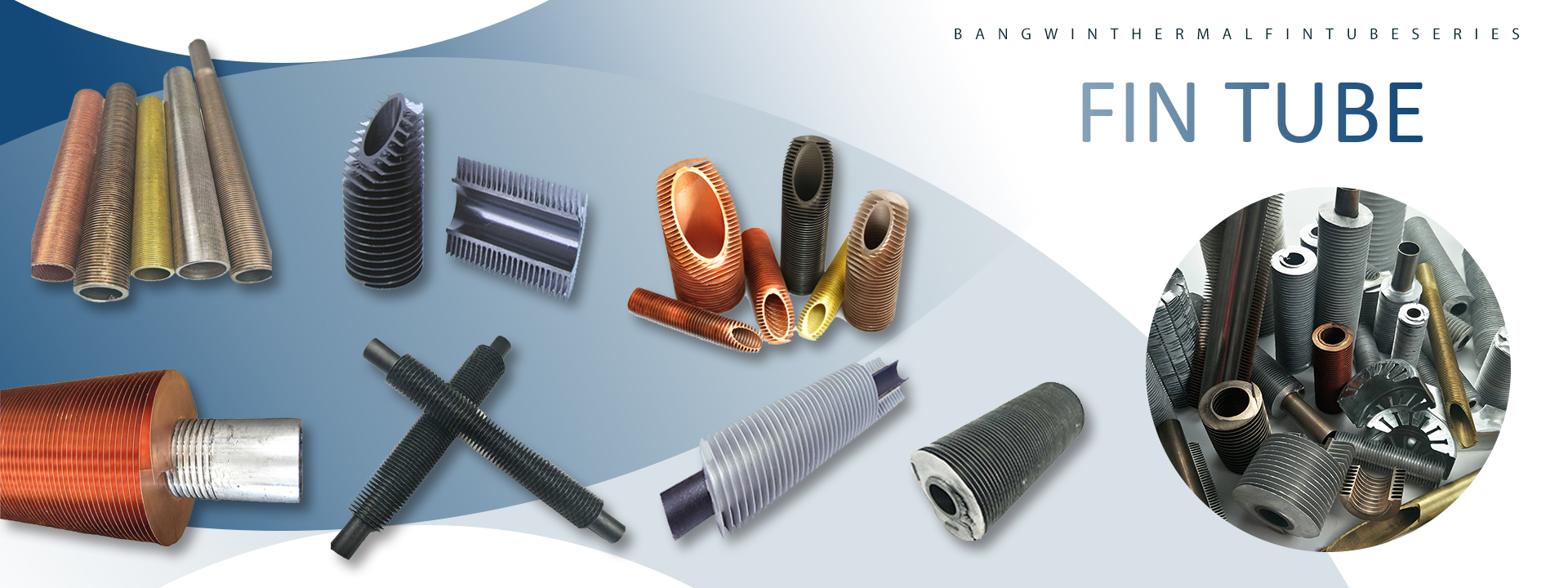
Industrial applications have a growing reliance on effective heat transfer systems. As a result, the use of fin tube systems and their associated technologies is on the rise.
Designs that promote turbulence and increase surface area allow systems to be designed with a higher level of performance and a lower level of energy consumption.
Today, the use of grooved fin tubes in HVAC, petrochemical, power generation, refrigeration, waste heat recovery systems is widespread. Furthermore, grooved fin tubes promote the continued stable operation of systems in the most demanding of conditions.
At Bangwin Thermal, we provide state-of-the-art heat exchanger and fin tube solutions on a global scale. For tailored industrial solutions, check out Bangwin Thermal.
2. Qu'est-ce qu'un Grooved Fin Tube?
A surface grooved fin tube is a tube that has horizontal or vertical grooves which assist the bonding of fins to the tube or improve surface heat transfer.
There are a number of methods to form grooves including mechanical rolling or cutting. Both methods can be used to secure fins or formed surfaces.
In the grooved fin tube surface, a grooved surface enhances contact and the transfer of heat. For this reason, heat transfer is faster and more effective.
A number of industries looking for grooved fin tube solutions are searching for effective and economical systems for heat transfer.
3. Comment un Grooved Fin Tube Travaux
With respect to surface geometry, a tube with grooved fins increases the surface area available to a contacting fluid.
Fluid flow through the tube and wall greatly facilitates surface contact. Grooves introduce turbulence, leading to efficient heat transfer.
The steps in this process are:
– Fluid flowing into tube
– Heat transferring through wall
– Turbulence enhancing by grooved surface
– Air flow outside absorbs heat
– Fluid exits the system
From this, grooved fin tubes are very effective in various industrial systems.
4. Manufacturing Process
This process is taking the accuracy in machining and forming into the advantage.
Preparations for the base tube are made first. Next, surface patterns are formed by using a grooving machine (which can engrave or roll the patterns).
Then fins are either attached or integrated (in the designs where fins are not yet formed). The last step in this process is to verify the formed fin tubes to the required standards of quality.
The steps in this process include:
– Base tube preparations
– Surface grooving
– Fin forming or integration
– Alignment
– Quality check
– Packing
Most of the new factories apply some automated systems of production for heat exchangers.
5. Structure of Grooved Fin Tube
The structure of a grooved fin tube will include these elements:
5.1 Base Tube
This is where fluid is carried and this tube is the one providing strength to the structure.
5.2 Grooved Surface
This provides a surface area and an improvement to heat transfer.
5.3 Fin Layer (if applied)
This is a layer which helps to fine tune the performance for external heat exchanges.
5.4 Contact Interface
This provides the necessary thermal connectivity for the layers.
5.5 Protective Coating
This is applied to improve its resistance to corrosion.
6. Types of Grooved Fin Tubes
To cater for the various applications, different designs can be produced:
6.1 Internal Grooved Tube
This is a design where internal grooves help improve internal heat transfer.
6.2 External Grooved Tube
This design has grooves to help to improve surface area in the external part of the tube.
6.3 Combined Grooved Fin Tube
In this design, grooves are in both sides.
6.4 Aluminum Fin Grooved Tube
This design, which is light and efficient, can be used in HVAC systems.
6.5 Stainless Steel Grooved Tube
This design can be used when there is a corrosive atmosphere.
7. Les avantages
There are a number of advantages in using grooved fin tubes. These include
7.2 Improved Efficiency
Systems need less energy for same results.
7.3 Superior Mechanical Performance
Durability is increased with grooved structures.
7.4 Economical Design
Decreased expense due to decreased material.
7.5 Consistency
Consistent performance is available in industrial settings.
Ainsi, grooved fin tube technology is still utilized.
8. Uses
Grooved fin tubes are employed in multiple sectors:
8.1 HVAC
Grooved fin tubes are used in cooling and heating coils.
8.2 Boilers
Boilers use grooved tubes for heat recovery and heating.
8.3 Petrochemical
Used in cooling and heating processes.
8.4 Refrigeration
Refrigeration systems rely on grooved fin tubes for increased cooling.
8.5 Industrial Heat Exchangers
Multiple thermal systems incorporate grooved fin tubes.
8.6 Recovering Waste Heat
Grooved fin tubes recover energy from waste gases.
9. Comparing Grooved Fin Tube to Smooth Tube
In many aspects, grooved tubes are superior to smooth tubes.
Limited surface area is a drawback for smooth tubes. Grooved fin tubes can greatly increase their contact area.
Thus, smooth designs can be inferior when compared.
Additionally, grooved tubes can decrease energy and increase fin tube performance.
10. Guide to Choosing
Finding the correct grooved fin tube helps optimize designs.
10.1 Temperature
Systems can only operate at high temperatures when constructed of specialized materials.
10.2 Corrosion
In harsh environments, materials must be stainless steel.
10.3 Heat Load
Heavy loads require special groove design.
10.4 Type of Fluid
Gas and liquid differ in design.
10.5 Reduced Cleaning
Easy cleaning design helps long term performance.
Visit the Bangwin Thermal Official Website for tailored options.
11. Performance Enhancing Maintenance
Frequent maintenance leads to higher performance.
At first, check tube surfaces for accumulated dust. Check for dust and deposits.
Next, check the condition of grooves for wear. Additionally check thermal efficiency.
Finally, approved methods must be used to clean systems.
Heat exchanger cleaning and maintenance standards are used by multiple sectors.
12. Why Choose Bangwin Thermal
Bangwin Thermal has a range of solutions for heat transfer.
This includes:
- Designed fin tubes
- Industrial heat exchanger systems
- Manufacturing Integrity
- Engineering Services
- Great Prices
- Worldwide Services
Our focus is fin tubes and industrial systems.
Go to Bangwin Thermal for additional information.
- Pour en savoir plus sur la fabrication industrielle :https://bangwingascylinder.com/
13. FAQ
- What is a grooved fin tube?
It is a type of tube wherein grooves are added to transfer heat more efficiently.
- Where is it found?
It can be found in HVAC systems, power generation, petrochemical systems, and refrigeration systems.
- What is the benefit of grooved fin tubes?
Les grooved fin tubes enhances the surface area of the tube and thus enhances the thermal performance.
- What are the materials used?
They can be made of stainless steel, carbon steel, and aluminum.
- What is the difference between grooved tubes and smooth tubes?
Grooved tubes are much more efficient in transferring heat.
- Where can I find grooved tubes?
Check out the solutions at Bangwin Thermal.
14. Conclusion
The incorporation of grooved fin tubes in systems enhances the performance of the system, reduces the overall energy consumption, and enhances the efficiency of the system.
This is the primary reason of the popularity of grooved fin tubes is in modern heat exchanger systems of various industries.
Bangwin Thermal offers professional fin tube and heat exchanger systems globally.