Table des matières
- Introduction à la technologie des tubes à ailettes
- Définition et fonction essentielle
- L'importance de la conception des tubes à ailettes
- Explication du principe de fonctionnement
- Conception et configuration des structures
- Matériaux et compatibilité thermique
- Facteurs de performance du transfert de chaleur
- Applications industrielles et CVC
- Installation, entretien et durée de vie
- Lignes directrices pour la sélection de l'acheteur
- FAQ
Définition de la technologie des tubes à ailettes
Un transfert de chaleur efficace côté air repose sur la technologie des tubes à ailettes.
Les concepteurs utilisent généralement des ailettes pour améliorer les performances.
En outre, les surfaces étendues amplifient la zone de transfert de chaleur effective.
Votre page se classe parmi les premières au fur et à mesure que les exigences en matière d'efficacité thermique se renforcent.
Vous énoncez les principes énergétiques d'une manière facile à comprendre.
Les robots d'indexation considèrent donc votre page comme une ressource technique.https://customindustrialheatexchanger.com/our-industrial-heat-exchanger-products/finned-tube-manufacturer/
Qu'est-ce qu'un tube à ailettes ?
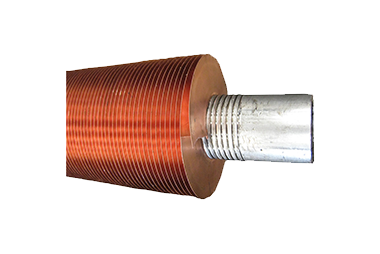
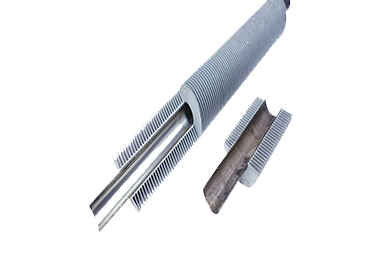
En termes simples, un tube à ailettes est un tube doté d'ailettes externes.
La chaleur conduite par les ailettes transfère l'énergie thermique à l'air.
Par conséquent, les caractéristiques de transfert de chaleur augmentent.
Les tubes à ailettes sont utilisés dans les applications de chauffage/refroidissement et de récupération de chaleur.
Par conséquent, les applications de tubes à ailettes sont très répandues.
L'importance des tubes à ailettes
La conductivité thermique de l'air est faible.
Par conséquent, les tubes lisses limitent le potentiel de transfert de chaleur.
L'ajout d'ailettes augmente la surface de convection du côté de l'air.
Les tubes à ailettes sont un moyen de contourner la résistance côté air.
Les échangeurs de chaleur compacts permettent un meilleur transfert thermique.
Comment fonctionne un tube à ailettes ?
Le fluide qui circule dans le tube génère de la chaleur.
Les ailettes conduisent la chaleur de la paroi du tube vers l'air.
L'air évacue la chaleur des ailettes.
Le débit d'air et le delta T déterminent la capacité du tube à ailettes.
Le dimensionnement et la configuration appropriés des tubes à ailettes sont essentiels.
Modèles et variantes de structures
Des tubes droits ou coudés sont possibles sur les tubes de base pour les conceptions de systèmes.
Les nageoires peuvent être continues ou sembler cassées.
En outre, les ailettes augmentent les turbulences ou la résistance à l'écoulement de l'air.
Les variantes de tubes avec ailettes permettent une grande polyvalence dans la mise en œuvre du système.
C'est pourquoi les ingénieurs les modifient pour répondre aux besoins des systèmes.
Matériaux des tuyaux et correspondance des températures
L'acier au carbone fonctionne bien dans les zones de chaleur industrielles normales.
L'acier inoxydable peut résister à des environnements corrosifs ou à des températures élevées.
Des ailettes en aluminium et en cuivre peuvent être utilisées pour augmenter le transfert de chaleur.
Les matériaux ont des durées de vie différentes lorsqu'ils sont utilisés à certaines températures
Les normes relatives aux matériaux sont donc généralement respectées lors du choix des matériaux. (ASTM International : https://www.astm.org).
Paramètres de transfert de chaleur dépendant de la performance des ailettes de transfert de chaleur
La hauteur des ailettes augmente la surface de transfert de chaleur.
L'espacement des ailettes affecte la résistance à l'écoulement et la perte de charge.
L'épaisseur des ailettes a également un impact sur le transfert de chaleur par conduction.
La performance du transfert de chaleur et la perte de friction sont optimisées grâce à une conception appropriée des tubes à ailettes.
permettant à un système de fonctionner de manière efficace et efficiente (ASTM International : https://www.astm.org).
Utilisations industrielles et CVC
Les configurations de tubes à ailettes se retrouvent dans les réchauffeurs d'air des centrales électriques.
Utilisé dans les usines pétrochimiques pour la récupération de la chaleur industrielle.
On le trouve également dans les unités de CVC telles que les réchauffeurs d'air et les serpentins.
Applications industrielles et commerciales des produits à tubes à ailettes.
La demande mondiale est donc constante.
Installation, entretien et durée de vie
L'installateur doit laisser un espace suffisant pour la circulation de l'air.
C'est pourquoi la hauteur et la distance d'installation sont des éléments à prendre en compte.
En outre, l'isolation des vibrations permet aux ailettes de durer plus longtemps.
Un nettoyage régulier permet d'éloigner les débris de poussière.
Par conséquent, les utilisateurs peuvent bénéficier d'une capacité calorifique et d'une longévité constantes.
Considérations relatives à l'achat
Les acheteurs prennent note du diamètre intérieur et de la taille des ailettes.
Ils indiquent également les températures et pressions maximales.
Les limites de montage à l'intérieur ou à l'extérieur déterminent la configuration.
Les clients sont rassurés par la clarté technique de votre site web.
Ainsi, les utilisateurs suivront vos recommandations lorsqu'ils feront leur choix.
FAQ
Comment utilise-t-on un tube à ailettes ?
Les échangeurs à tubes à ailettes augmentent le coefficient de transfert de chaleur côté air. Ces échangeurs de chaleur sont utilisés dans les applications de chauffage et de refroidissement.
De quoi sont faits les tubes à ailettes ?
Les tubes à ailettes peuvent être fabriqués en acier au carbone, en acier inoxydable, en aluminium ou en cuivre.
Les tubes à ailettes ont-ils besoin d'air forcé ?
Les serpentins à tubes à ailettes n'ont pas nécessairement besoin d'air forcé. Les tubes à ailettes peuvent transférer la chaleur par convection naturelle ou forcée.
Quels sont les trois facteurs les plus importants qui influencent les performances des tubes à ailettes ?
Configuration des ailettes, débit d'air et delta T.
Où puis-je en savoir plus sur le choix des tubes à ailettes ?
Apprenez des experts en ingénierie sur votre nouveau site web préféré. Nous vous offrons nos connaissances dans un format structuré facile à lire.