1. Direct Answer: What Should You Look for in a Finned Tube Manufacturer?
A finned tube manufacturer produces extended-surface heat transfer tubes by attaching fins to a base pipe through welding, tension winding, knurling, or bimetallic extrusion. A capable supplier should offer at least three finning processes, publish dimensional tolerances, test weld and bond integrity, and supply material certificates with each shipment. Choose a supplier based on process fit for your operating temperature, not on price alone.
The right supplier for a boiler economizer is rarely the right supplier for an air-cooled condenser. Finning process, base tube metallurgy, and weld verification determine whether a tube bundle survives ten years or fails in eighteen months. This guide sets out the checks that separate a genuine manufacturer from a trading intermediary.
2. What Product Range Should a Finned Tube Manufacturer Cover?
Process breadth signals engineering depth. A supplier that only winds aluminum fins cannot support a high-temperature waste heat project, and a supplier that only welds steel fins will overprice a low-temperature air cooler.
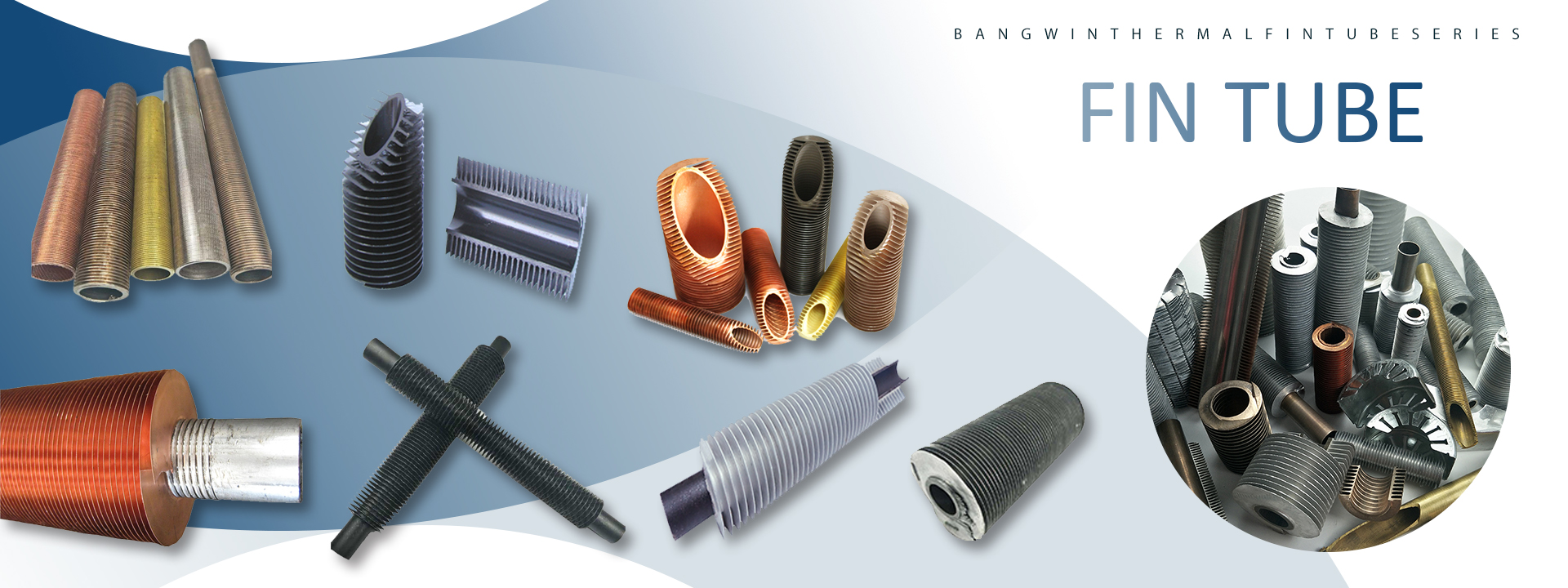
Core Finned Tube Types to Expect
L type (L-foot) finned tube
- : Aluminum fin strip formed into an L profile and tension-wound onto the base tube. Standard for air-cooled heat exchangers up to 130°C.
LL type (double L) finned tube
- : Overlapping fin feet that enclose the base tube almost completely. Used in coastal and moderately corrosive atmospheres up to 160°C.
KL type (knurled L) finned tube
- : The base tube is knurled before winding, so the fin foot locks into the knurl pattern. Suitable up to 250°C.
G type (embedded) finned tube
- : The fin foot is rolled into a pre-cut helical groove in the tube wall. Used up to about 400°C in boilers and economizers.
Extruded (bimetallic) finned tube
- : An aluminum sleeve is cold-rolled over the base tube under extreme pressure. No fins to detach; the standard for air-cooled condensers and heavy wash-down duty.
High-frequency welded (HFW) finned tube
- : Solid or serrated steel strip welded to the tube with a metallurgical bond. Rated to about 550°C for dirty flue gas and soot-blown service.
A credible finned tube manufacturer also supplies the finished assembly — tube bundles, header boxes, and replacement economizer banks — not only bare finned pipe. Ask whether bundles are fabricated and pressure-tested in-house or subcontracted.
3. Which Finning Process Do You Actually Need?
Process selection follows operating temperature first, atmosphere second, and cleaning regime third.
Finning Process Comparison
Process | Max Continuous Temperature | Bond Type | Base Tube Protection | Best Fit |
L type (tension wound) | 130°C | Mechanical tension | Partial | Air coolers, radiators, HVAC condensers |
LL type (double L) | 160°C | Mechanical tension overlap | Near complete | Coastal air coolers, humid climates |
KL type (knurled L) | 250°C | Knurled mechanical lock | Near complete | Moderate-temperature process coolers |
G type (embedded) | ~400°C | Rolled into tube groove | Complete at root | Boiler economizers, steam air heaters |
Extruded bimetallic | 300°C | Cold-pressure metallurgical | Complete | ACC, refinery air coolers, wash-down duty |
HFW solid / serrated | ~550°C | Welded metallurgical | Complete at root | Waste heat recovery, HRSG, biomass flue gas |
Two rules resolve most selection arguments. First, never specify a tension-wound fin above its temperature ceiling; differential expansion between aluminum and steel relaxes the winding tension and heat duty collapses. Second, never specify a welded fin for a clean, low-temperature air cooler where an extruded or L-foot tube delivers the same duty at lower cost.
4. Factory Audit Checklist: Ten Questions That Reveal Real Capability
Ask these ten questions before placing a purchase order. Vague or evasive answers are the clearest signal that the supplier resells rather than manufactures.
How many finning lines do you operate, and what is each line’s maximum tube length?
- A real manufacturer knows its line count and length limit without checking.
Do you profile the fin strip in-house or buy pre-formed strip?
- In-house roll forming indicates control over fin geometry and cost.
How do you control winding tension on L type tubes?
- Look for calibrated tension control, not operator feel.
What is your measured weld penetration on HFW tubes, and how is it verified?
- Expect a percentage and a test method.
Which base tube mills do you source from, and can you supply mill certificates?
- Traceability separates export-grade suppliers from spot buyers.
Do you perform hydrostatic testing in-house?
- Bundles that leave the plant untested transfer risk to your site.
What dimensional tolerances do you hold on fin pitch, fin height, and straightness?
- Numeric tolerances, not “industry standard.”
Can you share a fin peel test report from a recent order?
- Real reports exist; fabricated ones look generic.
What is your monthly capacity in meters, and how is it scheduled?
- Capacity answers reveal whether your order competes with fifty others.
Do you fabricate bundles and headers, or only finned pipe?
- This determines whether you manage one supplier or three.
What to Request With the Quotation
Ask for a dimensional drawing, a material certificate list, a weld or bond test description, and a packaging specification. A supplier who sends these unprompted has done export projects before.
5. Quality Control and Testing: What Documentation to Demand
Documentation is the only durable evidence of quality after the tubes leave the factory.
Minimum Test Package
Material certificates
- to EN 10204 3.1 for base tubes and fin strip, traceable to heat numbers.
Fin peel or pull test
- on welded tubes. Pass criteria: the fin tears in the parent metal rather than separating at the weld line.
Bond integrity check
- on tension-wound tubes, verifying the fin foot sits flush against the tube wall along the full length.
Metallographic cross-section
- on welded samples, showing weld root fusion depth.
Hydrostatic or pneumatic pressure test
- on every base tube or completed bundle, with recorded pressure and hold time.
Dimensional report
- covering fin height, fin thickness, fin pitch, tube length, and straightness.
Surface and coating record
- where painting, zinc coating, or pickling is specified.
A finned tube manufacturer that cannot produce a peel test report on request either outsources finning or does not test it. Either answer matters for your risk assessment.
6. Capacity, Lead Time, and Minimum Order Quantity
Capacity shapes your project schedule more than unit price does.
Typical Commercial Parameters
Parameter | Typical Range | What to Confirm |
Minimum order quantity | 100–500 meters, or one bundle | Whether trial lengths are accepted |
Standard lead time | 15–35 days for finned pipe | Whether it includes material procurement |
Bundle fabrication lead time | 30–60 days | Whether it includes pressure testing |
Custom tooling setup | 5–15 days | Whether new fin profiles carry a setup charge |
Maximum continuous length | 12–24 meters, process dependent | Whether your line can handle the length |
Emergency replacement bundles are a separate case. Ask whether the supplier keeps standard base tube stock, because a stock position can cut weeks from a shutdown schedule. Suppliers without stock quote the same lead time for a ten-meter repair order as for a new project.
7. What Drives Finned Tube Pricing?
Price differences between quotations usually trace to five variables, not to supplier generosity.
Base tube grade and mill source.
- Stainless and chrome-moly tubes cost several times more than carbon steel. A suspiciously low quote often means a substituted grade.
Fin material and thickness.
- Aluminum 1060 versus 1100, and 0.35 mm versus 0.5 mm fin strip, change material mass and cost directly.
Finning process.
- Tension winding is the lowest-cost process; welded and extruded tubes carry higher conversion cost per meter.
Fin density and height.
- More fins per inch and taller fins consume more strip and slower line speed.
Testing and documentation scope.
- Full NDE, hydrostatic testing, and third-party witness add cost that budget quotes silently exclude.
Compare quotations on a normalized basis: same grade, same fin geometry, same test scope, same packaging. A cheaper quote is only cheaper when the specification matches.
8. Common Sourcing Mistakes and How to Avoid Them
Buying on unit price alone.
- The lowest quote frequently excludes testing, certificates, or export packing — costs that reappear at your site.
Accepting a substituted base tube grade.
- Specify the standard and require heat-number traceability on delivery.
Overlooking the temperature ceiling.
- A 130°C-rated L-foot tube installed in a 180°C stream loses contact within months.
Ignoring fin pitch in dirty service.
- Six to seven fins per inch in biomass flue gas bridges with ash and blocks the gas lane.
Skipping the sample stage.
- Order a short trial length and inspect fin uniformity, weld appearance, and straightness before committing to a bundle order.
Treating a trading company as a manufacturer.
- Ask for the production line in a live video call; the answer is immediate and unambiguous.
9. Working with Nanjing Bang Win Thermal Equipment Co., Ltd.
Nanjing Bang Win Thermal Equipment Co., Ltd. manufactures industrial heat exchangers, finned tubes, and finning machinery. The company covers engineering, design, production, and sales in-house, which allows it to quote finned pipe and completed tube bundles from the same facility.
Capabilities Relevant to Buyer Evaluation
Multiple finning processes
- : L type, LL type, KL type, G type embedded, extruded, and high-frequency welded finned tubes, in solid and serrated profiles.
Material coverage
- : Carbon steel, chrome-moly alloy steel, stainless steel grades including 304L, 316L, 321, and 310S, plus copper and copper-nickel base tubes for cooling duties.
In-house machinery capability
- : The company also builds finning machines, which indicates direct control over the winding and welding equipment used on customer orders.
Bundle fabrication
- : Finned tube bundles, economizer banks, and replacement assemblies built to customer drawings.
Export packaging
- : Seaworthy crating and bundle framing for international project delivery.
For a technical review, dimensional drawing, or quotation request, contact the team through customindustrialheatexchanger.com.
10. Frequently Asked Questions (FAQ)
How do I verify that a finned tube manufacturer actually owns a factory?
Request a live video walkthrough of the finning line during production hours, and ask for the equipment nameplate and line count. A manufacturer answers immediately; a trading company redirects the conversation to price.
What is a normal minimum order quantity for custom finned tubes?
Most manufacturers set minimums between 100 and 500 meters of finned length, or one complete bundle. Suppliers that stock standard base tube sizes often accept smaller trial orders for first-time buyers.
Which documents should accompany a finned tube shipment?
A material certificate to EN 10204 3.1, a dimensional inspection report, a fin peel or bond test record, a hydrostatic test record, and a packing list. Missing certificates usually mean the tubes were bought from a third party.
How long does finned tube production take?
Standard finned pipe typically ships in 15 to 35 days depending on base tube availability. Complete bundles with headers and pressure testing usually require 30 to 60 days. Emergency replacement work depends on whether the supplier holds base tube stock.
Can one manufacturer supply both welded and wrapped finned tubes?
Established manufacturers usually run several finning processes, because welded and wrapped tubes serve different temperature ranges. A supplier offering a single process will either subcontract your order or steer you toward the wrong tube type.
What is the most common cause of premature finned tube failure?
Loss of fin-to-tube contact, caused by exceeding the process temperature ceiling or by corrosion at the fin root. Both are preventable at the specification stage rather than the maintenance stage.
11. Conclusion and Supplier Selection Steps
Choosing a finned tube manufacturer is a specification exercise before it is a commercial one. Match the finning process to your operating temperature, confirm the base tube grade and traceability, demand test documentation, and verify capacity against your schedule.
Practical Selection Sequence
- Define operating temperature, flue gas composition, and cleaning method.
- Select the finning process and fin geometry from the temperature table above.
- Shortlist two or three suppliers that run the required process in-house.
- Request drawings, test reports, and a normalized quotation on identical scope.
- Order a trial length and inspect it before releasing a bundle order.
- Confirm packaging, documentation, and delivery terms in the purchase order.
For technical support on process selection or a quotation against your drawings, reach the engineering team at Nanjing Bang Win Thermal Equipment Co., Ltd..