1. Introduction
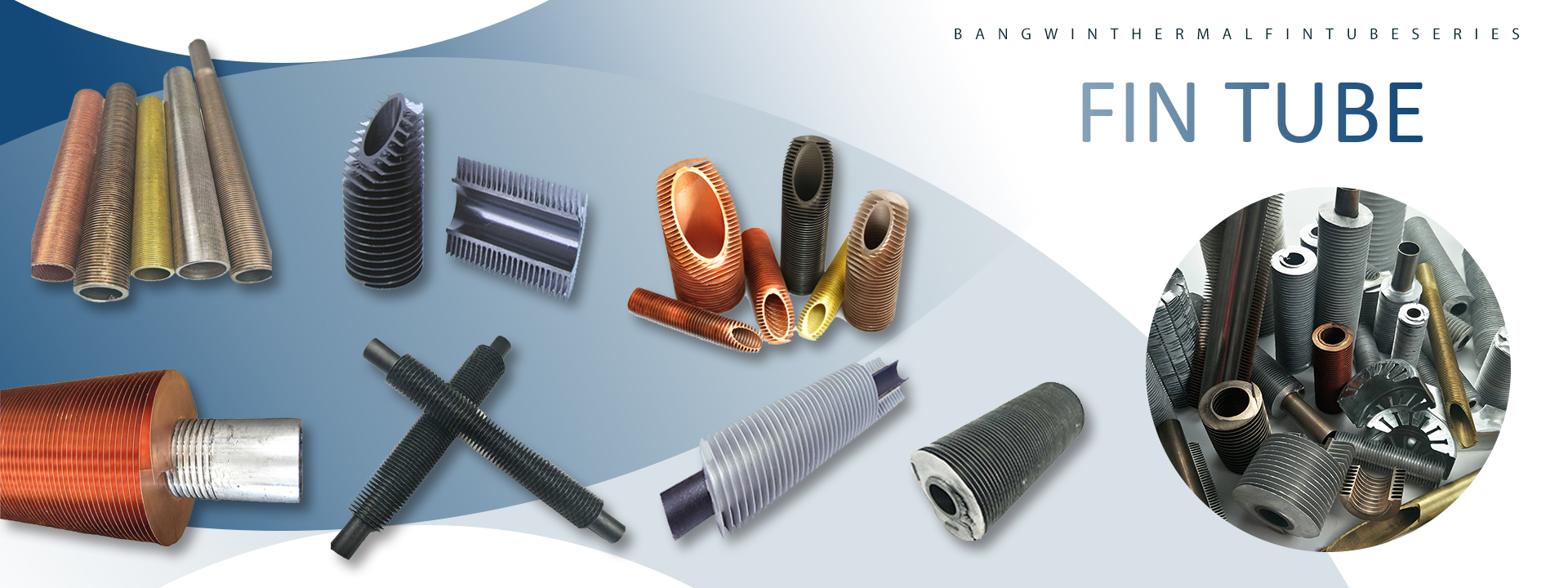
The need for efficiency and reliability in industrial systems for heat transfer drives the preference for extruded finned tubes by system designers.
These tubes deliver excellent thermal performance even in extreme conditions. Engineers use them in power plants, petrochemical facilities, waste heat recovery systems, and HVAC equipment.
Being extruded finned tubes have long service life and high corrosion resistance, they are suitable for harsh industrial conditions.
At Bangwin Thermal, we offer cutting-edge fin tube and heat exchanger solutions globally. For bespoke solutions, visit Bangwin Thermal.
2. What Are Extruded Finned Tubes
In heat transfer tubes, fins are formed through mechanical extrusion of either aluminum or copper onto a base tube.
Since the fin material is extruded onto the base tube, it forms a permanent bond and an excellent interface for heat transfer.
This tube design improves thermal interface matching, thereby enhancing the performance of heat exchangers.
Many industries use extruded finned tubes in high-performance, corrosive, and demanding environments.
3. How Extruded Finned Tubes Work
Extruded finned tubes have a higher surface area.
In the first step, fluid fills the base tube. Next, heat transfers to the fluid.
The fins in this design, absorb and dissipate heat in a timely fashion to the air or fluid flowing around them.
The process can be summed into:
- Fluid goes in tube
- Wall transfers heat
- Fins take heat in
- Air or liquid takes heat out
- Heat energy leaves
- Fluid leaves system
Because of this structure, extruded finned tubes achieve high efficiency in compact systems.
4. Manufacturing Process
Manufacturers use a precise cold-forming process to produce extruded finned tubes.
Manufacturers first prepare the inner base tube.Then, Operators place an aluminum sleeve over the base tube.
Next, the extruder applies high pressure to the fin material.As a result, the process forms strong fins and bonds them tightly to the tube.
This process involves the following:
- Base tube preparation
- Aluminum sleeve installation
- Extrusion at high pressure
- Formation of fins
- Cooling
- Cutting
- Inspection
Modern manufacturing facilities use advanced technology and tools to comply with heat exchanger manufacturer specifications.
5. Structure of the Extruded Finned Tubes
An extruded finned tube consists of the following:
5.1 Inner Tube
Holds the process fluid.
5.2 Bonding Layer
Provides the necessary thermal contact of the materials.
5.3 Extruded Aluminum Fin
Offers a large surface area for heat transfer.
5.4 Protective Outer Layer
Improves protection against corrosion.
5.5 Helical Fin Design
Enhances airflow and design efficiency.
6. Types of Extruded Finned Tubes
Different arrangements are used for different configurations.
6.1 Bimetallic Extruded Fin Tube
Aluminum fins over a steel or copper tube.
6.2 Copper Extruded Fin Tube
Designed with a high level of thermal conductivity.
6.3 Stainless Steel Base Extruded Fin Tube
Engineers select this design for highly corrosive environments.
6.4 High Fin Density Extruded Tube
For high-performance heat exchangers.
6.5 Low Fin Density Extruded Tube
Designers choose this configuration for balanced airflow systems.
7. Benefits
Extruded finned tubes offer a variety of benefits.
7.1 Outstanding Heat Transfer Efficiency
Increased bonding enhances conductivity.
7.2 High Corrosion Resistance
The base tube is protected by aluminum.
7.3 Extended Service Life
Increased durability is provided by a strong mechanical structure.
7.4 High Pressure Resistance
Designed for demanding systems.
7.5 Low Maintenance
Stable performance leads to few maintenance needs.
Because of this, extruded finned tubes are extensively used across the industry.
8. Applications
Extruded fin tubes have a wide variety of applications across numerous industries.
8.1 HVAC Systems
HVAC manufacturers install these tubes in heating, cooling, and air-handling coils.
8.2 Petrochemical Industry
Process cooling systems in petrochemical plants rely on extruded finned tubes for efficient heat transfer.
8.3 Power Plants
In power generation facilities, engineers use these tubes in condensers and heat recovery units.
8.4 Marine Industry
Marine cooling systems utilize these tubes in seawater applications.
8.5 Refrigeration Systems
High-efficiency refrigeration equipment often incorporates extruded finned tubes.
8.6 Industrial Heat Exchangers
Many industrial heat exchangers integrate these tubes to improve thermal performance.
9. Extruded Finned Tubes vs Other Fin Types
Designs can vary in extruded fin tubes.
In comparison to spiral welded fin tubes, extruded tubes have superior resistance to corrosion.
In comparison to KL fin tubes, extruded fins have superior bonding and longevity.
In comparison to low fin tubes, extruded fins also have greater surface area.
As such, the environmental conditions and required performance will influence the engineers’ decision.
10. Selection Guide
To enhance the performance of the system, the appropriate extruded fin tube should be selected.
10.1 Temperature Conditions
High temperatures put limitations on the choice of materials.
10.2 Corrosion Environment
Systems that are marine or chemical in nature typically have aluminum tubes, which offer corrosion resistance.
10.3 Heat Load
High heat loads require closely spaced fins.
10.4 Fluid Type
The design can be gas or liquid.
10.5 Maintenance Requirements
Designs that are easy to clean will have greater thermal efficiency.
See the Bangwin Thermal Official Website to see our solutions.
11. Maintenance Tips
Regular maintenance helps extend service life.
First, inspect all external surfaces.
Remove dust and deposits during routine cleaning procedures.
Record any signs of corrosion or physical damage immediately.
Monitor thermal performance on a regular schedule.
Maintain proper airflow conditions around the equipment.
12. Why Choose Bangwin Thermal
Bangwin Thermal products represent greater heat transfer solutions.
We provide:
- Custom fin tube designs
- Custom industrial heat exchangers
- Expert staff
- Quality manufacturing
- Affordable prices
- World-wide delivery
- Fin tube and heat exchanger specialists.
More at Bangwin Thermal.
:https://bangwingascylinder.com/
13. FAQ
- What are extruded finned tubes?
They are tubes with fins formed by extrusion.
- Where are these tubes used?
HVAC, petrochemical, marine, and power industries.
- What is the main advantage of extruded finned tubes?
The main advantage is high efficiency and strong corrosion resistance.
- What are the raw materials?
Aluminum, copper, carbon steel, and stainless steel.
- What makes them different from welded fin tubes?
Mechanical extrusion is used instead of welding.
- Where can I purchase extruded finned tubes?
Explore Bangwin Thermal.
14. Conclusion
Extruded finned tubes offer advanced and durable corrosion resistant heat transfer solutions.
For this reason, engineers install these tubes in many modern industrial systems.
Bangwin Thermal offers professional fin tube and heat exchangers solutions throughout the world.
Bangwin Thermal can customize your industrial requirements.