1. Introducción
Efficient heat transfer is crucial for many industries. As a result, many industrial manufacturers are incorporating more high frequency spiral finned tube technology into their demanding thermal applications.
Smooth tubes often provide limited heat exchange performance. However, spiral fin tubes can help improve thermal efficiency and reduce costs by increasing the heat transfer surface area.
Currently, many industries including petrochemical processing, power generation, HVAC, marine engineering, steel manufacturing and waste heat recovery are incorporating high frequency spiral fin tubes into their applications. The advancements in continuous welding technology have also improved the durability and reliability of the products.
At Bangwin Thermal, we offer advanced finned tube and heat exchanger technology solutions across the globe. We have options for tailored thermal equipment and solutions across a wide range of industrial applications in our official Bangwin Thermal website.
2. ¿Qué es un High Frequency Spiral Finned Tube?
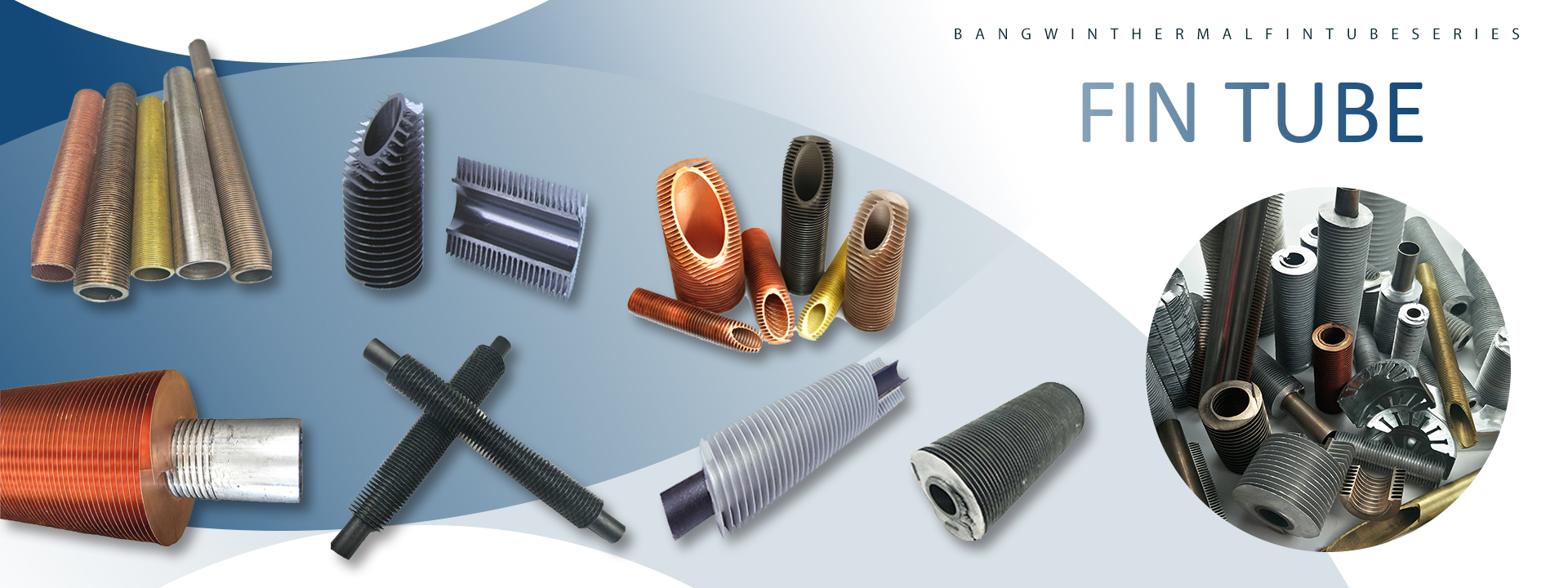
A high frequency spiral finned tube is a metal tube with a continuous spiral fin attached through high frequency resistance welding.
In this process, a metal fin strip is helically wrapped around the tube. The system concentrates a high frequency electrical current at the contact point. which results in the permanent bonding of the fin to the tube through a metallurgical weld.
High frequency welded tubes have superior thermal conductivity over mechanically wrapped fin tubes, which is the main reason they are used in high-performance heat exchanger systems.
Manufacturers commonly use carbon steel, stainless steel, alloys, copper, and heat-resistant materials to produce tubes and fins.They also have the ability to customize the height and pitch of the fins and other dimensions of the tubes.
Many companies want high frequency spiral finned tube solutions with strong heat exchange characteristics and long service lives. This Technology is arguably the most sought after finned tube technology on the global market.
You can learn more about the welding standards that pertain to the respective industries from the American Welding Society or from resources and publications like the Heat Exchanger World.
3. High Frequency Spiral Finned Tube Technology
High frequency spiral finned tubes enhance heat exchange not only because of increased surface area, but also by providing stronger fin-to-tube bonding.
Process fluid flows through the tube.
Next, heat moves through the tube wall and reaches the outer fin surface.
The design of the spiral fins allows heat to transfer to the air or gas surrounding the tube more readily.
The design of fins in a spiral configuration also promotes the turbulence of air or gas which improves the thermal exchange even more.
The process can be summarized in the following steps:
Process fluid flows through the tube
Heat transfers through the wall of the tube
Fins in the spiral configuration distribute the heat
Air or gas then contacts the fin surface.
The fins release heat into the surrounding environment
Process fluid then exits the system
For these reasons, engineers prefer high frequency spiral finned tubes in industrial heat exchangers Most suppliers include such tubes in their finned tube heat exchangers.
4. Main Parts of High Frequency Spiral Finned Tube
There are numerous parts of the High Frequency Spiral Finned Tube, all of which enhance the thermal characteristics and the longevity of the system.
4.1 Tubo base
The base tube is the part of the system that carries the process fluid.
4.2 Spiral Fin Strip
Using spiral fins increases external surface area for heat transfer, making their use advantageous.
4.3 High Frequency Weld Joint
The continuous weld creates a strong bond, ensuring the joint has the required thermal conductivity.
4.4 Helical Fin Structure
The spiral design enhances airflow turbulence and heat transfer.
4.5 Surface Protection
Most designs use coatings or galvanizing for surface protection and to improve resistance to corrosion.
5. Tipos de High Frequency Spiral Finned Tubes
Different industries use different fin configurations and as such, manufacturers produce different types of finned tubes.
This design uses continuous solid fins to improve heat transfer
5.2 Serrated Spiral Finned Tube
Serrated fins enhance thermal performance and airflow turbulence.
5.3 Stainless Steel Spiral Finned Tube
Stainless steel has good corrosion resistance.
5.4 Carbon Steel Spiral Finned Tube
Carbon Steel is a cost effective solution for many industries.
5.5 Alloy Steel Spiral Finned Tube
Alloy materials are good for high temperature applications.
Many customers compare these products with those of the extruded fin tube machine.
6. Ventajas de High Frequency Spiral Finned Tubes
High Frequency Spiral Finned Tubes are preferred by many industries as a result of the following benefits.
6.1 Excellent Heat Transfer Efficiency
Due to the increased heat transfer surface area, heat exchange performance is significantly improved.
6.2 Strong Fin-to-Tube Bonding
High frequency welding creates a continuous metallurgical bond.
6.3 High Temperature Resistance
These tubes operate effectively even under high temperatures.
6.4 Long Service Life
Welds are permanent and improve the service life of the product substantially.
6.5 Lower Operating Costs
Advanced thermal efficiency improves energy consumption.
Many facilities use cooling industrial systems to optimize performance of the plant.
7. Applications of High Frequency Spiral Finned Tubes
High frequency spiral finned tubes provide vital thermal management solutions to most industries.
7.1 Power Generation
Power stations use finned tubes in boilers, economizers, and air preheaters
7.2 Petrochemical Industry
Refineries need efficient heat transfer systems for process heating and cooling.
7.3 HVAC Industry
HVAC systems use finned tubes in heating and cooling coils
7.4 Waste Heat Recovery
Industrial systems recover energy from exhaust gases through finned tubes
7.5 Marine Engineering
Durability and resistance to corrosion characterize heat transfer systems used in the marine field.
7.6 Steel Manufacturing
Steel plants install finned tubes in furnaces and heat recovery systems
A majority of the customers looking for applications of high frequency spiral finned tubes also look for tailored industrial heat exchangers.
8. High Frequency Spiral Finned Tube vs Extruded Fin Tube
Engineers commonly compare these technologies before selecting equipment
Extruded fin tubes form fins directly from the outer metal layer.welded fins are made by spiral welding and are present in spiral finned tubes.
Because of the larger fin heights and greater design flexibility; air cooled heat exchangers benefit from greater performance when designed with spiral welded fins.
On the other hand, extruded fin tubes perform better in marine environments because of their corrosion resistance
Due to the operating conditions of a plant, most industries use both technologies.
9 Choosing the Right High Frequency Spiral Finned Tube
Selecting the right finned tube is essential for both efficiency and reliability. When choosing, the buyer should consider the following features.
9.1 Operating Temperature
High-temperature applications require specialized materials.
9.2 Corrosion Conditions
Corrosive environments require stainless steel or alloy finned tubes.
9.3 Fin Geometry
Fins of varying height and pitch have an effect on performance.
9.4 Heat Transfer Requirements
The capacity of the system defines the configuration of the finned tube.
9.5 Maintenance Accessibility
Long term efficiency of operation may be dependent on the ease of cleaning.
Bangwin Thermal’s Official Website offers various finned tube options to our customers.
10. Maintenance and Cleaning
Performance and longevity of the system can be greatly improved through regular maintenance.
In the first place, fin surfaces should be checked for obstruction and cleared of any dust or debris.
Operators should clean the system regularly to maintain proper airflow. This directly relates to maintaining good thermal performance.
Technicians should monitor weld integrity and corrosion continuously.
Many companies have adopted a heat exchanger specialist’s guide to system maintenance and cleaning.
11. Why Choose Bangwin Thermal
Our focus is on industrial heat transfer technology and the manufacturing of finned tubes.
Our customers enjoy the following:
Superior high frequency welding
Tailored finned tube solutions
Consistently high quality product
Backed by a team of qualified professionals
Value pricing
Global reach
Our team also has a thorough grasp of industrial thermal systems. This has earned us the confidence to undertake full finned tube and heat exchanger projects.
- Más información sobre fabricación industrial:
- https://bangwingascylinder.com/
12. FAQ
- What is a high frequency spiral finned tube?
This product incorporates a tube that has spiral fins continuously welded on using high frequency welding.
- Which industries make use of high frequency spiral fin tubes?
Many industries use this technology, including power generation, petrochemical processing, HVAC, marine engineering, steel manufacturing, and waste heat recovery.
- What materials are there for high frequency spiral fin tubes?
Manufacturers produce them from carbon steel, stainless steel, alloy steel, and copper.
- What are the benefits of high frequency spiral fin tubes?
Their service life is long, they have strong weld bonding, and they have high heat transfer efficiency.
- What is the difference between a high frequency spiral fin tube and an extruded fin tube?
Manufacturers weld fins onto spiral fin tubes, while extruded fin tubes form fins directly from the outer metal layer.
- Where can I buy high frequency spiral fin tubes that are made to order?
You can find them on the Bangwin Thermal Official Website.
13. Conclusión
One of the best solutions for industrial heat transfer in modern systems is the high frequency spiral fin tube. For this reason, other industries have also started using this technology.
Also, high frequency welded spiral fins optimize the thermal performance of the system, the efficiency of the equipment is higher, and they consume less energy.
Therefore, power plants, refineries, HVAC facilities, and waste heat recovery systems widely adopt this technology.
Bangwin Thermal focuses on finned tubes and heat exchanger systems for a global clientele. We also offer completely customized solutions based on the specific industrial needs. If you are looking for the latest finned tube technology or highly specialized heat transfer systems, contact us today.