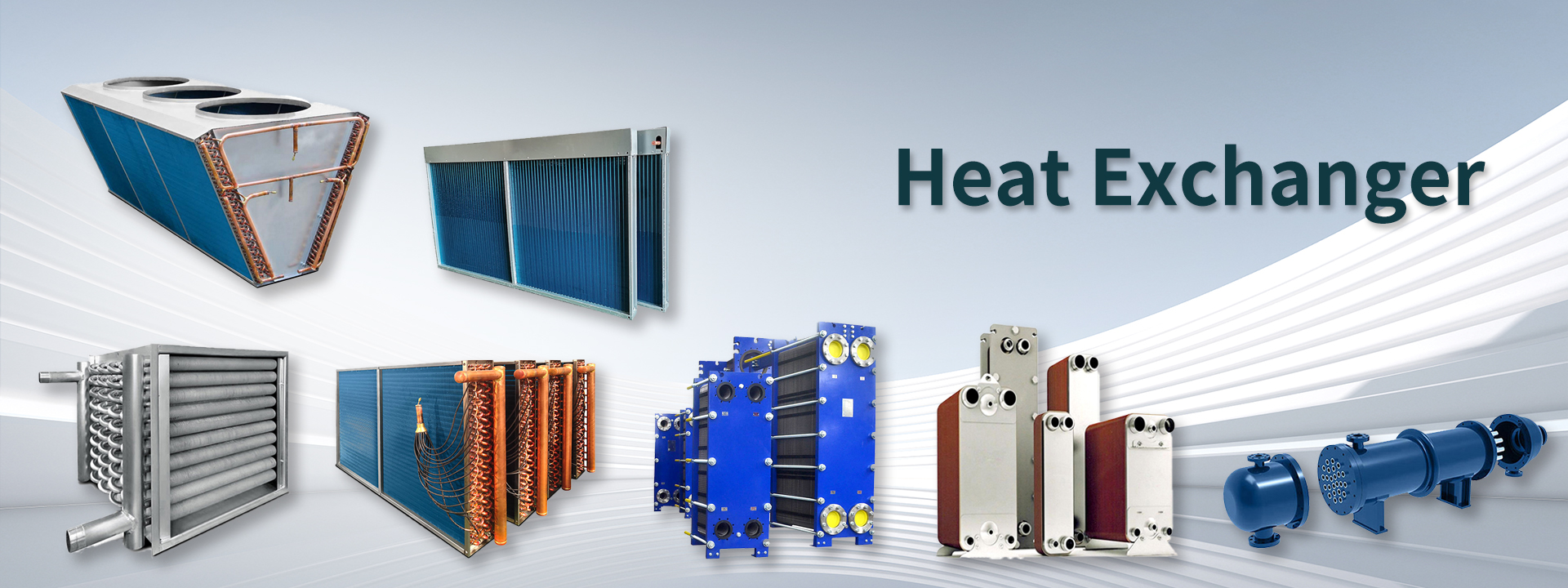
A intercambiador de calor de carcasa y tubos is specified by three things before anything else: its TEMA type code, its thermal duty, and the pressure and material class that contains that duty. Write those three into the datasheet before you request a price. Then add the tube-to-tubesheet joint, the test regime and the document list, because those are the items that decide whether the delivered unit can be accepted without a concession.
A quotation that answers only duty and price is a starting point, not a purchase specification. The gap between the two is where most delivery disputes start. A shell and tube heat exchanger bought from a two-line enquiry is still bought at full price; it simply arrives with somebody else’s assumptions built in. The rest of this guide fills that gap in eight steps, from the twelve datasheet fields through the TEMA code, the tubesheet joint, the tests, the code stack, the inspection plan and the seven mistakes that cause most arguments.
1. What Should a Shell and Tube Heat Exchanger Datasheet Contain?
A usable datasheet carries twelve fields, and each one removes a decision the supplier would otherwise make on your behalf. Leave a field blank and the supplier fills it with the cheapest option that still passes a hydro test.
# | Field | Why it matters | What happens when it is missing |
1 | Duty (kW) with margin | Sets tube surface and shell size | Supplier sizes to minimum, no fouling margin later |
2 | Hot side: fluid, flow, inlet and outlet temperature | Defines the thermal case | Duty drifts, guarantees become unenforceable |
3 | Cold side: fluid, flow, inlet and outlet temperature | Defines the approach temperature | The approach is fixed by guesswork |
4 | Allowable pressure drop, each side | Drives tube count, passes and baffle spacing | Unit meets duty and exceeds pump head |
5 | Fouling factor, each side | Sets the extra surface required | Clean-condition duty only, shortfall on site |
6 | Design pressure and temperature, each side | Sets wall thickness and flange class | Cheapest class that passes the test |
7 | TEMA type code | Fixes front head, shell and rear head | Default becomes a fixed tubesheet design |
8 | Tube OD, wall thickness, length, layout and pitch | Sets surface, cleaning access and velocity | Non-standard tube, long lead time for spares |
9 | Shell, tube and tubesheet materials, including tube grade | Sets corrosion allowance and cost | Lowest grade that matches the fluid list |
10 | Tube-to-tubesheet joint type | Decides leak risk and re-tubing options | Expanded joint assumed, weld not priced |
11 | Code of construction and supplementary standards | Decides design rules and stamping | Only the base code is applied |
12 | Test regime and document class | Decides what you can inspect and accept | Default tests, minimum paperwork |
Which fields does the supplier legitimately need from you?
Items 2, 3, 4 and 5 are process data. No supplier can invent them, and a quotation built without them is a guess with a price attached. Item 5 in particular is often treated as a formality, yet it is the single field that most often explains a shortfall after commissioning.
Items 7, 10 and 12 are the buyer’s engineering decisions. Those are the three that get delegated by accident, because they appear technical and the supplier offers a recommendation. Take the recommendation, but put the final choice in writing. A complete shell and tube heat exchanger datasheet is short, usually two pages plus the process data sheets, and it is the only document that later settles the question of what was actually ordered.
One field is frequently missing from templates borrowed from other equipment: the fouled condition. A datasheet that lists one duty assumes one state. State whether the guarantee applies at start of run or at the end of the cleaning cycle, and the fouling factor stops being a number nobody owns.
Why the pressure drop line is not optional
Allowable pressure drop decides tube count, number of passes and baffle spacing, so it moves the price more than most buyers expect. A shell and tube heat exchanger quoted against an unlimited pressure drop allowance will be compact and cheap. It will also demand more pump head than the plant has.
Give a number per side, in kPa or bar, and state whether it is for the clean or fouled condition. Suppliers cannot optimise against a range, and they will not optimise against silence.
2. How Do You Read a TEMA Type Code?
A TEMA designation is three letters in a fixed order: front head, shell type, rear head. Reading it correctly tells you how the bundle is supported, whether it can be removed, and how much thermal expansion the design tolerates.
What each letter position controls
Posición | Common letters | What it decides | Typical trade-off |
Front head | A, B, C | Channel construction and tube-side access | A gives full tube access at higher cost; B is cheaper but limits inspection |
Concha | E, F, G, H, J, X | Pass arrangement and pressure drop | E is single pass and simplest; F, G and H reduce shell-side pressure drop at higher cost |
Rear head | L, M, N, P, S, T, U | Fixed, packed, floating or U-tube bundle | Fixed tubesheet is cheapest and cannot be mechanically cleaned on the shell side |
Two rules of thumb survive most project reviews. A fixed tubesheet design (rear head L, M or N) suits clean service with moderate temperature difference. A floating head or U-tube design (P, S, T or U) suits service where the bundle must come out for cleaning or where thermal expansion is significant.
Confirm the letter definitions against the TEMA edition named in your order. Editions differ in detail, and a mismatch between the datasheet and the fabricator’s copy is a change order waiting to happen.
How the code changes cost and maintenance
The rear head is where the money sits. A floating head adds a packed or gasketed seal, more machining and a heavier shell, and it buys removable-bundle access. A U-tube bundle is cheaper than a floating head and removes most expansion problems, at the cost of losing mechanical cleaning inside the bend.
State the choice explicitly, and state the reason in the datasheet. A fabricator who understands that the bundle must come out for hydrojetting will not quietly substitute a fixed tubesheet design. The same logic applies to the front head: a B-type bonnet is a fine choice until someone needs to inspect the tube ends without cutting a gasket set every time.
A intercambiador de calor de carcasa y tubos that carries a complete code is easy to price, because every choice is visible. One that carries three letters and a duty is priced three different ways by three fabricators, and the spread you are comparing is scope, not profit.
3. Which Tube-to-Tubesheet Joint Should You Specify?
Specify expanded joints for moderate pressure and non-hazardous service, welded or welded-plus-expanded joints where leakage is unacceptable. The joint, not the tube, is the usual leak path in a shell and tube heat exchanger.
Expanded, welded, or both
An expanded joint relies on rolling the tube into the tubesheet until the wall thins against the hole. Wall reduction is commonly in the 4 to 8 percent range and should be qualified by procedure, not set by feel on the shop floor.
A welded joint adds a strength weld or a seal weld at the tube face. A seal weld closes the leak path without carrying primary load. A strength weld carries load and needs its own qualification under the welding code in force, with a mock-up tested to prove the procedure.
Combination joints, expanded then seal welded, are common in hydrogen, ammonia and other services where a pinhole is a safety event rather than a maintenance item.
How to verify the joint before shipment
Ask for the joint procedure, the qualification record, and a mock-up or sample result. Then ask how many joints are examined and by which method. Visual inspection finds missing welds; a leak test finds through-defects; neither finds a marginal expansion.
The cheapest control is a hold point. Make tube expansion and welding a witness point in the inspection plan, and the question of who did what to which tube stops being a matter of memory.
4. What Tests and Documents Belong in the Order?
Default to four tests and one document list, then add service-specific items. Anything not named in the order is supplied at the fabricator’s discretion.
Hydrostatic test.
- Typically 1.3 times the design pressure, adjusted for allowable stress ratios under the code applied. Confirm the multiplier and hold time in the edition named in the order.
Leak test.
- Helium or a sensitive pneumatic method for volatile, toxic or high-purity service, where a hydro test alone will not reveal a pinhole.
Non-destructive examination.
- Radiography, penetrant, magnetic particle or ultrasonic examination of shell and nozzle welds, at the extent required by the inspection class you specify.
Material verification.
- Certificates to EN 10204 3.1, plus positive material identification and hardness checks where sour service or alloy substitution is a risk.
Document set.
- As-built drawings, material certificates, test reports, welding records, coating report, nameplate rubbing, and an operating and maintenance manual.
Name the inspection class in the order. A Class 1 requirement and a Class 3 requirement can differ by a factor in price, and the difference is entirely in examination extent and documentation, not in the metal.
One more test deserves a line of its own: the performance test. Thermal performance of a shell and tube heat exchanger is rarely proven on the shop floor, because the test rig would need the design flow rates on both sides. Most contracts therefore guarantee performance by calculation and verify it at site. Say so in the order, and the commissioning argument about who owns a shortfall becomes a calculation review rather than a dispute about the equipment.
5. Which Code Governs Your Unit?
Most projects combine three documents: a pressure vessel code for design and fabrication, TEMA for mechanical standards and fouling allowances, and a purchase specification for the rest.
Document | What it governs | When it applies |
ASME BPVC Section VIII Division 1 | Design, materials, fabrication, inspection, testing | Default for pressure containment in most export projects |
TEMA Standards | Nomenclature, mechanical tolerances, fouling factors | Whenever a TEMA type code appears in the datasheet |
API Standard 660 | Refinery and petrochemical practice, documentation, inspection | When the end user is a refinery or an EPC working to API practice |
ASME Section IX | Welding procedure and performance qualification | Whenever welding is specified, including tubesheet welds |
NACE MR0175 / ISO 15156 | Materials for sour service | When H2S is present in either stream |
PED 2014/68/EU | European pressure equipment compliance | When the unit is placed on the EU market |
The practical point is not which code is “best”. It is that the code edition and any supplementary standard must be printed in the datasheet, because a fabricator quoting to a different edition is quoting a different unit at a similar price.
Two layering rules keep the stack clean. First, name one document as the governing code for pressure containment, and treat the others as additions. Second, name the edition of every standard you cite, including TEMA, because “TEMA” without an edition is a family of documents rather than a requirement.
The third layer is the project specification, and it is where most of the differentiation lives. A refinery specification may add examination extent, coating systems, nozzle orientation rules and documentation classes that no code requires. Those additions cost money, and they are the reason two shell and tube heat exchanger quotations for the same duty can differ by a wide margin without either being wrong.
If the unit will be exported into a regulated market, add the market’s own conformity route to the list. The European pressure equipment directive is the common example, but the principle is general: the destination market’s requirements sit on top of the design code, not instead of it.
6. What Should an Inspection and Test Plan Contain?
An inspection and test plan is a table of operations, each marked as hold, witness or review. It turns a purchase order into something an inspector can execute.
A workable plan covers material receipt, cutting and forming, welding and its qualification, tube expansion and welding, heat treatment where required, non-destructive examination, hydrostatic test, coating, and final documentation. Mark the tube-to-tubesheet operation as a hold point if nothing else is.
Add the commercial mechanics around the table: who the inspector is, whether third-party inspection is required, how much notice is needed for a witness point, and what happens when a hold point is missed. Projects rarely fail on the technical content of an inspection plan. They fail on notice periods and on nobody being authorised to release a hold point at 22:00.
Keep the plan to one page. A twenty-page inspection and test plan gets signed and ignored, while a single page with six marked operations gets executed. The inspection of a shell and tube heat exchanger does not need to be exhaustive to be effective; it needs to be specific about the two or three operations where a mistake cannot be corrected later.
Those operations are usually tube expansion, tubesheet welding and the final hydrostatic test. Everything else can be repaired, re-coated or replaced. A mis-expanded joint deep in a bundle cannot.
7. Which Specification Mistakes Cause Delivery Disputes?
Seven mistakes account for most of the arguments, and every one is visible in the datasheet before the order is placed.
Leaving the TEMA code to the fabricator. The default becomes the cheapest removable-free design, which is usually a fixed tubesheet unit.
Giving a range instead of a number for pressure drop. The unit meets duty and misses pump head, and the argument is unwinnable because no number was agreed.
Specifying a fouling factor without saying where it applies. Clean and fouled duty diverge, and the guarantee is written against whichever condition suits the seller.
Treating the tubesheet joint as a workshop detail. The joint type moves cost and leak risk more than the tube grade does.
Naming a code without an edition. Two editions can produce different thicknesses for the same duty.
Omitting the document class. Acceptance then depends on what the fabricator happens to send.
Skipping the pre-inspection meeting. A one-hour meeting before fabrication starts resolves more disputes than a week of correspondence afterwards.
Each of these mistakes has the same shape: a decision that is cheap at the desk and expensive at the flange. None of them is a manufacturing defect, which is why no inspection at the factory will catch them. The only control is the document that travels with the order.
8. How Do You Choose a Supplier?
Choose on documentation discipline, not on catalogue range. Five questions separate a fabricator who can support an inspection regime from one who can only quote a price.
- Which TEMA edition and which pressure vessel code edition will you design to?
- How do you qualify and verify the tube-to-tubesheet joint?
- What is your standard test regime, and what changes at the inspection class we specify?
- Which documents ship with the unit, and can we see a sample set?
- Who signs the hold points, and how much notice does a witness point need?
Nanjing Bang Win Thermal Equipment Co., Ltd. lists shell and tube heat exchangers among its main products, and its official site at intercambiador de calor industrial personalizado.com states that the factory operates under an ISO 9001 quality management system and offers OEM and ODM production to customer drawings. Those are the claims worth testing with the five questions above.
A short note on fit is worth adding to any enquiry. Buyers who already hold a thermal design and need a fabricator to build, document and test against it are the natural match for this kind of supplier. Buyers still choosing between a shell and tube heat exchanger and a plate unit should settle that question first, because no datasheet survives the wrong equipment type.
If the duty is fixed and the datasheet is drafted, send the process data, the mechanical requirements and the document class in one package: request a quotation. Bang Win Thermal, and every alternative on the shortlist, should answer the document class without being asked.
The company also maintains a separate product website at bangwingascylinder.com.
9. Frequently Asked Questions
What does the TEMA code in a quotation actually tell me?
It tells you the front head, shell and rear head arrangement in three letters, which fixes bundle removal, expansion tolerance and tube-side access. Ask the supplier to write the code and the TEMA edition into the quotation, not just the letters.
Should I always specify an allowable pressure drop?
Yes, per side, in absolute units. Without it the fabricator cannot optimise pass count or baffle spacing, and the delivered unit may exceed the available pump head even though it meets the thermal duty.
Is an expanded tubesheet joint acceptable for high pressure?
It can be, but the joint becomes the limiting element, and the qualification record matters more than the joint name. Above moderate pressure, a welded or welded-plus-expanded joint is the usual specification.
Is a hydrostatic test enough to accept the unit?
No. A hydro test proves pressure integrity at test conditions. It does not prove joint quality at operating temperature, material grade, or weld examination extent. Acceptance needs the test, the non-destructive examination and the document set together.
Which documents should ship with a shell and tube heat exchanger?
At minimum: as-built drawings, material certificates to EN 10204 3.1, welding and heat treatment records, non-destructive examination reports, hydro test report, coating report, nameplate details and an operating manual.
Can a shell and tube heat exchanger be re-tubed?
Yes, and the TEMA rear head decides how easily. Removable bundles allow re-tubing in place or in a workshop; a fixed tubesheet design usually means cutting the shell, which changes the economics of repair. If re-tubing is part of the lifecycle plan, buy the removable bundle at the start, when the premium is priced openly instead of later under pressure.
Do I need API 660 if I already specify TEMA?
Not always. API 660 adds refinery documentation and inspection practice on top of TEMA mechanical standards. Specify it when the end user works to API practice, and name the edition so the fabricator prices the same scope.
10. Conclusion and Next Step
Three items decide whether a shell and tube heat exchanger arrives as specified: a TEMA code you chose rather than inherited, a tubesheet joint with a qualification record behind it, and a test and document class written into the order.
Everything else, including price, can be negotiated after those three are fixed. Negotiating price first and technical scope later is how a cheap unit becomes an expensive project.
The next step is a one-page check before the enquiry goes out. Confirm the twelve datasheet fields are complete, confirm the TEMA code and its edition are printed, and confirm the inspection class is named. Then send the package and ask every shortlisted fabricator the five questions in Section 8.
Two hours of desk work at this point removes most of the risk that the delivered shell and tube heat exchanger is technically sound and commercially wrong. That is the failure mode worth designing against, because it passes every factory test and still costs a project its schedule.