Comprehensive Engineering Guide to Spiralgeschweißtes Rippenrohrs in Industrial Heat Recovery
1. Direct Answer: What Is a Spiralgeschweißtes Rippenrohr?
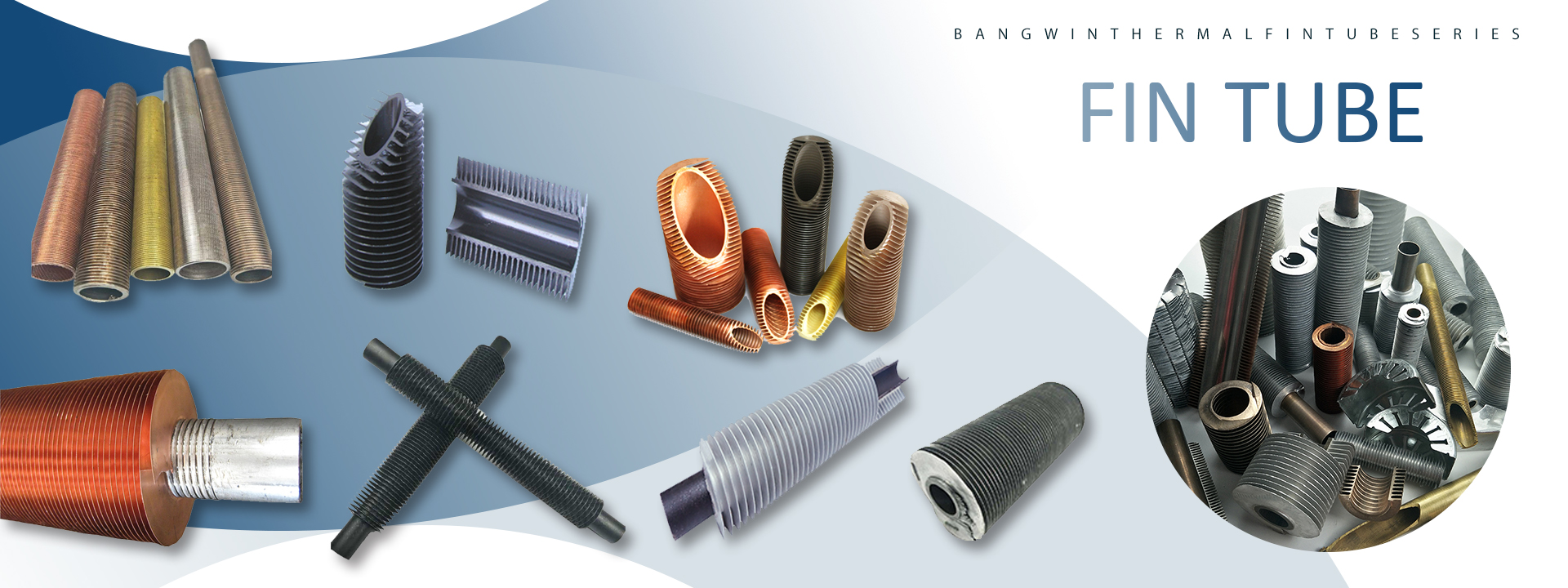
A spiralförmig geschweißtes Rippenrohr is an extended surface heat transfer component manufactured by continuously wrapping a steel strip helically around a base tube while welding it securely using high-frequency electric resistance welding (HFERW). This metallurgical bond delivers near 100% thermal contact efficiency and exceptional structural rigidity under extreme operating temperatures up to 550°C. Industrial boilers, heat recovery steam generators (HRSG), petrochemical fired heaters, and economizers widely deploy these tubes to maximize gas-side heat transfer coefficients in compact footprints.
Thermal engineers specify spiralförmig geschweißtes Rippenrohrs when gas-side convective heat transfer rates are substantially lower than tube-side fluid rates. Adding external fins expands the effective outside surface area by 8 to 15 times, overcoming gas-side thermal resistance without increasing overall tube count.
2. Manufacturing Process: How High-Frequency Welding Ensures Bond Integrity
High-frequency resistance welding forms the cornerstone of modern spiralförmig geschweißtes Rippenrohr production. The process combines high-frequency electric currents (typically 300 kHz to 450 kHz) with mechanical squeeze rolls to achieve localized fusion without adding filler metal.
The Step-by-Step Welding Sequence
Surface Preparation
- : The base pipe passes through shot-blasting or mechanical polishing to eliminate scale, rust, and oil contaminants.
Helical Winding and Contact Feeding
- : The fin strip feeds continuously at a controlled tension and angle onto the rotating base tube.
High-Frequency Induction Heating
- : Current concentrates at the microscopic junction point through skin and proximity effects, heating the contact surfaces to plastic forging temperatures (approx. 1200°C–1300°C).
Forging and Fusion
- : Heavy mechanical rollers apply continuous pressure, fusing the fin root directly into the tube wall.
Quality Inspection
- : The finished spiralförmig geschweißtes Rippenrohrundergoes dimensional verification, weld peel testing, and ultrasonic examination according to international fabrication standards.
Unlike tension-wound (L-foot / LL-foot) or mechanically grooved (G-type) fins, the high-frequency welded bond prevents fin loosening caused by thermal cycling, vibration, or thermal expansion mismatch.
3. Solid vs. Serrated: Which Spiral Finned Tube Design Fits Your System?
Engineers select between solid (plain) fins and serrated (segmented) fins based on gas velocity, acceptable pressure drop, particulate loading, and thermal duty.
Engineering Comparison Matrix
Technical Parameter | Serrated Spiralgeschweißtes Rippenrohr | |
Flossenform | Continuous, smooth surface strip | Segmented cuts along the outer fin edge |
Wärmeübergangskoeffizient | Baseline standard (1.0x) | 10% to 20% higher due to boundary layer disruption |
Gas-Side Pressure Drop | Mäßig | Higher per row at identical face velocity |
Fouling & Soot Accumulation | Lower tendency; easy to clean via soot blowers | Higher risk in heavy ash/particulate environments |
Weight Savings | Standard weight | 5% to 12% lighter per linear meter |
Recommended Applications | Coal boilers, biomass flue gas, heavy ash waste heat | Clean natural gas exhaust, gas turbines, light petrochemicals |
Key Engineering Takeaway: Specify solid spiral welded finned tubes when handling particulate-laden flue gases to prevent ash bridging. Choose serrated designs for clean gas turbine exhaust where maximizing heat transfer in limited space takes top priority.
4. Material Selection: Matching Base Tubes and Fins to Corrosive Environments
Material compatibility governs the operational lifespan of spiralförmig geschweißtes Rippenrohr assemblies, particularly in sulfur-bearing or high-humidity exhaust systems.
Standard Industrial Material Combinations
Carbon Steel / Carbon Steel (CS/CS)
- : ASTM A106 Gr. B, ASTM A179, or ASTM A214 base tubes paired with ASTM A1008 / A1010 carbon steel fins. This combination offers the most economical solution for standard boiler economizers and operating temperatures below 400°C.
Low-Alloy Steel (Cr-Mo)
- : ASTM A335 (P11, P22) tubes paired with alloy fins. Engineered for superheaters and convection banks exposed to temperatures from 400°C to 550°C.
Stainless Steel / Stainless Steel (SS/SS)
- : ASTM A249 / A312 (Grades 304L, 316L, 321, 310S). Ideal for condensing economizers, aggressive chemical gas streams, and offshore heat recovery where dew-point corrosion occurs.
Dissimilar Combinations
- : Stainless steel fins welded onto carbon steel base tubes to reduce material cost while protecting exterior surfaces against localized acid condensation.
5. Thermal and Mechanical Engineering Advantages
Evaluating a spiralförmig geschweißtes Rippenrohr requires examining both heat transfer enhancement and long-term mechanical reliability:
Zero Contact Resistance
- : Mechanical fins depend on contact pressure, which deteriorates over thermal expansion cycles. High-frequency welding eliminates contact air gaps entirely, sustaining constant thermal conductance across decades.
Exceptional Tube Rigidity
- : The continuous welded helical strip acts as a structural stiffener around the tube wall. This reduces vibration damage caused by cross-flow acoustic resonance and vortex shedding in high-velocity ducting.
High Temperature Tolerance
- : Welded joints endure continuous operating temperatures up to 550°C without fin deformation or detachment.
Enhanced Soot-Blower Resistance
- : High-pressure steam or acoustic soot blowers frequently dislodge mechanical fins. High-frequency welded fins withstand aggressive cyclic soot blowing without stripping.
6. Critical Design Parameters: Sizing Fin Pitch, Height, and Thickness
Optimizing fin geometry balances thermal efficiency against draft loss and manufacturing limits.
Standard Geometric Dimensions
Base Tube Outside Diameter (OD)
- : 25.4 mm to 219 mm (1.0″ to 8.625″)
Flossenhöhe
- : 9.5 mm to 38.1 mm (0.375″ to 1.5″)
Flossendicke
- : 0.8 mm to 3.0 mm (0.032″ to 0.12″)
Fin Pitch / Fin Density
- : 2 to 7 fins per inch (80 to 287 fins per meter)
Thermal engineers calculate overall surface efficiency by balancing fin height and fin thickness against metal thermal conductivity. Taller fins expand surface area but feature diminishing temperature gradients along the fin tip.
7. Common Engineering Mistakes in Finned Tube Heat Exchanger Sizing
Avoiding standard sizing errors ensures reliable operating performance and extends scheduled maintenance intervals:
Excessive Fin Density in Ash-Laden Streams
- : Specifying 6 or 7 fins per inch in coal or biomass boiler flue gas causes rapid ash bridging and severe tube clogging. For dirty flue gas, restrict fin density to 2.5 to 3.5 fins per inch.
Ignoring Flue Gas Acid Dew Point
- : Cooling combustion gases below the sulfuric acid dew point (120°C–140°C depending on sulfur content) triggers aggressive cold-end corrosion. Select stainless materials or maintain tube wall temperatures safely above the dew point.
Neglecting Gas-Side Pressure Drop Limits
- : Tightly packed fin configurations create substantial backpressure on induced draft (ID) fans, driving up plant auxiliary electrical consumption.
Selecting Mechanical Fins for Cyclic High-Heat Service
- : Specifying tension-wound fins instead of a high-frequency spiralförmig geschweißtes Rippenrohrin cycling waste heat boilers leads to thermal detachment within months.
8. Industrial Applications: Solving High-Temperature Challenges in Southeast Asia
Rapid industrial growth across Southeast Asia (including Thailand, Vietnam, Indonesia, and Malaysia) demands robust heat recovery equipment capable of handling high ambient humidity and diverse fuel sources:
Palm Oil & Wood Biomass Boilers (Indonesia & Malaysia)
- : Biomass combustion generates high alkali ash. Solid spiralförmig geschweißtes Rippenrohrs with wide pitch (8 mm–10 mm) and thick fin blades deliver erosion resistance and easy water/steam cleaning.
Petrochemical & Fired Heaters (Rayong, Thailand & Dung Quat, Vietnam)
- : Convection sections require high-temperature resistance and compliance with strict safety codes.
Combined Cycle Power Plants & HRSGs
- : High-frequency welded tubes recover exhaust heat behind natural gas turbines with minimal footprint and maximum thermal recovery.
9. Sourcing Reliable Heat Recovery Components from Nanjing Bang Win Thermal Equipment
Selecting an experienced manufacturer is essential when procuring custom finned tubing for demanding thermal duties.
Nanjing Bang Win Thermal Equipment Co., Ltd. specializes in the engineering, design, and fabrication of industrial heat exchange systems and precision extended surface tubes. The company produces custom high-frequency spiralförmig geschweißtes Rippenrohrs, heat exchanger bundles, and replacement boiler banks engineered to exact customer specifications.
Engineers and procurement teams benefit from Bang Win’s tailored manufacturing capabilities:
Comprehensive Dimensional Range
- : Tube outer diameters from 25.4 mm up to 219 mm with customized solid or serrated fin geometries.
Multiple Material Pairings
- : Precision welding across carbon steel, alloy steel, and austenitic stainless steel grades.
Strict Quality Control
- : Rigorous dimensional verification, weld penetration testing, and hydrostatic pressure testing according to international engineering standards.
For engineering inquiries, custom finned tube bundle designs, or project replacement quotes, visit the official company platform at kundenspezifischerindustriellerWärmetauscher.com.
10. Frequently Asked Questions (FAQ)
l What is the maximum operating temperature for a spiralförmig geschweißtes Rippenrohr?
A high-frequency spiralförmig geschweißtes Rippenrohr operates reliably at continuous temperatures up to 550°C (1022°F) when fabricated with appropriate carbon steel or low-alloy materials. Stainless steel and high-nickel alloy configurations can withstand higher operating thresholds depending on specific atmospheric chemistry.
l How does a spiralförmig geschweißtes Rippenrohr differ from an extruded finned tube?
A spiralförmig geschweißtes Rippenrohr fuses a distinct steel fin strip onto a steel base tube using high-frequency electrical resistance welding. An extruded finned tube rolls an outer aluminum sleeve cold over an inner base tube, creating an integrated aluminum fin without welding. Welded tubes support higher operating temperatures and mechanical abuse, while extruded tubes excel in low-temperature air-cooled condensers.
l Can solid and serrated spiral finned tubes be interchanged?
They can be interchanged thermally with proper engineering adjustments, but aerodynamic and fouling characteristics differ. Serrated fins improve heat transfer by 10%–20% in clean gas streams but plug rapidly in particulate-heavy flue gas. Always confirm soot loading and fan static head before substituting fin types.
l How do engineers clean soot and ash from spiralförmig geschweißtes Rippenrohr banks?
Plant operators clean spiral welded tube bundles using steam soot blowers, compressed air lances, acoustic horns, or periodic high-pressure water washing during shutdowns. The solid fusion weld resists mechanical stripping from high-pressure cleaning nozzles.
l What quality control tests verify high-frequency fin weld strength?
Standard quality control tests include the fin peel test (bending and tearing the fin to ensure base metal tearing rather than weld separation), metallographic weld penetration cross-section polishing, visual weld spatter audits, and hydrostatic pressure testing of the completed base tube.
l Why is high-frequency resistance welding preferred over manual arc or TIG welding for finned tubes?
High-frequency resistance welding operates continuously at high speeds with minimal heat-affected zones (HAZ). It prevents tube wall burn-through, produces consistent full-root fusion, and eliminates the recurring cost and weight of welding consumables.
11. Conclusion and Next Steps for Engineering Procurement
Die spiralförmig geschweißtes Rippenrohr remains the premier extended surface solution for industrial waste heat recovery, boiler economizers, and high-temperature petrochemical heaters. Its continuous 100% metallurgical bond guarantees zero contact thermal resistance and superior mechanical endurance under severe operating conditions.
When preparing your engineering specifications:
- Define flue gas composition, dust loading, and acid dew-point temperatures.
- Select solid fins for dirty gas streams and serrated fins for clean exhaust.
- Optimize fin pitch and thickness to balance thermal recovery against system fan power limits.
- Partner with an experienced manufacturer capable of delivering certified welding standards and custom material pairings.
For technical consultations or customized fabrication schedules, contact the engineering team at Nanjing Bang Win Thermal Equipment Co., Ltd..