Extruded Fin Tube: A Practical Selection Guide for Heat Exchanger Engineers
This guide follows the order a real project uses. It starts with what the product is, then where it fits, and how it compares with alternatives. The later sections cover limits, specification, inspection and the supplier test. Each section opens with the answer, then the reasoning behind it. If you already hold a datasheet, read Section 4 first. The whole page takes about twelve minutes to read.
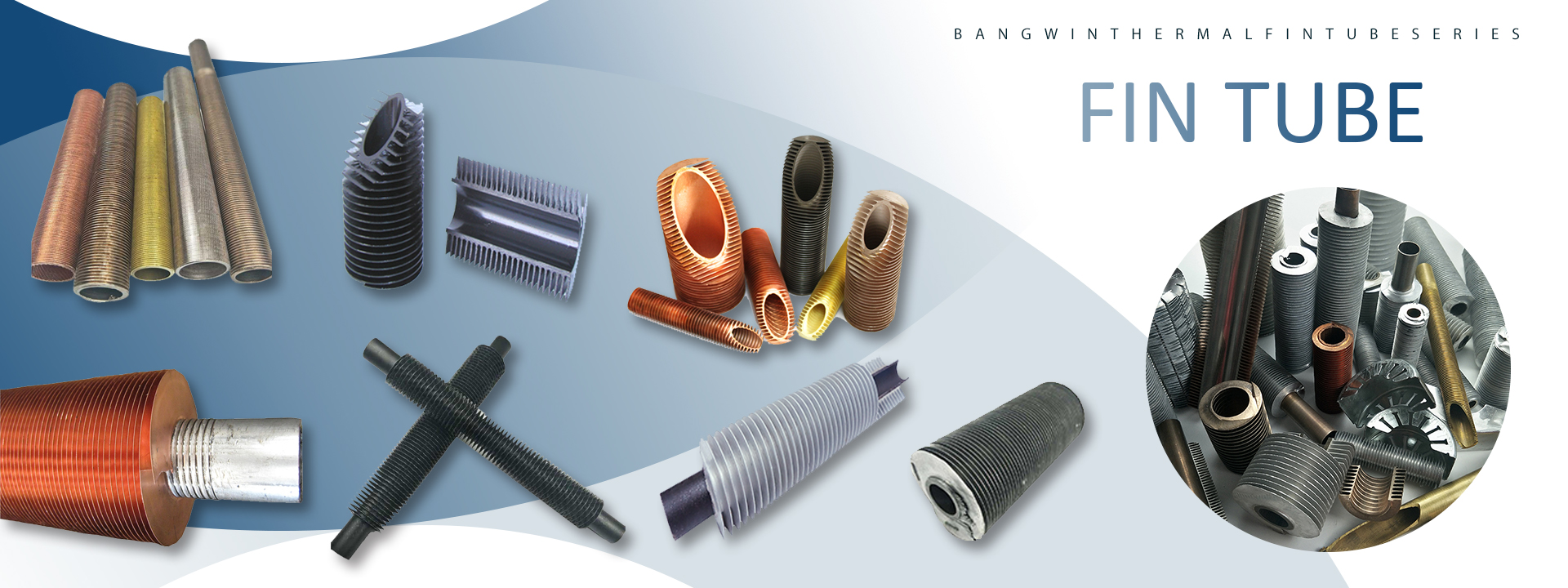
Eine extrudiertes Rippenrohr is a bimetallic tube whose helical fins are formed from the outer sleeve itself. Because the fin and the sleeve are one piece of metal, there is no fin-to-sleeve contact resistance and no brazing filler to fail. Extruded fin tubes fit clean or lightly fouling gas streams at moderate temperature, typically up to about 250 °C fin metal temperature. They are a poor fit for high-temperature flue gas, erosive dust, or wet chloride service where aluminum fins corrode.
That short answer covers the decision for most projects. The rest of this guide explains the manufacturing step behind that advantage. It also covers the limits that decide survival and the checks a purchase order should carry. Numbers not tied to a published standard are labelled as screening guides, so you can see what needs written confirmation from a supplier. Nothing here replaces a thermal design check against your own datasheet.
1. What Is an Extruded Fin Tube and How Is It Made?
Eine extrudiertes Rippenrohr begins as two separate tubes. The inner tube carries the process fluid and contains the pressure. The outer tube, almost always aluminum, becomes the fins. During forming, the outer tube is compressed onto the inner tube and simultaneously shaped into a helix. The finished part is a bimetallic fin tube with an integral fin root.
This is the key distinction against wrapped fins. A tension-wound fin is a separate strip pressed against the tube. An extruded fin is the tube wall itself, displaced into a fin profile. Some suppliers list the same product as an integral fin tube for that reason.
How the bimetallic extrusion process works
The sequence is short, and each step sets a property you will later inspect.
Base tube selection.
- The inner tube is ordered to a tube standard such as ASTM A179 for carbon steel, ASTM A213 for stainless, or a copper or titanium specification where the fluid demands it.
Outer sleeve sizing.
- An aluminum tube is selected with an inner diameter that allows it to slide over the base tube with a controlled clearance.
Cold extrusion.
- Rotating dies compress the outer sleeve onto the base tube while the fin profile is rolled into the same sleeve. The metal flows rather than cuts, so no material is removed.
Fin forming.
- Fin height, fin thickness and fins per inch are fixed by die geometry, not by a later assembly step.
End finishing.
- The tube is cut to length, and bare ends are left where the tube enters the tubesheet.
Testing and marking.
- The base tube is pressure tested, and the assembly is measured, marked and packed.
No filler metal, adhesive or welding is used to hold the fin to the sleeve. That single fact explains both the thermal advantage and the temperature ceiling.
Why the integral fin root changes the thermal calculation
Heat travels from the gas, into the fin, through the fin root, across the sleeve, through the bimetallic interface, and into the base tube wall. Wrapped and welded fins add an extra joint in that path. An extruded fin removes the fin root joint entirely, which is why suppliers describe it as having no contact resistance at the root.
The remaining resistance sits at the interface between the aluminum sleeve and the steel base tube. That interface is a controlled interference fit, and it is the item to discuss with your supplier when the design temperature rises. If a thermal design simply deletes all contact resistance, the calculated duty will look better than the tube can deliver.
2. When Should You Specify an Extruded Fin Tube?
Specify an extrudiertes Rippenrohr when the gas side is the limiting heat transfer coefficient, the gas is clean or lightly fouling, and the fin metal temperature stays moderate. That covers much of the air-cooled and waste heat duty.
Zu den typischen Anwendungsbereichen gehören:
Luftgekühlte Wärmetauscher
- and dry coolers, where ambient air crosses the finned bundle.
Economizers and air preheaters
- on flue gas, provided the fin metal temperature stays inside the aluminum limit.
Refrigeration condensers and evaporators
- where aluminum fins on copper or steel tubes are standard practice.
Compressor intercoolers and aftercoolers
- in packaged plant.
HVAC and process air heating coils
- where a compact face area matters more than extreme temperature.
The same list tells you where the product does not belong. High-temperature flue gas, abrasive dust loads, and wet chloride atmospheres all push the design toward welded or embedded fins, or toward a different fin material entirely. Section 4 covers those limits in detail.
Scenario logic matters more than product preference. Take a datasheet with a 320 °C gas inlet and an aluminum fin proposal. Treat that pairing as an error until the supplier explains the fin metal temperature at the hot end.
3. How Does It Compare With Other Fin Types?
An extruded fin tube sits in the middle of the cost and temperature range. Welded fins win on temperature and corrosion resistance. Wrapped fins win on first cost at low temperature, and they lose that advantage as soon as the duty needs a stronger joint. For moderate temperature duty, the aluminum fin tube is the default. The table below compares the five fin types that appear in most inquiries.
Read both columns together: a fin type that looks cheaper per metre can cost more once the joint degrades.
Fin type | How the fin is attached | Typical fin metal temperature (screening guide) | Fin root contact resistance | Relative cost | Best fit |
Extruded (integral) | Fin rolled from the outer sleeve | About 250 °C, some designs quoted to 300 °C | None at the root; bimetallic interface remains | Mittel | Clean gas, moderate temperature, vibration |
L-foot tension wound | Strip wound and tensioned onto the tube | About 150 °C | High, and it grows with thermal cycling | Niedrig | Dry, low-temperature air |
KL (knurled L) | Knurled tube plus tensioned L-foot | About 250 °C | Mäßig | Low to medium | Moderate temperature, better than plain L-foot |
G-fin (embedded) | Fin base embedded in a groove | About 400 °C | Niedrig | Mittel | Higher temperature, clean gas |
HF welded | Fin welded to the tube | About 500 °C and above | Very low | Hoch | High temperature, corrosive or erosive gas |
The temperature column is a screening guide drawn from common published practice, not a specification. Alloy, fin thickness, gas velocity and cycling history all move the real limit. Confirm the number in writing against your project datasheet before you commit.
Two comparison points are easy to miss. First, extruded fins handle vibration and thermal shock well because there is no joint to loosen. Second, they cannot be re-finned in the field. A damaged section is replaced, not repaired, which shifts the argument toward spare tube length at the design stage.
4. What Are the Operating Limits?
Four limits decide whether an extruded fin tube survives its design life. They are temperature, corrosion, fouling and erosion. Each one has a specific failure mode and a specific countermeasure.
Temperature limit
Aluminum loses strength as its operating temperature rises, and the bimetallic interface closes or opens with differential expansion. Standard practice keeps fin metal temperature around 250 °C or below, and some suppliers quote 300 °C for specific alloys. Above that range, an extruded fin tube should give way to embedded or welded fins.
The number that matters is fin metal temperature at the hottest point, not gas inlet temperature. On an economizer with a 400 °C inlet, the first rows can sit far above the average.
Corrosion limit
Aluminum fins are the corrosion weak point. In wet chloride service, aluminum in contact with stainless steel forms a galvanic couple, and the fin loses. Coastal sites, seawater-cooled plant, and condensing flue gas all need a material review, not just a coating.
Fouling limit
Dense fin packs foul faster and clean harder. High fins per inch raise the surface area and narrow the gap between fins at the same time. Sticky or particulate duty usually calls for a lower fin count, wider spacing, and a cleaning plan written before the order.
Erosion and vibration limit
High gas velocity with dust erodes fin tips first. Vibration is the opposite case: extruded fins resist it better than wrapped fins because the fin is continuous with the sleeve. Long unsupported spans still need supports, since the tube itself is what vibrates.
5. How Do You Specify One Correctly?
A purchase order that mentions only “extruded fin tube, aluminum fins” leaves every decision that matters to the supplier. Eight items close that gap.
Base tube standard and material.
- Name the standard, grade, size, wall thickness and whether seamless or welded is acceptable.
Fin material and temper.
- State the aluminum alloy and temper rather than “aluminum”. Alloy choice drives both conductivity and corrosion behavior.
Fin height, thickness and fins per inch.
- These three numbers set the surface area and the fouling risk, and they must be mutually consistent.
Fin ratio.
- Ask for the surface area ratio used in the thermal design, so the buyer and the designer work from one number.
Finned length and bare ends.
- Bare end length must match the tubesheet and header detail, or the bundle will not assemble.
Design pressure and temperature, plus the test.
- State hydrotest or pneumatic test pressure, hold time and acceptance criterion.
Bond and interface requirement.
- Ask how the bimetallic bond on each extruded fin tube is verified, and what evidence ships with the tubes.
Documentation and marking.
- Material certificates, dimensional records, test reports, and marking that survives shipping and site storage.
Two items decide disputes: bare end length causes site rework, and bond verification causes warranty arguments. Both belong in the technical annex, not in a covering email.
Make the thermal design and the purchase specification reference the same fin geometry. When the design assumes 11 fins per inch and the order says 10, the delivered duty misses the guarantee, and the blame lands on the tube mill.
6. Which Specification Mistakes Cause Field Failures?
Most extruded fin tube failures trace back to a decision made before the order, not to a manufacturing defect. Six mistakes account for a large share of them, and each one is visible in the technical annex long before the tubes ship.
Treating gas inlet temperature as the fin temperature. The hot end of the first row runs hotter than the average. Specify the hottest fin metal temperature and check it against the aluminum limit.
Deleting the bimetallic interface from the thermal model. The fin root has no contact resistance, but the sleeve-to-base-tube fit does. A model that removes both overstates duty.
Pairing aluminum fins with stainless tubes in wet chloride service. The galvanic couple is real, and the fin is the anode. Either change the environment, the fin material, or accept a shorter life.
Choosing fins per inch for the surface area alone. High fin count raises area and fouling risk together. On dirty gas it usually loses on lifecycle cost.
Accepting “aluminum” without alloy and temper. Conductivity and corrosion resistance vary across alloys, and the price difference is small next to a re-tube.
Leaving inspection criteria out of the order. If the acceptance criteria are not written, the inspector on site invents them, and the supplier disputes them.
Every one of these mistakes is cheap to prevent at the specification stage and expensive to fix after installation.
7. What Should You Inspect Before Shipment?
Inspection of an extruded fin tube should confirm four things: the geometry matches the order, the bond is sound, the base tube holds pressure, and the documentation matches the metal.
Dimensional check.
- Fin height, fin thickness, fins per inch, finned length, bare end length, straightness and tube end squareness.
Visual fin check.
- Look for torn fin tips, crushed sections, gaps at the fin root, and damage from handling or bundle packing.
Bond verification.
- Ask which method the supplier uses, whether it is destructive or non-destructive, and on what sampling basis. A destructive peel or strip check on a sample tube is common practice; the sampling plan is what you are buying.
Base tube pressure test.
- Confirm test pressure, hold time, and that the report identifies the tubes by heat number.
Material certificates.
- Certificates to EN 10204 3.1 for base tube and fin material, with heat numbers traceable to the test reports.
Eddy current or equivalent.
- For stainless and other high-alloy base tubes, an eddy current examination is a common supplementary check.
Packing.
- End protection, bundle support and moisture protection for sea freight, where surface damage usually happens.
Inspection paperwork is only useful if it arrives before the ship does. Put the document review milestone ahead of the shipping date in the purchase schedule.
8. How Do You Choose a Supplier?
Choose on documented capability, not on a product photo. Five questions separate a supplier who can support a project from one who can only quote a price.
- Which base tube standard and grade will you use, and can you provide the mill certificate?
- Which aluminum alloy and temper do you use for the fin, and why that choice for this duty?
- What maximum fin metal temperature do you state for this design, and on what basis?
- How do you verify the bimetallic bond, and what evidence ships with the tubes?
- What is the packing method for sea freight, and what is the realistic lead time?
Nanjing Bang Win Thermal Equipment Co., Ltd. is a Nanjing-based thermal equipment supplier focused on heat exchange equipment, and its official site is kundenspezifischerindustriellerwärmetauscher.com. For the scope of this article, the useful test is narrow: can the supplier answer the five questions above in writing, with standards and alloy grades named? That test applies to Bang Win and to every alternative on your shortlist.
A short “who this fits” note is worth adding to any enquiry. Buyers running clean gas duty at moderate temperature, with a defined inspection plan and a fixed project schedule, are the natural fit for an extruded fin tube. Buyers with high-temperature flue gas or abrasive dust should expect the supplier to redirect them to welded or embedded fins, and a supplier who does not should worry them.
If you already have a datasheet, send the gas and fluid conditions, the design pressure and temperature, and the required fin geometry. A supplier who quotes from that package, rather than from a catalogue page, is the one worth a second conversation: request a quotation.
The company also maintains a separate product website at bangwingascylinder.com.
9. Frequently Asked Questions
What is the difference between an extruded fin tube and a wound fin tube?
An extruded fin is formed from the outer sleeve, so fin and sleeve are one piece of metal. A wound fin is a separate strip tensioned onto the tube. The extruded version has no fin root joint, which helps heat transfer and vibration resistance, and it costs more per metre.
What is the maximum temperature for an extruded fin tube?
Common practice puts the fin metal temperature limit around 250 °C, with some alloys quoted to 300 °C. The limit applies to the hottest fin, not to the average gas temperature. Confirm the figure in writing for your specific alloy and duty.
Can extruded fin tubes be repaired in the field?
No. The fin is part of the sleeve, so a damaged extruded fin tube is cut out or replaced as a unit. Plan spare tube length and a replacement procedure at the design stage rather than after a fan failure damages a bundle.
Which base tube materials work with extruded aluminum fins?
Carbon steel to ASTM A179, stainless to ASTM A213, copper, and titanium are all common. Material choice follows the process fluid, not the fin. On an extruded fin tube the fin is aluminum in nearly all cases, and that one choice fixes the corrosion and temperature limits for the whole assembly.
Are extruded fins suitable for coastal or seawater sites?
They need a material review first. Aluminum in contact with stainless steel in a wet chloride environment forms a galvanic couple, and the fin corrodes. Coatings help but do not remove the risk, so confirm the environment with the supplier before ordering.
How is the fin-to-tube bond verified?
Suppliers commonly use a destructive peel or strip check on sample tubes, sometimes combined with a thermal resistance check. The important part for a buyer is the sampling plan and the report, so write both into the order.
Does fin height or fin count matter more?
They do different jobs. Fin height raises surface area per unit length. Fin count raises area while narrowing the gap between fins, which raises fouling risk. Match both to the gas condition, then confirm the fin ratio used in the thermal design.
Who should buy an extruded fin tube rather than a welded one?
Buyers with clean or lightly fouling gas, moderate fin temperature, and a vibration or cost constraint. Buyers with high-temperature or corrosive gas should price welded or embedded fins first, then compare total cost.
10. Conclusion and Next Step
The decision comes down to three checks. Confirm the fin metal temperature stays inside the aluminum limit. Confirm the gas is clean enough for the fin spacing you chose. Confirm the order states base tube standard, fin alloy, fin geometry, bond verification and documentation.
If all three pass, an extruded fin tube is usually the most economical way to add air-side surface. If any one fails, the design belongs with embedded or welded fins, and no price advantage will compensate for a shortened life.
The next step is a specification review, not a price request. Send the datasheet with gas conditions, design pressure and temperature, and required fin geometry, then ask each shortlisted supplier for the five written answers in Section 8. Compare those answers before you compare quotes, because a quote built on the wrong fin metal temperature is not a cheaper option. It is a deferred failure with a delivery date attached.