1. Introduction
Industrial and commercial processes often require efficient heat transfer.
Consequently, heat transfer tubes with attached fins provide improved thermal characteristics.
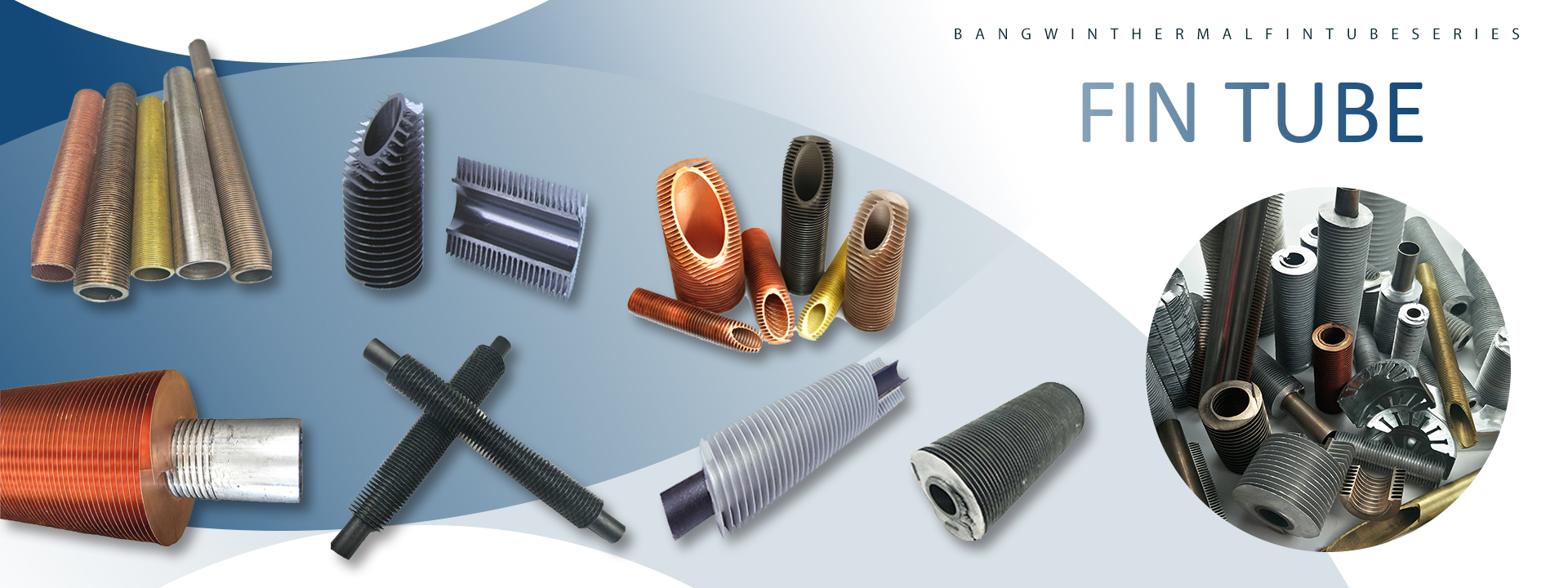
Copper Finned Tubes use copper tubes together with external fins.
The copper tube provides good thermal conductivity for heat transfer.
At the same time, the fins add greater surface area on the outside of the tube.
Cu finned tubes allow more efficient heat transfer compared to bare tubes.
Applications can include heating, cooling, condensing, or evaporating fluids.
Copper also exhibits suitable corrosion resistance properties in many applications.
As a result, copper finned tubes are often used in HVAC, refrigeration, industrial cooling, and heat exchangers.
Bangwin Thermal supplies fin tube solutions and industrial heat exchangers to customers worldwide.
2. What Is a Copper Finned Tube
A Copper Finned Tube is a finned tube that uses copper for the tube material.
Fin manufacturers attach fins to the outside of the tube.
This increases the overall heat transfer surface area of the tube.
The fluid for heat transfer flows through the copper tube.
Heat can then transfer to or from external air through the fins.
Essential components of a copper finned tube include:
- Tube
- External fins
- Connection between fins and tube
- Internal passage for fluid
- Optional coatings
Fin designs can also vary. Some common options include:
- Spiral fins
- Low fins
- Serrated fins
- Continuous fins
- Louvered fins
As a result, there are many options for copper finned tube designs to suit each application.
3. How Copper Finned Tubes Work
Heat transfers through both the tube wall and external fins of a copper finned tube.
The process begins with the flow of a working fluid through the tube.
Heat will naturally transfer to or from the fluid and the tube wall.
The copper then conducts heat to or from the external fins.
Finally, heat transfers to or from the air surrounding the fins.
Fins add considerable surface area on the outside of the tube.
As a result, the tube achieves greater heat transfer in roughly the same length.
Coupled with copper’s thermal conductivity, this allows effective thermal transfer rates.
Fin geometry also plays a role in airflow and pressure drop considerations.
Engineers must balance the heat transfer benefits with pressure drop limitations.
4. Copper Finned Tube Construction
Different elements make up a copper finned tube assembly.
4.1 Copper Tube
The tube provides the passage for fluid to flow through the heat exchanger.
The copper tube also allows thermal conduction to or from the fluid.
As a result, the tube diameter and thickness are important design characteristics.
Considerations include:
- Tube outside diameter
- Tube wall thickness
- Tube length
- Copper grade
- Allowable working pressure
4.2 External Fins
The fins help transfer heat to or from the air outside the tube.
Manufacturers can make fins from copper or other compatible materials.
Copper provides strong thermal conductivity for the fins.
Alternatives like aluminium fins can reduce weight as well.
Manufacturers can select suitable fin materials for each application.
4.3 Fin Connection
How the fins connect to the tube impacts thermal efficiency.
Fin-to-tube contact should provide low thermal resistance.
As a result, the manufacturing process should ensure proper assembly.
Fin attachment methods vary between different manufacturing processes.
5. Copper Finned Tube Manufacturing Process
Different fin designs require unique manufacturing processes.
However, all copper finned tube assembly involves some common steps.
5.1 Copper Tube Preparation
Manufacturers start by preparing the copper tube.
The copper tube should have the correct diameter, wall thickness, and length.
Next, manufacturers clean the outer surface of the tube.
Cleaning ensures the tube surface is ready for fin attachment.
5.2 Fin Material Preparation
Next, the fin material requires preparation as well.
Fin materials typically consist of copper or aluminium.
However, material selection depends on many factors, such as:
- Thermal conductivity
- Weight requirements
- Corrosion resistance
- Cost
- Expected operating environment
Therefore, many considerations influence fin material selection.
5.3 Fin Forming
Next, manufacturers form the fins into their desired shape.
Fin formation methods can produce various fin types.
For example, spiral fins result from continuous spiral winding.
Forming machines can shape low fins or serrated fins.
Consequently, fin formation produces fin shapes that suit heat exchanger designs.
5.4 Fin Attachment
Now, manufacturers attach the formed fins to the copper tube.
Methods of attachment can include:
- Mechanical expansion
- Winding
- Brazing
- Extrusion
- Other processes
Consequently, the type of fins influences how they attach to the tube.
5.5 Tube Finishing
After assembly, finishing cuts the tube to its desired length. A straightening process follows.
Finally, technicians carry out inspections of the finished copper finned tube.
Inspection points include:
- Tube outside diameter
- Fin height
- Fin spacing
- Fin alignment
- Surface condition
- Tube straightness
Correct finishing and quality control ensures consistent performance.
6. Main Advantages of Copper Finned Tubes
Copper finned tubes offer many benefits to heat transfer applications.
6.1 Excellent Thermal Conductivity
Copper has high thermal conductivity.
As a result, heat can rapidly transfer through the tube wall.
Therefore, copper is ideal for high-performance heat transfer applications.
6.2 Increased Heat Transfer Area
Adding fins to the tube increases heat transfer surface area.
Consequently, copper finned tubes achieve higher heat transfer than smooth tubes.
This can allow a smaller heat exchanger size to meet thermal demands.
6.3 Compact Heat Exchanger Design
Since fins add surface area without greatly increasing tube size.
Engineers can construct smaller heat exchangers with cu fins.
Compact heat exchanger design is particularly beneficial in HVAC and refrigeration.
6.4 Good Corrosion Resistance
Copper often provides satisfactory corrosion resistance.
Thus, copper finned tubes can enjoy long service life when used appropriately.
However, engineers should consider the actual application and environment.
6.5 Good Thermal Response
Copper conducts heat very well and quickly.
Therefore, copper finned tubes have good thermal response characteristics.
This is useful for both heating and cooling processes.
6.6 Flexible Fin Design
As mentioned, fin design can vary to suit different applications.
Different fin options include:
- Low fins
- Spiral fins
- Serrated fins
- Continuous fins
- Custom profiles
As a result, we can customize copper fin designs to meet your needs.
7. Copper Finned Tube Applications
Our copper finned tubes support various industrial equipment..
7.1 HVAC
HVAC equipment typically requires efficient air-side heat transfer.
As a result, copper finned tubes can be used in:
- Cooling coils
- Heating coils
- Air conditioners
- Heat pumps
- Air handlers
Copper offers excellent thermal conductivity.
Finning creates a larger air-side heat transfer surface area..
7.2 Refrigeration Equipment
Heat exchangers inside refrigeration equipment must also exchange heat quickly and efficiently.
As a result, copper finned tubes can be used in:
- Condensers
- Evaporators
- Refrigeration coils
- Cooling units
Equipment with space limitations can benefit from their compact structure as well.
7.3 Industrial Heat Exchangers
Industrial processes often require dedicated equipment to heat or cool the process continuously.
As a result, copper finned tubes can be used in many types of heat exchanger.
Applications include but are not limited to:
- Process cooling
- Oil cooling
- Air heating
- Heat recovery
Learn More: Industrial Heat Exchanger
7.4 Air Cooled Heat Exchangers
Air cooled heat exchangers draw air across the heat exchanger to remove process heat.
As a result, having a large external heat transfer surface is beneficial.
Copper finned tubes can provide excellent thermal performance when used in appropriate systems.
7.5 Heat Recovery Systems
Heat recovery systems attempt to reclaim thermal energy for productive use.
As a result, heat transfer surfaces within these systems should efficiently transfer heat.
Copper finned tubes can be used within suitable heat recovery equipment.
7.6 Water Heating Systems
Copper finned tubes can be used in certain water heating applications as well.
The thermal conductivity of copper allows heat to pass through the wall quickly.
As a result, they are useful when heating equipment requires compact heat transfer surfaces.
8. Copper Finned Tube vs Bare Copper Tube
A bare copper tube offers a smooth external surface for heat transfer..
As a result, it has a limited external heat transfer area.
Copper finned tubes add external fins to the surface of the tube.
As a result, the heat transfer surface area increases.
Feature | Copper Finned Tube | Bare Copper Tube |
Surface Area | High | Lower |
Heat Transfer | Excellent | Good |
Air-Side Performance | High | Moderate |
Equipment Size | More Compact | Larger |
Design Flexibility | High | Limited |
As a result, copper finned tubes are useful when air-side heat transfer restrictions limit system performance.
9. Copper Finned Tube vs Aluminum Finned Tube
Comparison of Copper Finned Tube and Aluminum Finned Tube
Feature | Copper Finned Tube | Aluminum Finned Tube |
Thermal Conductivity | Excellent | Good |
Weight | Higher | Lower |
Mechanical Strength | High | Moderate |
Corrosion Resistance | Good | Good |
Cost | Higher | Lower |
Typical Use | HVAC and refrigeration | Lightweight heat exchangers |
Copper provides higher thermal conductivity than aluminum.
However, aluminum provides benefits like lower weight and often cheaper material cost.
As a result, engineers should assess the entire application before deciding on a material.
10. How to Choose a Copper Finned Tube
Careful consideration allows engineers to select the right copper finned tube for the job.
10.1 Heat Transfer Capacity
Determine the required heat transfer duty.
From there, calculate what heat transfer area is needed to meet that heat transfer duty.
As a result, engineers can choose tube dimensions and fin density that allow sufficient heat transfer.
10.2 Operating Temperature
Find the minimum and maximum temperatures the heat exchanger will see.
Temperature can impact factors like material selection and fin attachment method.
As a result, ensure the design matches what the heat exchanger will face during operation.
10.3 Working Pressure
The copper tube will see internal working pressure as fluids flow through.
As a result, engineers should select a tube with an appropriate wall thickness.
10.4 Fin Geometry
Some important factors include:
- Fin height
- Fin spacing / pitch
- Fin thickness
- Fin density
- Fin profile
These properties can impact heat transfer and airflow.
As a result, they should be optimized based on the application.
10.5 Working Fluid
The heat exchanger will encounter whatever fluid it heats or cools.
Some important properties include:
- Temperature
- Pressure
- Corrosiveness
- Viscosity
- Chemical compatibility
As a result, the tube material should be compatible with the fluids it contacts.
10.6 Installation Environment
Installations taking place outdoors may face:
- Humidity
- Salt (by the ocean)
- Dust
- Temperature fluctuations
- Industrial pollutants
As a result, engineers should choose fin and tube materials that can handle the installation environment.
11. Why Choose Bangwin Thermal
Bangwin Thermal specializes in copper fin tube solutions and industrial heat exchangers.
Our standard product lineup features many fin tube configurations.
These include:
- Copper finned tubes
- Low fin tubes
- Extruded fin tubes
- G fin tubes
- KL fin tubes
- Serrated fin tubes
- Longitudinal finned tubes
- Spiral welded fin tubes
- High frequency welded fin tubes
- Laser welded fin tubes
We also offer custom heat exchanger solutions to meet industrial needs.
Our engineers can help you determine:
- Heat duty
- Tube material
- Fin material
- Fin geometry
- Operating temperature
- Working pressure
- Desired airflow
- Corrosion considerations
As a result, we can provide you with a solution tailored to your project’s specific requirements.
Contact Bangwin Thermal for professional fin tube solutions and industrial heat exchangers:
Bangwin Thermal Official Website
Explore related industrial grade products from our sister company:
12. FAQ
- What is a copper finned tube?
A copper finned tube is simply a copper tube with fins attached to the outside.
They provide a larger heat transfer surface area than a bare copper tube.
- What are copper finned tubes used for?
Typical applications include HVAC equipment, refrigeration equipment, industrial heat exchangers, air cooling systems, water heating systems, water cooling systems, heat recovery equipment, and air cooled heat exchangers.
- Why is copper used for finned tubes?
Copper has very high thermal conductivity.
As a result, it efficiently transfers heat through the wall.
- Can you use aluminum fins on copper tubes?
Yes, copper tubes can utilize aluminum fins.
This can create a lightweight heat exchanger with a lower material cost.
Copper tubes provide excellent thermal conductivity while aluminum fins are lightweight and cheap.
- Is copper fin better than aluminum fin?
It depends on the application.
Copper has higher thermal conductivity than aluminum.
However, aluminum is much lighter and typically cheaper.
As a result, engineers should look at the entire intended operating environment before choosing materials.
- How are fins attached to copper tubes?
Fins can be attached to copper tubes through mechanical forming, winding, brazing, or other specialized techniques.
Which method is used depends on the geometry of the fins and tubes.
- Do copper finned tubes have high temperature capabilities?
Copper finned tubes can be used in many high temperature applications.
However, engineers should consider the tube material, fin material, and how the fins are attached to the tube.
- Can Bangwin Thermal provide customized copper finned tubes?
Yes, Bangwin Thermal offers customizable copper finned tubes.
We can customize diameter, fin geometry, fin pitch, materials, length, and more.
13. Conclusion
Copper Finned Tubes allow engineers to build heat transfer surfaces that offer high performance in space constrained equipment.
Copper offers high thermal conductivity and decent corrosion resistance.
Finning the tube increases the total heat transfer area available.
As a result, copper finned tubes can deliver high thermal performance in compact spaces.
These are used in HVAC equipment, refrigeration equipment, industrial cooling, industrial heating, heat recovery equipment, and air cooled heat exchangers.
Before deciding on a copper finned tube, engineers should evaluate their heat duty, temperature requirements, pressure, properties of the working fluid, fin geometry, and installation environment.
Correctly selecting a copper finned tube can increase thermal performance without sacrificing reliable long-term operation.
Bangwin Thermal can provide customers with customized copper finned tubes and industrial heat exchangers.
We have a team of experienced engineers along with the production experience to create any design we make.
Bangwin Thermal