1. Introduction
Heat transfer efficiency is critical to many types of thermal equipment.
Heat exchangers, HVAC units, refrigeration systems, and industrial cooling processes all need effective heat transfer surfaces.
One reliable solution for efficient heat transfer is a Copper Fin Tube.
Copper offers high thermal conductivity as well as decent corrosion resistance in many applications. Adding external fins also increases the heat transfer surface area.
As a result, copper fin tubes offer several benefits for heat exchange applications.
Furthermore, manufacturers can produce copper fin tubes with various tube sizes, fin dimensions, and heat transfer designs.
Selection factors therefore allow engineers to choose copper fin tubes that suit their specific application.
This article provides an overview of copper fin tubes, including their design, advantages, manufacturing, and applications.
2. What Is a Copper Fin Tube?
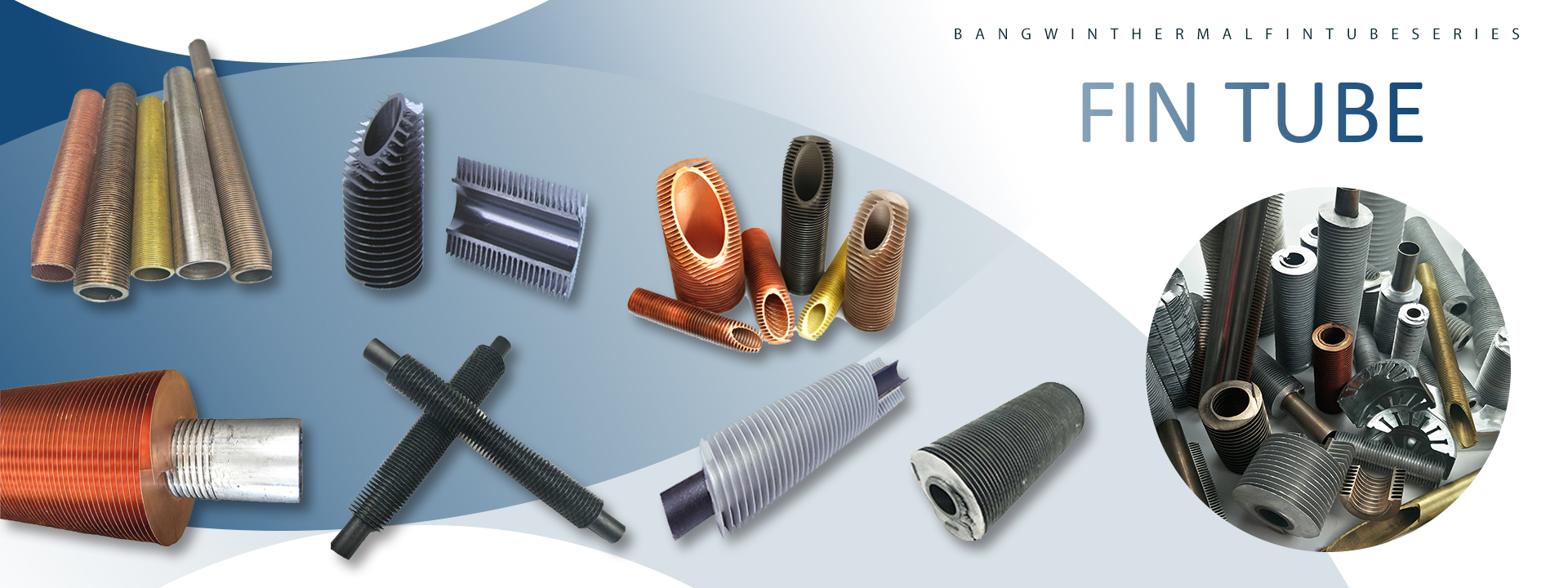
A copper fin tube consists of a copper tube with attached external fins.
The tube itself carries the fluid on the inside of the component.
The fins add more surface area to the outside of the tube.
Copper provides high thermal conductivity to efficiently transfer heat from the fluid to the fins.
Products can use copper for both the tube and fins. However, many items feature copper tubes with aluminum fins.
[Copper Fin Tube Construction]
Manufacturers select the appropriate materials based on the application, thermal requirements, budget, and environment.
Copper Finned Tube Heat Exchanger
3. How Does a Copper Fin Tube Work?
Heat transfer within a copper fin tube is relatively simple.
Fluid enters the tube either hot or cold. Heat conducts through the copper tube wall.
Next, fins draw heat across a larger area on the outside of the tube.
Finally, air or another fluid removes or adds heat to the copper fin tube.
The fins allow more heat to move efficiently between two fluids or air.
This effect becomes especially important when air is the medium on the outside of the tube.
Air does not typically transfer heat as easily as liquids. Therefore, increasing the air-side surface area helps enhance heat exchanger performance.
Coupled with copper’s thermal conductivity, copper fin tubes are effective heat transfer components.
4. Copper Fin Tube Construction
Cu fin tubes normally have three primary components.
4.1 Copper Tube
The inside copper tube provides the passage for refrigerant or other fluids.
This tube must also be able to withstand operating pressures and temperatures.
Tubes sizes and wall thicknesses vary depending on the application.
For example, copper tube used in refrigeration may have different dimensions than industrial heat exchangers.
Therefore, designers should choose the tube size based on the system’s requirements.
4.2 External Fins
As mentioned previously, external fins add more surface area to the heat transfer surface.
Fins can be made from copper or any other thermally conductive material.
Fin height, fin thickness, pitch, and fin shape can affect heat transfer and airflow.
Therefore, engineers should carefully optimize fin design as needed.
4.3 Fin- to-Tube Connection
Lastly, the connection between fin and tube impacts heat transfer efficiency.
Heat should pass quickly from the tube into the fins.
Production methods can vary depending on the fin tube product design.
However, the connection method should ensure tight contact during operation.
Low Fin Tubes for Heat Exchanger
5. Copper Fin Tube Manufacturing Process
Performance relies on the quality of manufacturing.
Producing copper fin tubes requires precision equipment and process control.
5.1 Copper Tube Preparation
The manufacturing process begins with preparing the copper tube.
Production personnel clean the tube and check its dimensions.
This step ensures the tube is free of contaminants and has the correct size.
5.2 Fin Material Preparation
The manufacturer then prepares the fin material.
While copper offers high thermal conductivity, aluminum is also a common option.
Both materials work well for heat transfer. However, aluminum provides a lighter-weight and more cost-effective alternative.
Selection depends on the requirements of the intended application.
5.3 Fin Forming
Production machinery forms fins around or along the copper tube.
Different forming equipment allows for different fin configurations.
Possible fin styles include continuous fins, spiral fins, and more.
5.4 Fin-to-Tube Bonding
The manufacturer must then securely connect the fins to the tube.
This connection ensures strong thermal performance and structural integrity.
5.5 Cutting and Finishing
Once the fins form correctly around the tube, the component reaches the desired length.
Workers then cut the copper fin tube to length and perform any needed end treatment.
Lastly, finished copper fin tubes undergo dimensional and visual inspection.
Fin Tube Manufacturing Machine
6. Advantages of Copper Fin Tubes
Copper fin tubes offer many advantages over plain tubes or other materials.
6.1. Excellent Thermal Conductivity
Copper is an excellent thermal conductor.
Heat can easily travel through the tube wall and flow into the fins.
This thermal conductivity makes copper ideal for high-performance thermal applications.
6.2. Large Heat Transfer Surface
By adding external fins, engineers significantly increase the surface area.
Compared to a bare tube of similar length, fin tubes allow more heat to transfer.
6.3. Good Corrosion Resistance
Copper naturally resists many corrosive environments.
That being said, engineers should always verify material compatibility with actual fluids and operating conditions.
6.4. Compact Heat Exchanger Design
Thanks to their high heat transfer efficiency, copper fin tubes support compact heat exchangers.
Engineers can often fit the necessary heat transfer surfaces within smaller spaces.
6.5. Good Formability
Copper is ductile and easy to form into different shapes.
As a result, copper tube manufacturers can produce fin tubes in various configurations.
6.6. Reliable Thermal Performance
Due to its thermal conductivity and widespread use in heat exchangers, copper provides dependable thermal performance.
Copper remains one of the most common materials in HVAC and refrigeration equipment.
6.7. Suitable for Multiple Applications
From residential to commercial and industrial, copper fin tubes can meet many cooling and heating demands.
Possible applications include cooling, heating, heat recovery, refrigeration, and more.
7. Copper Fin Tube Materials
Selecting proper materials impacts performance and costs.
Engineers should consider tube and fin materials separately.
7.1. Copper Tube
Due to thermal conductivity and ease of forming, copper tubes are ideal for HVAC and refrigeration.
7.2 Copper Fins
Fins made from copper provide great thermal conductivity.
Such fins work well in applications where thermal efficiency is critical.
However, using copper fins increases the material cost and weight of the finished component.
7.3 Aluminum Fins
Aluminum fins provide an alternative to copper fins.
Workers can fabricate aluminum fins at lower weights and cost than copper fins.
Therefore, copper tubes with aluminum fins offers a balance of thermal performance and equipment weight.
7.4 Stainless Steel Components
Some heat exchangers use stainless steel parts along with copper tubes.
Such designs allow for better compatibility with certain applications.
Bear in mind the possibility of galvanic corrosion when using mixed metals.
8. Copper Fin Tube Applications
Copper fin tubes work well in many industries and applications.
Due to thermal conductivity, air-side heat transfer benefits greatly from copper fin tubes.
8.1 HVAC Systems
Copper fin tubes can serve in HVAC systems that need heating or cooling.
For example, they can serve as coils for air conditioning units and heat exchangers.
Copper fin tubes can transfer heat between three fluids: refrigerants, water, and air.
Internal Link: Industrial Heat Exchanger
8.2 Refrigeration Systems
Refrigeration equipment commonly uses copper tubing.
Adding fins to copper tubing increases external surface area for heat transfer.
As a result, these components work well in condenser and evaporator applications.
8.3 Air Conditioning Equipment
Air conditioners need efficient heat exchangers that do not take up much space.
Pairing copper tubes with fins provides an excellent solution for some applications.
These configurations work well for indoor and outdoor heat exchanger coils.
8.4 Heat Pump Systems
Heat pumps move thermal energy from one location to another.
Typically, heat moves between indoor and outdoor air.
For this reason, heat pumps require efficient finned tube coils.
Copper fin tubes give engineers the required surface area for heat transfer.
8.5 Industrial Cooling
Industrial processes sometimes need continuous cooling.
Cu fin tubes can serve some industrial cooling applications.
As always, copper must meet compatibility requirements for the intended process.
8.6 Heat Recovery Systems
Heat recovery systems attempt to capture and reuse thermal energy.
Finned copper tubes can transfer heat between air and fluids.
Therefore, they make useful components in heat recovery systems.
8.7 Water Heating Systems
Copper offers such high thermal conductivity that it works well in water heating.
Finned copper tubes provide increased surface area to transfer heat to water.
9. Copper Fin Tube vs Bare Copper Tube
Bare copper tubing provides the heat transfer surface on both sides.
However, the tube only offers a limited amount of external surface area.
Cu fin tubes add fins to the outside of the tube.
Therefore, finned tubes give a much larger area available for heat transfer.
Feature | Copper Fin Tube | Bare Copper Tube |
External surface area | High | Lower |
Heat transfer area | Increased | Limited |
Compact design | Excellent | Less effective |
Air-side performance | High potential | Lower |
Material usage | Higher | Lower |
Typical use | Heat exchanger coils | Piping and basic heat transfer |
Copper fin tubes work well in situations where air-side heat transfer is a limitation.
10. Copper Fin Tube vs Aluminum Fin Tube
When comparing aluminum fin tubes vs copper fin tubes, both materials have their unique advantages.
For example, copper provides much better thermal conductivity.
On the other hand, aluminum brings benefits like lower density and often lower cost.
Feature | Copper Fin Tube | Aluminum Fin Tube |
Thermal conductivity | Excellent | Good |
Weight | Higher | Lower |
Corrosion resistance | Good | Good |
Formability | Excellent | Good |
Material cost | Usually higher | Usually lower |
HVAC applications | Common | Very common |
Industrial applications | Wide | Wide |
As a result, there is no clear winner. Instead, the ideal material will depend on your thermal needs, weight limitations, budget, and environmental conditions.
11. How to Choose a Copper Fin Tube
Picking the correct fin tube involves analyzing your entire heat exchanger system. Here are some things to consider:
11.1 Determine Heat Duty
First, know how much heat you need to transfer.
The heat duty required will help determine tube size and fin geometry.
11.2 Check Operating Temperature
Consider the minimum and maximum temperature limits.
These temperatures should stay well within material capabilities.
11.3 Evaluate Operating Pressure
Internal pressure affects wall thickness and allowable materials.
Pressure limitations should be considered when choosing tubes.
11.4 Consider Airflow
Air velocity impacts heat transfer and pressure drop.
As a result, fin spacing should correspond to airflow rates.
11.5 Select Fin Geometry
Fin height and pitch impact available heat transfer surface.
Too many fins can restrict airflow and cause higher pressure drops.
Therefore, engineers must balance heat transfer surface area and pressure drop.
11.6 Consider Corrosion
Fluids and operating environments create varying corrosion risks.
As a result, engineers should carefully consider material compatibility.
11.7 Consider Maintenance
Buildup can occur between external fins.
For dirty air applications, choose fin spacing wisely.
Designing heat exchangers for easy cleaning can prolong performance.
12. Copper Fin Tubes in Heat Exchanger Design
Heat exchanger designers can use copper fin tubes to increase thermal performance.
Fins increase the outside surface area available for heat transfer.
The copper pipe also efficiently conducts heat to or from the fins.
Together, they efficiently manage heat transfer to or from surrounding air. This makes fin tubes ideal for air-side heat transfer.
Air cooled heat exchangers can use finned tubes to reject heat to the air.
HVAC coils can also use fin tubes to heat or cool air as it passes through.
Just keep in mind that fin tube selection alone does not make a heat exchanger design.
Engineers must also consider:
- Heat Transfer Requirements
- Fluid Properties
- Air Velocity
- Operating Temperature
- Operating Pressure
- Tube Arrangement and Layout
- Fin Spacing
- Corrosion Conditions
- Maintenance Requirements
- Equipment Size
Because of this, copper fin tube selection should be done during the overall heat exchanger design process.
Air Cooled Heat Exchanger
Finned Tube Heat Exchanger
13. Why Choose Bangwin Thermal?
Selecting proper fin tubes requires knowledge and experience from manufacturers.
Bangwin Thermal specializes in industrial heat transfer equipment including finned tube solutions.
The company offers fin tube solutions for a variety of heat exchanger applications.
Product technologies include extruded fin tubes, high frequency welded fin tubes, and laser welded fin tubes. Due to the differences in fin tube technology, customers can compare to see what solutions Bangwin Thermal offers.
In addition, the ideal fin tube will depend on material, performance needs, manufacturing processes, and more. When it comes to industrial heat exchangers, choosing the proper fin tube technology can greatly enhance your equipment’s design.
Explore industrial heat transfer solutions and custom finned tubes at Bangwin Thermal.
High Frequency Welded Fin Tube
Home
14. FAQ About Copper Fin Tubes
14.1 What is a copper fin tube?
A copper fin tube is a tube that has external fins welded to or attached to the outside of the tube. This increases the surface area available for heat transfer. Copper fin tubes are typically used to transfer heat more efficiently to or from surrounding air.
14.2 Why is copper used in fin tubes?
Engineers use copper for fin tubes because of its thermal conductivity. Copper also has good corrosion resistance and formability for many applications.
Copper fin tubes are common throughout HVAC and refrigeration equipment.
14.3 Are copper fin tubes suitable for HVAC?
Yes, copper fin tubes are very common HVAC components. You will regularly see them used in HVAC coils and heat transfer equipment.
Generally, any application that requires heating or cooling can make use of copper fin tubes.
14.4 Are copper fin tubes better than aluminum fin tubes?
Not exactly. Copper has higher thermal conductivity than aluminum.
Aluminum is lighter and will usually be cheaper than copper.
Therefore, the application will dictate which fin tube is best suited for your needs.
14.5 Can copper fin tubes be used in industrial heat exchangers?
Yes, copper fin tubes can be used for various industrial heat exchanger applications.
However, engineers should verify that temperature, pressure, material compatibility, and corrosion allow for copper to be used.
14.6 What affects copper fin tube performance?
Tube diameter, fin height, fin spacing, fin thickness, airflow, temperature difference, and material selection will impact performance.
Keep in mind that fin tube selection is only one part of heat exchanger design. The overall heat exchanger design will heavily influence performance.
14.7 How do fins help with heat transfer?
Adding fins to a tube increases its surface area. More surface area allows more heat transfer between the tube and the air around it.
As a result, finned tubes provide better heat transfer than bare tubes when cooling or heating air.
14.8 Can copper fin tubes be customized?
Yes, copper fin tubes can be custom made to your needs.
Manufacturers can make many different sizes and fin configurations.
Customization will depend on the machinery used by the manufacturer and the application requirements.
15. Conclusion
If your application requires efficient air-to-liquid or air-side heat transfer, copper fin tubes are a great option to consider.
Copper offers high thermal conductivity which improves heat transfer.
External fins also allow for more surface area to transfer heat to or from surrounding air.
Therefore, you can use copper fin tubes to design compact heat exchangers.
Copper fin tubes are used in HVAC, refrigeration, air conditioning, heat pumps, and some industrial equipment.
Just remember that engineers should carefully select fin tubes for their applications.
Heat duty, airflow, temperatures, pressure, corrosion, fin configuration, and maintenance should all be considered when selecting fin tubes.
Additionally, engineers should choose between copper vs aluminum, welded vs extruded, and more based on their specific application needs.
Bangwin Thermal is a great resource for industrial heat transfer and custom finned tube solutions.