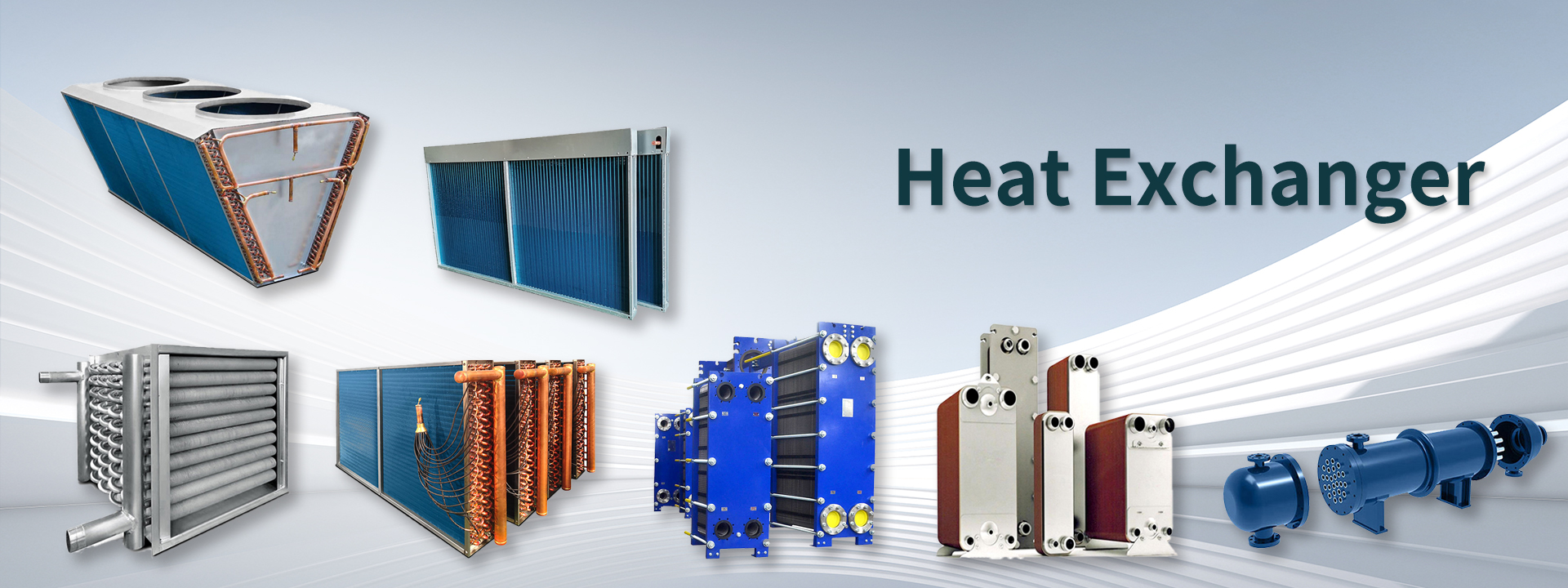
Gasketed Plate Heat Exchanger: Working Principle, Benefits, and Selection
A مبادل حراري بلوحة ذات حشية transfers heat from one fluid to another using a series of thin, corrugated metal plates. The channels created by these plates are sealed with gaskets to prevent mixing of the fluids. The مبادل حراري بلوحة ذات حشية provides high-efficiency heat transfer, is easy to maintain, and can be easily adjusted to provide additional or reduced capacity for various types of industrial applications.
مبادل حراري بلوحة ذات حشيةs (GPHEs) are utilized in many applications such as; heating, cooling, heat recovery, etc., however there is much more to choosing a GPHE than just looking at the dimensions and/or purchase price.
Engineers should consider several factors when selecting a GPHE. These include process fluids, operating temperatures, design pressures, and allowable pressure drop. They should also check plate materials, gasket compatibility, and maintenance requirements.
The following article describes the function of a مبادل حراري بلوحة ذات حشية, its applications, the material requirements, and methods for selecting a suitable type of heat exchanger for use in industry.
What Is a Gasketed Plate Heat Exchanger?
A مبادل حراري بلوحة ذات حشية uses an indirect method to transfer heat. It is constructed using a series of stacked corrugated metal plates. Gaskets made of elastomers are placed in grooves cut into each plate. The gaskets provide seals for the channels and control fluid flow through alternating flow paths.
The two types of fluids will release heat and absorb heat respectively.
Metal plates separate the two fluids. This design transfers thermal energy without direct fluid contact.
The plate pack is placed in-between two plates – one is a fixed frame plate and the other is a moving pressure plate. The entire assembly will be compressed by tightening the bolts in order to provide the necessary seal.
Technicians can loosen the frame bolts to access the plates during maintenance. They must follow the manufacturer’s disassembly procedure.
The use of gaskets on the plates of a heat exchanger is what separates a مبادل حراري بلوحة ذات حشية from brazed and fully welded design types. Because it has a serviceability design feature, it makes the process of inspecting, cleaning, replacing gaskets and/or some changes in capacity simpler.
The use of a plate and frame heat exchanger with a gasket should be considered when there is a need for efficient heat exchange and periodic maintenance.
How Does a Gasketed Plate Heat Exchanger Work?
The concept behind operation is simple: Two liquids go through two different pipes, and heat goes across the thin metal plates that separate the two.
Step 1: The fluids enter separate connections
One of the two fluids will enter the inlet that is designed for hot fluid; the other fluid will enter an inlet that has been designed for cold fluid. The way the port and gasket are arranged will allow each of these fluids to be channeled to the proper channel.
Step 2: The fluids flow through alternating channels
The way the plates are arranged will allow for separation of the hot fluid from the cold fluid. For many types of heat exchangers, the fluids will be flowing in opposite directions (this is called counter-current). This type of plate arrangement is capable of transferring heat effectively between the fluids.
Step 3: Heat passes through the metal plates
The heat is transferred from the hotter fluid to the surface of the plate. Heat then travels through the metal plate to the colder fluid on the opposite sid The corrugated plate pattern provides an increased amount of surface area, and also allows for more mixing of the fluid around the heat transfer surfaces.
Step 4: The fluids leave at their target temperatures
The hotter stream exits the heat exchanger with a lower temperature than when it entered. On the other hand, the colder stream will exit with a higher temperature than when it entered. Several factors determine the outlet temperatures of both fluid streams.Key factors include flow rates and inlet temperatures. Fluid density, viscosity, and heat transfer area also affect performance. Operating pressure and flow configuration influence the final outlet temperatures.
Step 5: The equipment operates within its design limits
The exchanger must operate inside of its accepted operating pressures and temperatures. The choice of gaskets will need to be able to withstand the process fluid, the temperature of the fluid, the chemical cleaners used on the equipment, and the overall operating conditions.
You can view a diagram of how a مبادل حراري بلوحة ذات حشية works by viewing the guide provided by Alfa Laval.
What Are the Main Components?
Understanding each component helps buyers evaluate performance and plan maintenance.
Component | الوظيفة | What to check |
Heat transfer plates | Transfer thermal energy between fluids | Material, plate pattern, thickness, and condition |
Gaskets | Seal channels and direct fluid flow | Chemical compatibility, temperature rating, and attachment style |
Frame plate | Supports one end of the plate pack | Design conditions, frame construction, and connections |
Pressure plate | Compresses the plate pack against the frame plate | Alignment and movement during servicing |
Carrying bar | Supports the plates and pressure plate | Structural condition and plate movement |
Guiding bar | Keeps plates aligned | Wear, cleanliness, and alignment |
Tightening bolts | Apply the required compression | Condition, lubrication requirements, and tightening procedure |
Inlet and outlet connections | Carry fluids into and out of the unit | Connection type, size, and process compatibility |
The actual configuration of each model and application will vary. Rather than assume that components can be switched out among different models, buyers must look at the manufacturer’s drawing and technical data.
What Are the Main Benefits?
4.1 Effective heat transfer in a compact design
Corrugated plates create a lot of surface area for heat to be transferred in a small space. The shape of the plates allows for fluids to mix together and help transfer heat quickly.
In comparison to some alternative designs for heat exchangers, this may provide a smaller space requirement for the equipment. However, the exact reduction in space will depend upon the specific duty, properties of fluids used, pressure drops allowed and how it is configured.
4.2 Convenient inspection and maintenance
The frame provides access to the plate pack. Depending upon the type of equipment being used, an operator may be able to visually inspect the plates, remove any build-up that has occurred on them, install new gaskets if necessary, and reassemble the plate pack as per the manufacturer’s directions.
The value of this ability to service the process lies in the fact that it will allow for regular cleaning and/or inspection of the process.
4.3 Flexible capacity adjustment
Some types of مبادل حراري بلوحة ذات حشيةs allow for the addition or removal of plates. This allows for a user-friendly means to alter the amount of heat transfer area available as process conditions evolve.
However, adding plates to the unit may not always work well with the current setup. It is important to review several factors such as the frame capacity, how the fluid is distributed, the pressure loss across the plates, the heat transfer requirements, and the maximum allowed operating conditions prior to making changes to the plate assembly.
4.4 Multiple material and configuration options
With the ability to select from various types of plates made out of different alloys, various forms of gaskets based upon different compound materials, multiple configurations for the pattern of the plates, and various configurations for how fluid flows through the unit, engineers are able to choose a unit that is specifically tailored to meet their requirements for their process. This allows engineers to design a system that will be more efficient and effective at performing its intended function.
4.5 Opportunities for energy recovery
A heat exchanger has the ability to take energy out of a hot process stream and put it into another stream which needs to be heated. Depending upon the process and operating schedule, this could help reduce the amount of extra heat/cooling required.
Actual energy savings depend on the specific application of the product and cannot be estimated based on the product type.
How Do You Choose Plate and Gasket Materials?
Material selection is a major factor in the design process for specifying a مبادل حراري بلوحة ذات حشية. If you make an incorrect material choice, it can result in; Corrosion Gasket Degradation Leakage Premature Maintenance
5.1 Plate material options
Some of the most popular types of metals are those with various grades of stainless steel as well as several specialty alloys. Your selection of metal will depend on the type of liquid being processed (fluid chemistry), the temperature of the fluid, how much chloride is present in the fluid, the way you plan to clean your equipment, and the amount of time you expect your equipment to last (required service life).
Plate material | Typical consideration | Selection note |
AISI 304 stainless steel | Suitable for some general-purpose services | Verify corrosion resistance for the actual fluid |
AISI 316 or 316L stainless steel | Used in many industrial and process applications | Check chloride levels and other corrosive constituents |
التيتانيوم | Considered for certain demanding aqueous or seawater services | Confirm compatibility and mechanical requirements |
Higher-alloy materials | Considered for more aggressive chemical environments | Select according to the full fluid composition and operating conditions |
The following are general considerations when selecting materials, but there is no guarantee that they will work with all possible combinations of chemical concentrations and temperatures. Materials that perform well at certain concentrations or temperatures may be unsuitable for other combinations.
5.2 Gasket material options
The gaskets form a seal between each plate. Gaskets must be compatible with the chemical environment in which they are used, as well as the operating temperatures and pressures. They also must be able to withstand exposure to cleaning chemicals and exhibit appropriate compression characteristics.
Gasket material | General characteristics | Key consideration |
NBR | Used in selected water, oil, and industrial services | Verify fluid compatibility and temperature rating |
EPDM | Common in many water-based and selected process applications | Check compatibility with oils, solvents, and process additives |
FKM | Considered for selected chemical and temperature requirements | Confirm suitability for the specific chemical mixture |
Other specialized compounds | Used for duties requiring particular chemical or operating properties | Obtain written confirmation from the equipment supplier |
There is no one gasket compound that works for all applications. The user should have the manufacturer verify the chosen gasket compound against the users specific process fluid(s), concentration(s), operating temperature(s), start up condition(s), and cleaning regime(s).
5.3 Why plate and gasket compatibility must be evaluated together
Plate and gasket materials have different purposes, however they must all work within the same operational environment. While corrosion resistant plates may not protect against gasket damage due to incompatibility of the elastomer with the process fluid, they will help minimize overall system degradation.
Before you place your order, give the supplier all relevant details about your fluid. This includes the normal temperature and maximum temperature, as well as the working pressure and design pressure. Also include the flow rate(s), and if you use any cleaning chemicals for maintenance purposes.
For more detailed technical data, refer to the product documentation of Danfoss standard plate heat exchangers.
What Are the Common Industrial Applications?
The final configuration of a مبادل حراري بلوحة ذات حشية will depend on several factors such as what type of process fluid you are working with, how well you need the heat exchanger to perform thermally, what are your maximum pressure limits and finally, how often you plan on performing maintenance.
HVAC and district energy
Plate heat exchangers are used by HVAC (heating, ventilation, and air conditioning) systems to move thermal energy from one circuit of water to another. Examples of applications include space heating for buildings, cold water systems for buildings, district heating and district cooling.
Appropriately designed systems that separate circuits may also allow for the isolation of different water quality and/or operating pressures.
تجهيز الأغذية والمشروبات
Heat exchangers are utilized in some food and beverage facilities to provide specific functions such as heating, cooling, and heat recovery. These functions can include but are not limited to process water heating or other types of process liquids.
Buyers need to check if the equipment has the correct sanitary design, approval of gaskets, ability to clean, required documentation, and meets all relevant regulatory requirements when purchasing for a hygienic application. Therefore, it is important to remember that just because an item can be used in industry doesn’t mean it will automatically meet the requirements of food contact applications.
Chemical and process industries
A process temperature can be controlled using heat exchangers, and a chemical plant may use these devices to recover some of the heat generated by its processes. In addition, fluid compatibility is an important factor in this type of equipment since many types of chemicals can cause corrosion to the plates made from alloys that are typically used in heat exchangers, as well as degradation to the gaskets that provide a seal between those plates.
Selection of equipment needs to account for changes in concentration, possible contamination, cleaning methods, and unusual operating conditions.
Power generation and industrial utilities
مبادل حراري بلوحة ذات حشيةs can be used in power generation and industry for secondary cooling, fluid lines, and heat recovery. The equipment manufacturer must verify if their product meets all of the performance specifications (pressure, temperature, fluid composition and reliability) required for the system being designed.
Marine and heavy industry
The use of heat exchangers can be used to cool down cooling water, lubricating oil systems, utility applications, and process operations in marine, mining, pulp and paper, and many other types of heavy industry.
Corrosive environments, such as seawater, may require specific material selections. It is important for engineers to confirm the complete chemical analysis of the fluid, along with any relevant marine or project-specific requirements.
استعادة الحرارة المهدرة
Preheat a second stream with energy from a first stream such as hot water or another suitable process stream. Prior to making an investment in a recovery system, determine how much energy is available to recover, the number of hours the system will operate, if there is a good match between the temperatures of the two streams, the potential for fouling, and what type of demand you anticipate for the recovered energy.
If you have an industrial heat recovery solutions page, add a link to that page.
How Do You Select the Right Heat Exchanger?
A quality process for selecting equipment should be based upon process data and not a specific model number or a low bid price.
Step 1: Define the thermal duty
Provide the required heat transfer amount (duty) along with the inlet and outlet temperature requirements for both fluid streams. Determine what type of thermal process is being performed (i.e. heating, cooling, heat recovery, condensation, etc.).
If the information is incomplete, request that a qualified vendor assist in identifying the missing information prior to completing the selection process.
Step 2: Confirm both fluid properties
For each fluid provide name of fluid, (if available) concentration of fluid, density of fluid, viscosity of fluid, specific heat of fluid, suspended solid content of fluid, and corrosion-inducing components of fluid.
These factors affect material compatibility, flow distribution, heat transfer, and fouling.
Step 3: Establish flow rates and pressure limits
Specify the normal and maximum flow rate on each side. Additionally, provide the operating pressure, the desired design pressure, and the maximum acceptable pressure drop.
Pressure drop is important because pumps require adequate pressure to drive the fluid through the system. A design that performs well in terms of heat transfer might not work out for a given process if it exceeds the allowable pressure drop for that process.
Step 4: Select the plate and gasket materials
Match the type of plate material and sealing material with the fluid types and working environments. Also include the types of cleaning agents used on the plate material as well as unusual or non-standard working conditions in your assessment.
Please ask the supplier to provide you with written documentation regarding the recommended materials and their potential limitations.
Step 5: Review the proposed thermal design
Request a thermal calculation or selection sheet which specifies the required duty, temperature conditions, flow rate, pressure loss, total heat exchange surface area, and proposed equipment arrangement.
The reviewer should verify if the calculation is reflective of actual operating conditions. In instances where there are different operating scenarios for a given process, the supplier may be required to assess every applicable scenario.
Step 6: Check mechanical and installation requirements
Verify design pressures and temperatures, connection sizes, orientations of connections, total dimensions, clearances for maintenance, and applicable design codes.
Ensure there is adequate space to install and service the unit. While a design that can be serviced requires sufficient space to allow the user to open the unit’s frame and remove plates without causing damage, a serviceable design must also provide enough room for the user to perform maintenance tasks safely.
Step 7: Compare lifecycle requirements
Compare initial cost with ease of maintenance, availability of replacement parts, frequency of required cleanings, anticipated operating environment, warranty duration and availability of technical assistance.
The selected مبادل حراري بلوحة ذات حشية must provide the necessary performance to support the process, as well as a cost-effective maintenance strategy during the entire service life of the equipment.
Industrial Plate Heat Exchanger products
How Do You Maintain and Clean the Equipment?
regularly scheduled maintenance can help prevent unexpected equipment failures. the amount of time between maintenance procedures is based on several factors including: fluid cleanliness, fouling potential, operating conditions and the manufacturer’s suggested maintenance schedule.
8.1 Monitor operating performance
The user wants to compare current readings of inlet/outlet temperatures, flow rates, and pressure drops to those of a previously established baseline for normal operations of the equipment.
Changes in how well a system performs thermally, or changes in how much force it takes to push fluid through a system (pressure drop), may signal that there has been an alter in the way a system operates due to things like the accumulation of dirt and other contaminants (fouling), changes in operating conditions, or some other type of problem with the operation of the system that needs to be looked into.
8.2 Inspect for external leakage
Examine the plate pack, connections, frame and the surrounding areas for evidence of leakage. When you find a leak, follow your site’s safety guidelines and the manufacturer’s directions prior to repairing the issue.
Never loosen a unit when it is under pressure or hot. As specified in the approved procedures, you should isolate, depressurize, drain, and cool the units.
8.3 Select an appropriate cleaning method
The type of cleaning will depend on what is deposited and how the plates are designed. For example, if there is a deposit, you can either use an approved Clean-In-Place (CIP) procedure to clean it, or open up the plate pack to visually inspect and manually clean it.
It is important that the cleaning chemical be safe for use with both the plate and gasket materials. Do not choose a chemical simply because it will effectively clean off the deposit. Selecting the wrong chemical could cause serious harm to the equipment.
8.4 Inspect plates and gaskets
Inspect for corrosion, deformation, cracking, deposition, and damage to the seal surface during the authorized inspection. Check if the gasket is hardened, swollen, cracked, or deteriorated in any way.
Replace parts as recommended by the manufacturer. Use the appropriate part specifications and installation techniques for your specific model.
8.5 Reassemble according to the manual
It is important to have correct plate alignment and compression. Always follow the manufacturer’s tightening sequence and the required plate-pack dimensions. Too much or too little compression could lead to sealing issues or damage.
Once you have completed the service on your unit, make sure to do all of the necessary checks prior to allowing the unit to return to standard usage.
Plate Heat Exchanger Maintenance Guide.
Gasketed vs. Brazed vs. Welded Plate Heat Exchangers
Each design uses plates to move heat, however, each design differs in how it is built and how long it should last.
الميزة | Gasketed plate | Brazed plate | Welded or semi-welded plate |
Sealing method | Replaceable gaskets | Plates bonded by brazing | Welded joints; some designs also use gaskets |
Service access | Plate pack can generally be opened | Typically not designed to be opened for plate cleaning | Depends on the specific construction |
Capacity adjustment | Some models allow plate count changes | Generally not adjustable by adding plates | Depends on design |
Gasket replacement | Applicable where gaskets are used | No conventional plate-pack gaskets | Depends on the design |
Common selection factor | Serviceability and flexible configuration | Compact construction and application requirements | Fluid compatibility and specified operating conditions |
When you need to clean your equipment or replace the gasket, then a gasketed unit is a good choice. If you are looking for a small size, then a brazed unit will work well. The brazed unit has to meet the requirements of your application. There are some applications that require something other than a conventional gasketed design, in which case a welded or semi-welded design may be more suitable.
The optimum design will vary based upon the specific application. Evaluate each of the following: actual thermal duty, maximum allowable pressures and temperatures, fluid compatibility, requirements for maintenance/cleaning, available installation space, and total lifecycle costs.
What Should You Include in a Request for Quotation?
A completed RFQ allows suppliers to evaluate the application properly and decreases the chance of evaluating non-comparable bids.
Include the following information:
- Process duty: Heating, cooling, heat recovery, or other required service.
- Fluid Info: Fluid Name, concentration of fluid, what it is made of, and any issues with contamination or fouling.
- Thermal data:Inlet and target outlet temperatures for both fluids.
- Flow rates:Normal, minimum, and maximum values where applicable.
- Pressure Conditions:Design pressure, operating pressure and permissible pressure drop for both sides.
- Material Requirements: Alloy used for plate; gasket compatibility; and other requirements based upon the use of the material (e.g. hygiene/corrosion).
- Connections: Required sizes, standards, positions, and orientation.
- Installation limitations:Available room, access for maintenance, and connection methods.
- Compliance requirementsinclude all applicable code requirements for inspections and testing, along with the required documentation.
- Commercial Requirements:Quantity, Delivery Location, Target Delivery Schedule, Warranty Expectations, and Spare Parts.
Request the technical selection sheet, general arrangement drawing, material information, and a clear quote scope from the supplier. Confirm what is included in the scope and what requires separate quotes.
When reviewing a bid for a مبادل حراري بلوحة ذات حشية, evaluate the technical capabilities of the unit prior to reviewing the cost. While a cheaper option may appear attractive, it will typically be missing certain components such as materials, accessories, documentation and/or services.
For related industrial equipment information, visit Bangwin Gas Cylinder.
الأسئلة المتداولة
l What is a gasketed plate heat exchanger used for?
The transfer of heat from one fluid stream to another occurs within various types of systems that utilize fluids to regulate temperatures (i.e., HVAC, district energy, industrial cooling, process heating, and heat recovery). Fluid compatibility and the design limitations of the equipment determine how the system will be used.
l What is the main advantage of a gasketed plate heat exchanger?
The greatest benefit of using a plate heat exchanger is that it is easy to maintain. Typically, you are able to open up the plate pack so that you can inspect, clean and replace the gaskets. In addition, many of the models available on the market will allow you to change the number of plates in the unit as long as there has been an engineer’s review first.
l Which gasket material is best?
There is no “perfect” gasket material that will work for all applications. Each type of gasket compound (i.e. NBR, EPDM, FKM) has its own specific set of operating conditions and fluid compatibility requirements. You should choose your gasket compound depending upon the application process fluid, concentration level, operating temperature, operating pressure and types of cleaning agents used.
l Can a gasketed plate heat exchanger handle corrosive fluids?
Corrosive fluids can be handled by the equipment, as long as the plate alloy, gasket compound, and equipment configuration are appropriate for handling those corrosive fluids. However, prior to selecting components for use in contact with the corrosive fluid, the exact nature of the fluid being processed, along with the operational parameters of the system, should be evaluated to determine whether the chosen component will be compatible with the environment it will operate in.
l How do I know when the heat exchanger needs cleaning?
Other possible indications of fouling are a decline in heat transfer rates, variations in the amount of pressure drop across the heat exchanger, inconsistent discharge temperatures and an increase in power usage. Other reasons for these types of issues exist; therefore, you should collect operating data and review the performance of your system prior to selecting a cleaning method.
l Can I add more plates to increase capacity?
In some cases, you can add plates to a model. However, adding plates is not always appropriate for each unit. Before adding plates, it’s important to verify the design of the frame, how the plates are arranged, how the fluid flows through the unit, what pressure drop will occur, and what the thermal load will be.
l How do I select the correct size?
The user will provide the supplier with the two fluid flow rates, the target temperature for the inlet and the target temperature for the outlet, as well as the fluid properties, operating and design pressures, and allowable pressure drop. With this information, the supplier can then assess how much heat transfer area is needed, as well as determine what type of configuration would be best suited for their system.
l What information should I request from a supplier?
Request for a Thermal Calculation/Selection Sheet, Design Conditions, Material Details, Connection Drawings, Compliance Documentation (where applicable), Warranty Terms, Spare Parts Information, and Maintenance Instructions.
الخاتمة
A مبادل حراري بلوحة ذات حشية provides a feasible alternative to other types of industrial heating, cooling and heat recovery systems. The corrugated design of each plate enhances heat transfer, and the gasketed frame provides easy access for maintenance and inspection.
The correct selection will be determined by the specific process operation. Prior to purchasing, it is important for buyers to confirm that they have selected a heat exchanger with suitable fluid characteristics (i.e. viscosity, density), thermal requirements (i.e. heat transfer rate, temperature difference), plate and gasket material compatibility, design pressure and temperature limits, and allowable pressure drop.
When making a purchasing decision, it is best to provide all of the relevant information regarding how the item will operate. You should also evaluate different suppliers’ proposals based upon both their product’s technical performance capabilities as well as its life cycle requirements. Doing so will help you select the most appropriate piece of equipment for your process and make certain that it can be operated in a safe manner throughout its useful life.