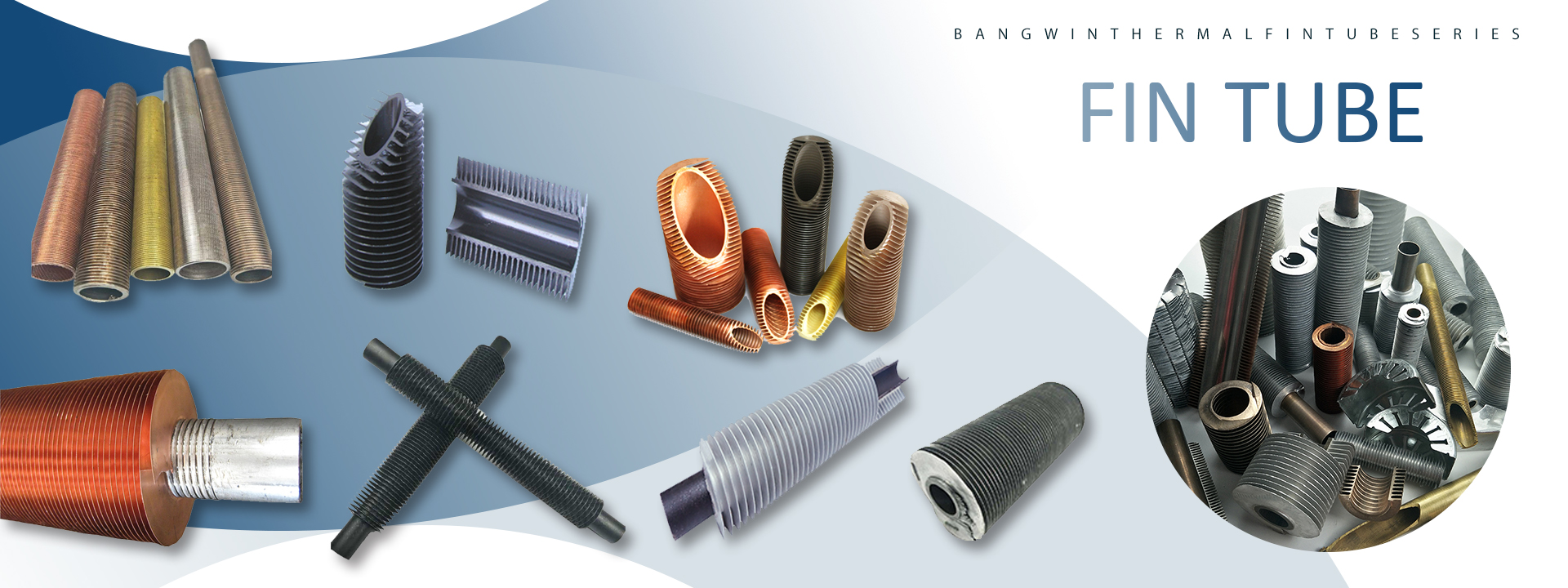
Spiral Fin Tube Machine: How Winding Settings Decide Fin Quality
A ماكينة أنبوب الزعنفة الحلزونية uses four key settings to control fin quality. These include spindle rotation, trolley travel, strip geometry, and winding tension. Running speed also plays an important role. It determines whether these settings remain stable during production.
Each setting affects the others. A change in one parameter can influence the entire forming process. This explains why two identical machines may produce different results under similar operating conditions.
Start with the tube drawing when setting up your ماكينة أنبوب الزعنفة الحلزونية. Record all four key parameters for every production batch. Treat unexplained changes as possible mechanical faults. Do not rely on tension or speed adjustments to hide underlying problems. This article explains how to verify each setting before purchasing a machine.
1. Which Process Is the Machine Actually Running?
The term ماكينة أنبوب الزعنفة الحلزونية covers three different bonding processes. These processes are not interchangeable. Buyers should confirm the exact production method before placing an order.
Wrapped or Wound Fins
A formed strip is wound around the bare tube under controlled tension. This process does not use heat to attach the fin. Common types include G, L, LL, KL, and KLM profiles.Published machine information covers wrapped tubes made from copper and aluminium. Compatible tube materials include carbon steel, stainless steel, and copper.
High frequency welded fins.
A strip is pressed into a helical groove and fixed by resistance heating. Contact is metallurgical at the root, so it survives higher gas temperature, and it needs a groove-cutting station in the same line.
Laser welded fins.
Same principle, different energy source, better control on thin wall and non-ferrous tube, and a higher capital cost.
A machine listing that says the fins “can be high-frequency welded, mechanically wrapped, or laser welded” is describing a supplier’s product family, not one machine. Ask which of the three the quoted build performs, and ask to see the head that does it. The difference matters at the exchanger level because the fin root bond is the dominant thermal resistance in a wrapped tube and a solved problem in a welded one.
2. What Sets the Fin Pitch?
Pitch is a ratio, not a dial. The trolley advances a fixed distance per spindle revolution, so fin pitch equals the tube length advanced per turn. On a published specification for one machine, the spindle is driven by an 11 kW inverter motor, the trolley by a 3.7 kW inverter motor, main shaft speed is listed at 800 r/min and trolley travel at 1,200 mm/min, with a stated precision of 0.01 mm.
Those ماكينة أنبوب الزعنفة الحلزونية figures explain two behaviours you will see on the shop floor. First, pitch error is usually a drive problem, not a forming problem: a slipping coupling, a worn screw, backlash in the gearbox or an inverter that hunts under load all produce periodic pitch variation, visible as a band along the tube. Second, pitch changes are cheap mid-run but expensive across a batch, because the two drives must stay in the same relationship for hours.
One caution about published pitch ranges. The same product page states a pitch range of 2.3 to 5 mm in the descriptive text and 2.3 to 8.5 mm in the specification table. Both figures cannot be correct for the same build without qualification. Treat the wider figure as a family capability and ask for the range that applies to your tube size, your strip and your fin height, in writing.
Practically, confirm three things before you accept a pitch claim on a ماكينة أنبوب الزعنفة الحلزونية: the pitch measured at the start and end of a full-length tube, the correction method when the strip thickness changes, and whether the pitch holds while the machine is at operating temperature rather than cold.
3. How Strip Geometry Controls the Result
The fin strip is the only consumable that becomes part of the product, so its geometry and its condition are process inputs, not purchasing details.
Four attributes matter. السماكة sets fin rigidity and how much forming load the head must absorb; it also feeds directly into the wrap tension needed to seat the fin root. العرض sets fin height, together with the forming angle. Edge condition matters more than most shops admit: a burred or rolled edge will not seat, and a strip slit on worn tooling produces fins whose tips vary along the tube. Material condition, meaning temper and surface film, changes both springback and how the wrapped fin holds after the tube is cut.
Springback is the second effect people miss. A wrapped fin is held by geometry and residual stress, so the strip recovers slightly after it leaves the forming head. A setting that looks correct at the head can measure slightly open ten metres down the line. Verify fin height and root seating on a sample that has been off the machine long enough to relax, not on the first metre you cut.
Specify the strip against the tube, not against a catalogue. Take your tube outside diameter and wall, your target fin height and pitch, and ask the strip supplier for the width, thickness and temper that produces it. Then freeze that combination in the work order, because a substitution accepted at goods inward becomes an unexplained quality shift on the machine.
4. Why Wrap Tightness Decides Thermal Performance
In a wrapped fin tube, the fin is held by interference and residual stress rather than by metal fusion. That single fact explains both the cost advantage of the process and its main quality risk.
Heat entering a wrapped fin must cross the fin-root interface. Every micrometre of gap there is a thermal resistance running the whole length of the tube. So a wrapped tube with poor seating can pass visual inspection and still miss its thermal rating, because the geometry looks right while the contact does not exist.
The machine control is tension, applied as the strip leaves the forming head and seats onto the tube. One published description states that the equipment uses a continuously variable transmission to control the tightness of the wrap so the strip winds tightly without loosening. That is the correct control point, and the one most often adjusted by ear rather than by measurement.
Three practical rules follow. First, tension is not “as high as possible”: over-tension deforms soft aluminium fins, marks the tube and can thin the fin root. Second, tension must be measured indirectly and repeatably, for example by the resulting fin pitch stability and by a root-seating check on a sectioned sample, rather than by a dial position copied from a note. Third, tube surface condition belongs in the process specification, because oil, mill scale or a wet tube surface changes friction and therefore changes the tension that actually reaches the wrap.
The verification method that settles arguments is cheap: cut a short sample, section it, and look at the fin root under low magnification. Continuous contact along the root, or a visible gap, is a fact rather than an opinion. A machine builder who will not section a sample during acceptance testing is telling you something.
5. How Fast Can You Run Without Losing the Tube?
Published specifications give capability figures, not operating points. On the machine page cited above, the values are an 800 r/min main shaft, 1,200 mm/min trolley travel, an 11 kW spindle motor, a 3.7 kW trolley motor, a 120 W cooling pump and a 180 W lubricating pump.
Read those as a starting envelope for the ماكينة أنبوب الزعنفة الحلزونية and then find your own running point, because four effects appear only with speed.
Forming heat.
- Faster forming raises strip and head temperature, which changes springback and therefore fin height and root seating. Cooling and lubrication flow become a quality control, not a housekeeping item.
Resonance and support.
- A long thin tube deflects, and deflection changes wrap geometry along the length. The symptom is a tube that measures correctly at one end.
Drive tracking.
- At higher output the pitch relationship between two independently driven axes is what fails first, usually as a repeating band.
Tool wear rate.
- Every metre of strip formed is wear on the forming tool. Doubling output halves the interval between regrinds, which is exactly the point where an undocumented setting starts to drift.
A defensible commissioning method is to run at target speed for a full shift, take samples hourly, and reject the speed rather than the tube when the hourly samples diverge. Output claims that were never measured over a shift are not claims you can plan a schedule around.
6. Which Defect Traces Back to Which Setting?
Read this table from the symptom. Each row names the control to check first, which is what saves time when a line stops.
Symptom on the tube | Check first | Then check |
Pitch varies in a repeating band | Trolley drive coupling, screw and backlash | Inverter tuning, guide rail wear |
Fin lifts at the root, visible gap | Wrap tension at the forming head | Strip temper, tube surface cleanliness |
Fin leans or climbs along the tube | Strip guide alignment into the head | Forming angle, mandrel or roller setting |
Torn or nicked fin tip | Forming tool edge condition | Strip edge burr from the slitter |
Fin height short or drifting | Strip width and forming tool wear | Springback after relaxation, tool setting |
Scoring or witness marks on the tube | Support roller condition and height | Chip or hard particle carried into the wrap |
Fin opens after the tube cools or rests | Insufficient residual seating | Strip thickness tolerance, tension setting |
Tube bows along its length | Intermediate support and feed alignment | Chuck or driver runout |
Two habits make this table work on a ماكينة أنبوب الزعنفة الحلزونية. Record the four control values, meaning pitch ratio, strip size, tension setting and speed, on every batch, so a defect has a date and a setting attached. A defect with no recorded settings is a rumour by the second week, and it cannot be priced, guaranteed or repeated on purpose.
Then section a sample whenever a defect appears for the first time. The root photograph decides whether you are chasing a drive fault or a strip fault, and those two lead to different people, different spare parts and very different shutdown lengths. Keep both records for six months and the pattern of your own machine becomes obvious. Fixing the wrong one first is how a two hour adjustment becomes a week.
7. What Machine Data Should You Demand in Writing?
A machine specification should contain measurable data. Before purchasing a ماكينة أنبوب الزعنفة الحلزونية, request written confirmation of the following ten items.
1. Tube Outside Diameter Range
Confirm the supported tube diameter and wall thickness. One published specification lists an aperture range of Φ19–Φ38 mm. Ask the manufacturer to confirm the applicable tube wall range.
2. Fin Height Range
The published range is 7.5–16.5 mm. Confirm the strip width and tooling required to achieve different fin heights.
3. Fin Pitch Range
Confirm the actual pitch range for your production requirements. Resolve any differences between the product description and specification table. Request measurements under both hot and cold operating conditions.
4. Strip Thickness and Width Range
Confirm the minimum and maximum strip dimensions accepted by the forming head. Ask whether changing strip sizes requires additional tooling.
5. Working Wheelbase and Stroke
The published specification lists a 1,000 mm wheelbase and a 1,000 mm trolley stroke. Confirm the tube support arrangement for longer products.
6. Operating Speed Range
Request the spindle and trolley speed ranges. Ask for the corresponding fin pitch at different operating speeds.
7. Motor Ratings
Confirm the electrical requirements before installation. The published figures include an 11 kW spindle motor and a 3.7 kW trolley motor. The cooling pump is rated at 120 W, while the lubricating pump is rated at 180 W.
8. Overall Machine Dimensions
The published dimensions are 4,950 × 900 × 1,500 mm. Check whether the machine fits your workshop. Also allow enough space for maintenance and material handling.
9. Definition of the 0.01 mm Precision Claim
Ask what the stated precision of 0.01 mm actually measures. Confirm the relevant axis, measurement length, and operating temperature.
10. Tooling Life and Regrinding Interval
Request the expected tooling life in metres of tube produced. Also confirm how many regrinding cycles are possible before replacement.
Important Details to Confirm
Three items are often missing from machine quotations. These are the strip size range, tooling life, and definition of the precision claim. Request all three in a written specification attachment.
8. Tube Range, Wheelbase and the Rest of the Cell
A ماكينة أنبوب الزعنفة الحلزونية is one station in a line, and line constraints usually bind before machine capability does.
The published wheelbase of 1,000 mm and trolley stroke of 1,000 mm tell you how the machine moves, not how long a tube you can produce. Long tubes need intermediate support, a drive arrangement that does not mark the finished fin, and an unloading path. Ask the builder to show the support arrangement for your length, and what the tube looks like where that support touched it.
Three cell items decide the practical output of a ماكينة أنبوب الزعنفة الحلزونية: the decoiler and strip feed, because an inconsistent feed shows up as pitch and tension noise; the cut-off station, because a rough cut damages the last fins and drives your scrap rate; and handling after cutting, because a freshly wrapped fin dents easily.
Nanjing Bang Win Thermal Equipment Co., Ltd. publishes the ماكينة أنبوب الزعنفة الحلزونية data used in this article, including the wheelbase, motor ratings and fin geometry ranges, on its official site at مبادل حراري صناعي مخصص.com. Those published figures make the machine straightforward to test against Section 7, which is the useful reason to shortlist it rather than a reason to skip the questions.
Send three items with any enquiry: the tube drawing with fin height, pitch and tolerance; the strip size you intend to buy; and the tube length your exchanger needs. Bang Win Thermal and every other builder can price that, and only the first two of the three are worth arguing about later. Request a quotation. The company also maintains a separate product website at bangwingascylinder.com.
9. Frequently Asked Questions
Is a wrapped spiral fin better than a welded spiral fin?
Neither is better in general. A wrapped fin is cheaper to produce and performs well within the temperature range where the contact pressure at the root is maintained, while a welded fin keeps its root bond at higher gas temperature and in aggressive service. Choose by the exchanger condition, not by the machine you already own.
Why does fin pitch drift during a shift?
Usually because the relationship between spindle rotation and trolley travel is not fixed. Check drive couplings, the feed screw, backlash and guide rail wear before touching the inverter parameters, because parameter changes hide a mechanical fault rather than removing it.
What causes fins that can be lifted by hand?
Insufficient wrap tension, a strip whose temper does not match the setting, or a contaminated tube surface. Confirm with a sectioned sample rather than by adjusting tension first, since over-tension damages soft fins and marks the tube.
Can one machine run both aluminium and copper strip?
Frequently yes, but the forming tooling, tension setting and speed normally need separate qualification for each material. Confirm whether the quoted tooling set covers both, or whether a second set is a separate purchase.
How do I verify the machine meets a stated precision?
Measure the product, not the machine. Fin pitch across a full-length tube, fin height after relaxation, and root seating on a section are all verifiable with ordinary instruments, and they are what the exchanger actually cares about.
What is the most commonly missed specification item?
The strip size range the forming head accepts. Buyers confirm tube and fin dimensions, then discover that the strip their material supplier sends is outside the range the head was set up for.
Which wear items belong in the initial spare order?
Forming tools or heads, drive couplings and belts, support rollers, tension and guide bearings, and the coolant and lubricant pump spares. Get part numbers, not descriptions.
10. Conclusion and Next Step
A ماكينة أنبوب الزعنفة الحلزونية is set, not simply switched on. Pitch comes from a drive ratio, fin height from the strip and the forming tool, thermal performance from wrap tension, and stable output from running at a speed where all three hold still. Every quality complaint you will ever receive on a wrapped fin tube maps back to one of those four controls, which is good news: four numbers are cheap to record and easy to audit.
Write your target tube first, then demand the ten data points in Section 7 in writing, resolve the pitch range contradiction on the specification sheet, and commission at a speed proven over a full shift with hourly samples and one sectioned tube. Whether the ماكينة أنبوب الزعنفة الحلزونية comes from Bang Win Thermal or from another builder, those checks are identical, and a builder unwilling to be measured on them has already answered your question.