1. مقدمة
Industrial heating systems operate at extreme, demanding conditions. For this reason, most manufacturers resort to the use of studded finned tube technology to achieve reliable heat transfer.
Conventional finned tubes, especially those used in high temperature, tend to lose a lot of their efficiency. Studded finned tubes, on the other hand, have thermal and mechanical strength and can, therefore, be used in most demanding industrial applications.
Because of their design, several industries have benefited from the use of studded finned tubes. These industries include petrochemical, refining, power generation, waste heat recovery and furnace systems.
Bangwin Thermal designs and provides customer-centric and cutting-edge solutions to heat exchangers systems and components for clientele worldwide. The Bangwin Thermal Website offers a range of tailored industrial finned tube and heat transfer solutions.
2. ما هو Studded Finned Tube?
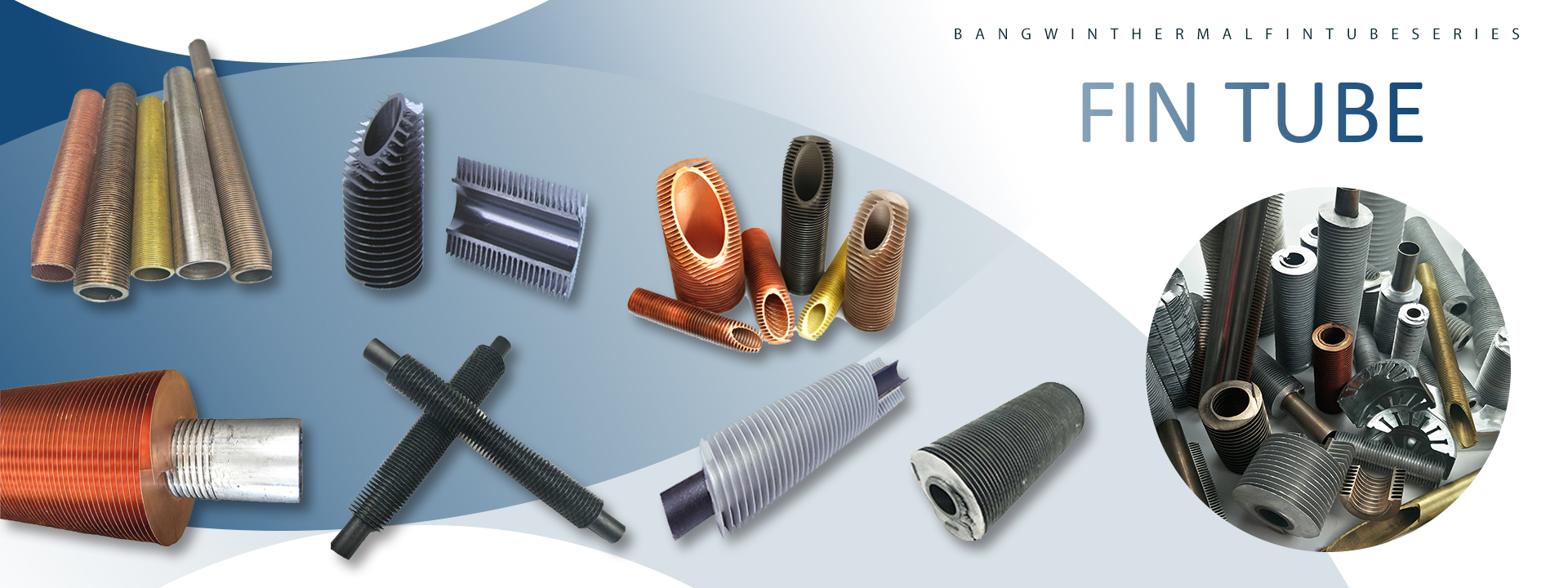
A studded finned tube is a heat transfer tube that features metal studs welded directly onto its outer surface.
These studs provide further outer areas for heat transfer while also providing strong mechanical support.
Stud fins, unlike traditional spiral fins, are short cylindrical pins that are placed in a specific pattern. This design results in the tube creating significant turbulence and aids in the further enhancement of heat transfer.
Manufacturers commonly use carbon steel, stainless steel, alloy steel, and heat-resistant materials to produce studded finned tubes.
Therefore, industries use these tubes in high-temperature and high-pressure environments.
Due to the requirement of companies searching for studded finned tube solutions, advanced products designed to withstand severe operating conditions, studded tube technology is still widely used in industrial heating systems throughout the globe.
If you would like to learn more about the relevant industrial thermal standards, you could consult the American Society of Mechanical Engineers, or sources within the industry such as Heat Exchanger World.
3. كيف Studded Finned Tube الأعمال
A studded finned tube works by promoting better heat transfer via airflow turbulence, and via an increased surface area.
First, hot or cold process fluid flows through the tube interior.Next, external gas or air flows across the studded surface.
During operation, the studs continuously disrupt airflow and create turbulence.The studs create stronger turbulence around the tube surface.
Turbulence is a significant aid for convective heat transfer and, as such, This design delivers higher thermal efficiency than seamless or smooth tubes.
The typical operational sequence includes the following steps:
- Fluid flows through the tube
- Heat travels through the tube wall
- Studs expand the outer surface area
- Airflow turbulence enhances heat transfer
- Thermal energy transfers
- مخارج السوائل
Due to this mechanism, in the presence of dirty gas and in high-temperature applications, studded finned tubes give the best performance. Many industrial plants use these tubes in finned tube heat exchangers.
4. Main Parts of a Studded Finned Tube
Several key components make up a studded finned tube and support efficient heat transfer.
- 1 Base Tube
The base tube carries the process fluid.
- 2 Welded Studs
The studs enhance the heat transfer surface and promote turbulence of the airflow. This results in better thermal performance.
- 3 Weld Zone
The weld zone connects the studs directly to the tube surface.
- 4 Protective Surface Coating
Manufacturers sometimes apply a protective coating to improve corrosion resistance.
- 5 End Connections
End fittings enable the tube to be fitted into a industrial heat exchanger.
Many manufacturers integrate their production with quality standards of heat exchangers.
5. أنواع Studded Finned Tubes
Due to the varying needs across industries, numerous types of studded tubes are available.
5.1 Carbon Steel Studded Finned Tube
This is the most economical tubing option and is commonly used for heating appliances in industry.
5.2 Stainless Steel Studded Finned Tube
This design also provides good protection against corrosion.
5.3 Alloy Steel Studded Finned Tube
Alloy materials are effective at managing very high temperatures.
5.4 High Temperature Studded Finned Tube
This design performs well in furnaces and waste heat recovery systems.
6. Benefits of using Studded Finned Tubes
Studded finned tubes are advantageous to several industries, which is why a significant number of industries still use them in harsh conditions.
6.1 Excellent High Temperature Resistance
Studded finned tubes can work in harsh and extreme environments.
6.2 Strong Mechanical Durability
Studded finned tubes are very resistant and robust against stress, vibration and temperature.
6.3 Improved Heat Transfer Efficiency
Studded finned tubes provide a much greater external surface area, thus improving heat transfer.
6.4 Better Resistance to Fouling
Studded finned tubes work in very dirty environments involving dusty and filthy gases.
6.5 Long Service Life
Studded finned tubes are very durable and this lowers their maintenance costs.
Many industries combine these systems with industrial cooling systems, heat recovery systems and other equipment.
7. استخدامات Studded Finned Tubes
Many industries use studded finned tubes for effective thermal management.
7.1 Petrochemicals
Heaters and process heat exchangers use studded finned tubes in petrochemical refineries.
7.2 Power Generation
Power plants install these finned tubes in waste heat recovery units and boiler systems.
7.3 Furnace Systems
All industrial furnaces require durable heat transfer systems.
7.4 Waste Heat Recovery
Studded finned tubes facilitate the recovery of heat from exhaust gases.
7.5 Steel Manufacturing
Steel manufacturers rely on studded tubes for high-temperature heat transfer.
Most customers looking for studded finned tubes also want tailored thermal systems.
8. Studded Finned Tubes vs High Frequency Welded Finned Tubes
Studied tubes and welded finned spiral tubes are compared by a significant number of manufacturers when choosing between the two technologies.
إن studded finned tube handles dirty gas and high-temperature applications well. In addition to this, high frequency welded finned tubes can frequently create larger heat transfer surfaces.
Studded tubes also tend to better resist fouling. For this reason, industries employ them under more severe operating conditions.
Yet, welded fin tubes often better handle cleaner applications with more orderly airflow.
Many different facilities often utilize a combination of both technologies given their specific process requirements.
9. How to Choose the Right Studded Finned Tube
The right tube choice positively impacts the thermal efficiency and reliability of the operation. For this reason, potential buyers need to carefully analyze a series of factors.
9.1 Operating Temperature
For applications with high temperatures, Engineers should choose suitable materials.
9.2 Corrosion Conditions
Corrosive environments may need use of stainless steel or alloy materials.
9.3 Gas Cleanliness
For dirty gas systems, there are significant advantages to using a studded tube design.
9.4 Heat Transfer Requirements
Various thermal load requirements will dictate different stud arrangements and tube densities.
9.5 Maintenance Accessibility
Long term performance will benefit from easy inspection access.
Bangwin Thermal Official Website has customized options for studded tubes.
10. Maintenance and Cleaning Tips
The tube’s lifespan and thermal efficiency increase with periodic maintenance.
Maintenance teams should inspect the stud welds firstNext, technicians should remove debris from the tube surface.
Cyclic inspections will aid in the early diagnosis of wear and/or corrosion, so maintenance costs are kept low.
Operators should monitor thermal performance regularly. and many facilities opt to follow a professional heat exchanger maintenance and cleaning guide.
11. Why Choose Bangwin Thermal
Bangwin Thermal has advanced industrial heat transfer solutions and custom finned tube manufacturing based on customer needs, available globally.
Our advantages comprise:
– Cutting-edge welding technology
– Custom studded tube solutions
– Consistent product quality
– Engineering support
– Cost-effective solutions
– Export experience
Moreover, our team possesses in-depth knowledge of industrial heat exchangers.
Bangwin Thermal is a trusted partner for comprehensive thermal manufacturing solutions for many international clients.
For more industrial thermal transfer solutions, please visit Bangwin Thermal.\
- لمزيد من المعلومات عن التصنيع الصناعي
- https://bangwingascylinder.com/
12. الأسئلة الشائعة
- What is a studded finned tube?
Studded finned tubes have welded metal studs onto the tube surface for enhanced heat transfer.
- Which industries use studded finned tubes?
They are common in petrochemical, power generation, steelmaking, furnace, and waste heat recovery industries.
- What are the materials of studded finned tubes?
Manufacturers produce studded finned tubes from carbon steel, stainless steel, alloy steel, and heat-resistant steel.
- What are the benefits of studded finned tubes?
They are highly resistant to high temperatures, durable, and provide excellent fouling resistance.
- What is the distinction between studded tubes and welded finned tubes?
Welded pins are used for studded tubes, while welded fins are in continuous spirals for welded finned tubes.
- Where can I obtain industrial studded finned tubes?
You can check the Bangwin Thermal Official Website for custom options.
13. خاتمة
In challenging industrial surroundings, a studded finned tube is a dependable, efficient heat transfer solution. These tubes are used in high-temperature applications, making them very popular.
They also provide thermal fouling resistance and a long service life and, therefore, are very important in contemporary industrial heating systems.
At Bangwin Thermal, we offer our international clients professional solutions for finned tubes and heat exchangers. Moreover, we accommodate custom thermal systems for various fields.
For sophisticated industrial heat transfer systems or custom studded finned tubes, come visit Bangwin Thermal.