Introduction
Evaporators are heat transfer components or heat exchangers in the refrigeration, air conditioning, food processing, and chemical industries. They are designed to absorb the required heat in a given medium (refrigerant, or air, or water, or solution) for a complete change of liquid refrigerant or process fluid to the vapor state to remove the unwanted heat.
What Is an Evaporator?
The evaporator is an important part of a system that absorbs heat, allowing the refrigerant or process fluid to boil or evaporate from liquid to vapor and evaporate to remove unwanted heat from a refrigerant, liquid food product, or solution
Working Principle
- Heat Absorption – Liquid refrigerant or process fluid enters the evaporator at low pressure
- Phase Change – Liquid absorbs heat from the surrounding medium and evaporates
- Continuous Cycle – Vapor returns to the compressor or next process stage; meanwhile, the medium is cooled or concentrated
Key Features
- Evaporators are designed with high heat transfer efficiency and compact in size
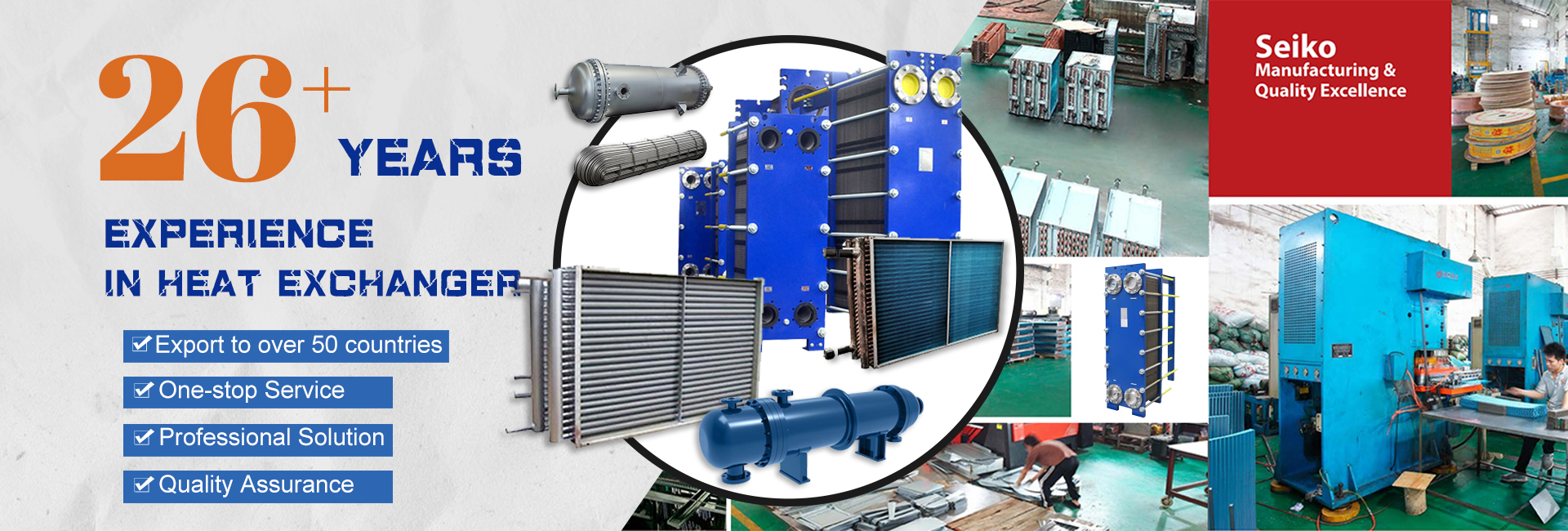
- The evaporator can be of different configurations, such as shell-and-tube, plate, falling film, and forced circulation evaporators
- A wide range of materials can be used for the construction of evaporators such as stainless steel, copper, and carbon steel
- Evaporators work over a broad range of operating temperatures and pressures
- Suitable material can be chosen for corrosion resistance in harsh chemical environments
Technical Details
Specification | Typical Range/Options |
Operating Temperature | –40 °C to +120 °C (depends on design) |
Materials | Stainless steel, copper, carbon steel |
Types Available | Falling film, shell-and-tube, plate, forced circulation |
Heat Transfer Coefficient | 800–1500 W/m²·K depending on medium and design |
Applications | Refrigeration, HVAC, food processing, chemical plants |
Advantages
- Energy Efficiency – The evaporator offers high thermal conductivity, which reduces energy consumption and costs
- Process Flexibility – Compatible with a range of fluids and solution concentrations
- Space Saving – Compact models are available for small installation spaces
- Reliable Performance – Long operational lifespan with proper maintenance
Industrial Applications
- HVAC & Refrigeration – Used in air conditioners, cold storage rooms, and chillers
- Food & Beverage Processing – Milk concentration, juice evaporation, sugar processing
- Chemical & Pharmaceutical – Solvent recovery, concentration of chemical solutions
- Power Generation – Used in desalination and water treatment processes
FAQs
Q1: What is the main purpose of an evaporator?
A1: To absorb heat and allow a liquid (often a refrigerant or solution) to vaporize, cooling or concentrating the surrounding medium.
Q2: What are the common types of evaporators?
A2: Shell-and-tube, plate, falling film, and forced circulation are the most widely used types.
Q3: Which materials are best for evaporator construction?
A3: Stainless steel is preferred for corrosion resistance, while copper and carbon steel are also used depending on the application.
Q4: How do you maintain an evaporator for optimal performance?
A4: Regular cleaning to remove scale or fouling, proper refrigerant charge, and periodic inspection of tubes and seals ensure efficiency.
Conclusion
Evaporators are widely used in refrigeration, HVAC, food processing, and chemical manufacturing for their ability to efficiently absorb heat and facilitate the change of liquid to vapor to cool or concentrate surrounding solutions. With their multiple design and material options, evaporators are reliable for thermal transfer in a wide range of industrial processes.
 English
 Spanish
 Portuguese
 French
 Russian
 German
 Arabic
 Indonesian