Introduction
Thus, industries need effective heat transfer by using components.
After reviewing the different finned tube solutions, Extruded Fin Tube technology along with having high thermal performance also has excellent corrosion resistant property.
Extruded Fin Tubes are made with a solid fin enveloping the base tube that greatly increases heat transfer area. The types such as these also prove themselves effective in rigorous environments.
With industries scaling energy efficiency, the requirement for advanced fin tube solutions keeps going up.
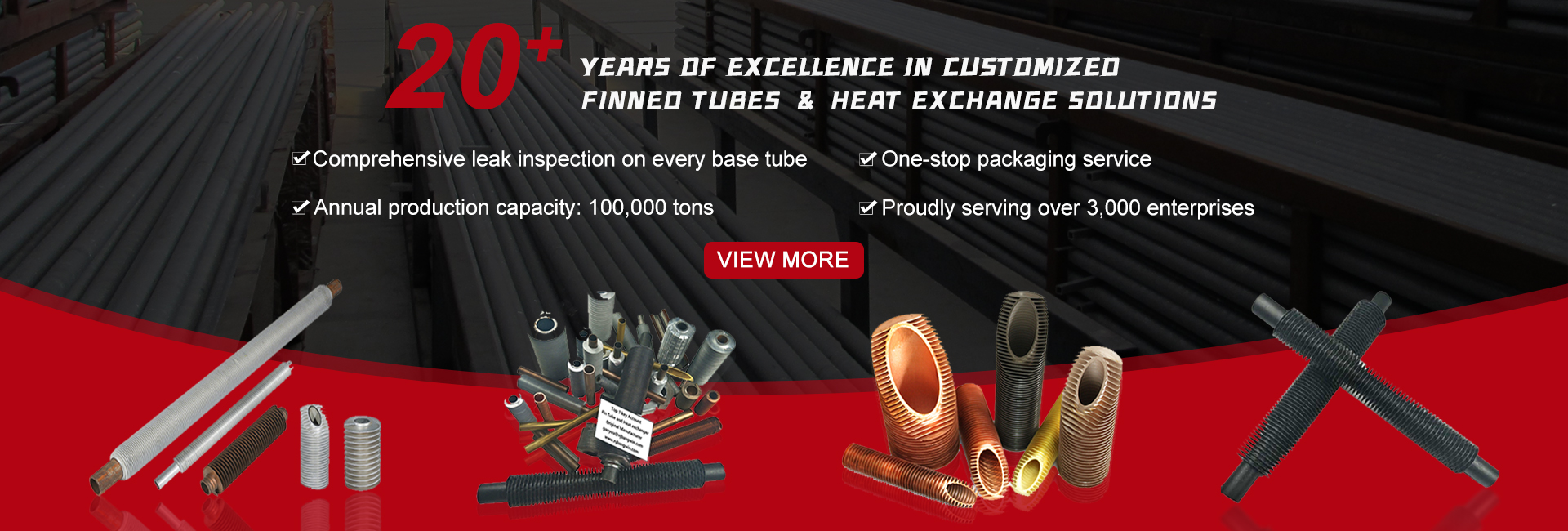
Bangwin Thermal, we manufacture custom fin tubes and industrial heat exchanger solutions for customers around the globe.
Visit:
What Is an Extruded Fin Tube
An Extruded Fin Tube is a tube in which an outer aluminum sleeve is mechanically formed into fins surrounding a base tube.
Extruded fins, unlike welded fin tubes, form a close mechanical connection.
It makes use of pressure to expand the top aluminum outer tube on to the inner tube.
Because of this, the fin and tube make great contact.
Common structures include:
- Aluminum outer fin layer
- Steel or copper inner tube
- Integrated fin surface
Thus, the extruded fin tubes have perfect thermal efficiency and corrosion protection.
How Extruded Fin Tubes Work
Fin tube is used to increase the surface area and improve its heat transfer capacity, and they are divided into three types:Extruded fin tubes.
Initially, the flows of fluid are in a tube with an anchored base.
The first is heat transfer through the tube wall.
Next, aluminum fins soak and distribute heat energy.
In the meantime, air passes over the enlarged fin area.
So here heat exchanging will be faster and better.
As a result, the fins are tightly in contact with the tube surface and thermal resistance is still low.
Thus, these fin tubes guarantee reliable heat exchanger performance.
Extruded Fin Tube Manufacturing Process
So there are several stages of production involved.
4.1 Base Tube Preparation
The inner tube is inspected and cleaned by manufacturers.
Common materials include:
- Copper
- Steel
- Stainless steel
4.2 Aluminum Sleeve Installation
The base tube is covered with a seamless aluminum tube.
Next, manufacturers set the stage for an extrusion process.
4.3 Mechanical Extrusion
The aluminum sleeve is pressed by a special machine.
Thus, this aluminum has continuous fins wrapping around the tube.
4.4 Fin Forming
The extrusion process creates:
- High fin density
- Uniform fin height
- Strong tube contact
4.5 Quality Inspection
Manufacturers check:
- Fin dimensions
- Tube straightness
- Bond quality
- Surface finish
As a result, the final product is satisfactory enough to maintain the industry.
What are Extruded Fin Tube and their Main Advantages:
There are several advantages of extruded fin tubes.
5.1 Excellent Corrosion Resistance
The base tube is protected by the outer aluminum layer.
Thus, the pipes are used in outdoor conditions.
Aluminum also has inherent resistance to oxidation.
Consequently, service life improves.
5.2 Superior Fin-to-Tube Bond
Mechanical extrusion ensures good contact between materials.
That way, the heat transfer from tube to fins and vice versa is efficient.
This, in turn, allows the refraining of thermal performance to remain stable.
5.3 High Heat Transfer Efficiency
A larger fin surface improves the heat exchange capacity.
This is why there will be better thermal performance of the equipment.
Furthermore, fins with their optimized designs allow more efficient airflow.
5.4 Long Service Life
The aluminum protection layer decreases the chances of corrosion.
Consequently, maintenance requirements decrease.
Hence, the industries get advantage of low-operating cost.
5.5 Excellent Outdoor Performance
Outdoor heat exchangers face:
- Rain
- Humidity
- Temperature changes
- Atmospheric corrosion
Well, these conditions are handled by extruded fin tubes perfectly.
Consequently, they are well-liked in air-cooled heat exchangers.
5.6 Flexible Material Combination
Different materials for tubes combined with aluminum fins are within manufacturer capabilities.
Examples include:
- Aluminum + steel tube
- Aluminum + copper tube
- Aluminum + stainless steel tube
This allows engineers to choose solutions according to application requirements.
5.7 Reduced Maintenance
Even an aluminum layer that is highly protective will reduce damage at the surface.
As a result, they require less cleaning and replacement.
Extruded fin tubes material
Material selection affects performance.
Aluminum Fins
In the industry, Aluminum is the most popular fin material.
Advantages include:
- Lightweight
- Corrosion resistance
- Good thermal conductivity
Steel Tubes
Steel tubes provide mechanical strength.
Therefore, they suit industrial applications.
Copper Tubes
Copper offers excellent thermal conductivity.
Consequently, it supports high-efficiency systems.
Stainless Steel Tubes
Stainless steel provides corrosion resistance.
Hence, it is appropriate for chemical and maritime environments.
Extruded Fin Tube Applications
Applications of extruded fin tube in various industries
7.1 Air Cooled Heat Exchangers
Air cooled heat exchangers have also large areas on the exterior.
Hence, the most common tube used is extruded fin.
Applications include:
- Petrochemical plants
- Refineries
- Power stations
7.2 HVAC Systems
Efficient heat transfer of air is important in HVAC Systems.
Therefore, extruded fin tubes support:
- Cooling coils
- Heating coils
- Ventilation equipment
7.3 Power Generation
Extruded fin tubes used in power plants are as follows:
- Cooling systems
- Heat recovery equipment
- Condensers
7.4 Chemical Industry
Chemical facilities require corrosion-resistant components.
So you can appreciate that extruded fin tubes operate reliably.
7.5 Marine Applications
Marine environments has salts and moisture.
Hence they have a high durability as these are coated with aluminum layer.
Extruded Fin Tube vs Other Fin Tube Types
Feature | Extruded Fin Tube | HF Welded Fin Tube | Laser Welded Fin Tube |
Corrosion Resistance | Excellent | Good | Very Good |
Heat Transfer | Excellent | Very Good | Excellent |
Bond Type | Mechanical | Welding | Laser Welding |
Outdoor Performance | Excellent | Good | Very Good |
Cost | Medium | Low | High |
Therefore, extruded fin tubes are ideal for applications requiring corrosion protection and long service life.
Guide to Selecting a Suitable Extruded Fin Tube
Several factors influence selection.
Operating Environment
Outdoor systems require corrosion-resistant designs.
Temperature Range
Choose tube materials based on high temperature.
Heat Transfer Requirements
Efficiency is affected by fin height and spacing.
Fluid Compatibility
The working fluid has some constraints on material selection.
Installation Conditions
Equipment size affects tube dimensions.
Bangwin Thermal engineers offer tailor-made solutions.
Visit:
Bangwin Thermal Official Website
Why Choose Bangwin Thermal
Bangwin Thermal — Focused on Heat exchanger Parts and fin tube solutions.
Our advantages include:
- Professional thermal engineering team
- Customized extruded fin tubesolutions
- Advanced manufacturing equipment
- Strict quality control
- Global export experience
- Competitive factory pricing
Additionally, we help customers in energy, chemical, HVAC and industrials.
For related industrial products, visit:
FAQ
- What is an extruded fin tube?
An extruded fin tube uses an aluminum outer sleeve that forms fins around a base tube through mechanical extrusion.
- What are the main advantages?
It provides excellent corrosion resistance, high efficiency, and long service life.
- Where are extruded fin tubes used?
They are used in air cooled heat exchangers, HVAC systems, power plants, and chemical industries.
- What materials are available?
Common materials include aluminum, steel, copper, and stainless steel.
- Are extruded fin tubes suitable for outdoor applications?
Yes. Their aluminum protection layer provides excellent outdoor durability.
- Where can I buy customized extruded fin tubes?
Bangwin Thermal supplies customized fin tubes and heat exchanger solutions worldwide.
Conclusion
Extruded Fin Tube as a modern heat transfer solution for industrial applications
Possessing top-notch resistance to corrosion, solid tube-fin contact and high thermal efficiency makes this the right material for demanding environments.
Thus, extruded fin tubes are extensively used in air cooled heat exchangers as well as HVAC systems, power generation industries, chemical processing units and even marine applications.
If you are looking for standard raised and serrated fin tubes or program heat exchanger solutions, bangwin Thermal can offer worldwide professional manufacturing support.
Visit: